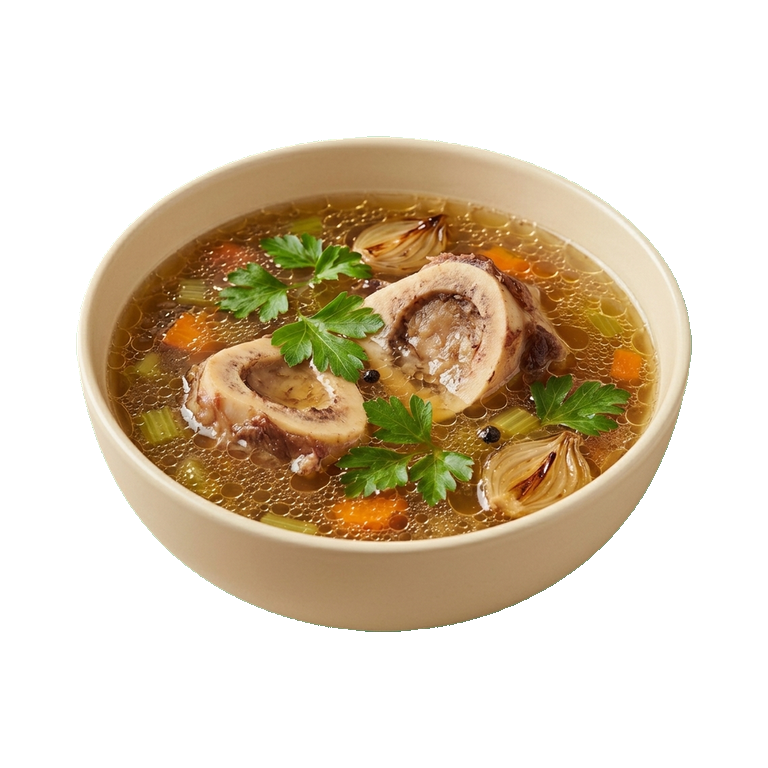
Usuba
Usuba
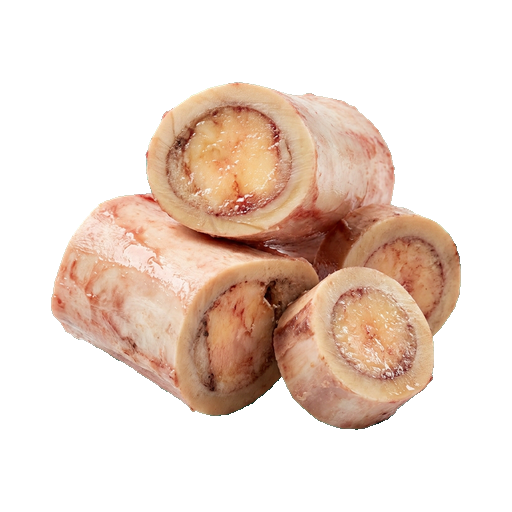
Beef Marrow Bones
Marrow bones are tubular bones with a porous structure inside containing bone marrow. When cooked, they release collagen and fats into the broth, giving it a rich flavor, aroma, and gelatinous consistency. Used for making strong broths, soups, and sauces, while the marrow from the bones can be spread on bread or added to dishes as a delicacy.
About
Marrow bones are tubular bones with a hollow cavity inside, filled with bone marrow. In cooking, they are valued not so much for the bone itself, but for what's inside: soft, fatty marrow with a delicate flavor and creamy texture. This is one of the simplest ways to achieve a deep, rich flavor in broth or a finished dish.
Taste and Texture
Bone marrow has a delicate, slightly sweet taste with a subtle mineral note. When cooked, it becomes softer and acquires a creamy consistency, almost like butter. When seared over high heat, the marrow becomes slightly browned and develops a more pronounced, almost nutty flavor. The texture always remains tender — it's not tough meat, but rather a delicate substance that practically melts in your mouth.
Role in dishes
The main purpose of bone marrow bones is to enrich broths and sauces. When bones are simmered for several hours, the marrow dissolves into the liquid, giving it silkiness and depth of flavor. Such broth becomes the base for soups, risotto, or sauces. But bone marrow can also be used separately: extract it from the bone and add it to pâtés, spread it on bread with sea salt, or use it as a filling for roasted marrow bones baked in the oven.
- In broths and soups — simmered for 3–4 hours for maximum flavor extraction
- In roasted bone marrow — bones are cut lengthwise, roasted at 200°C and the marrow is eaten with a spoon directly from the bone
- In pâtés and terrines — marrow is mixed with butter, herbs and spices
- In sauces — marrow is added at the end of cooking for creaminess and depth
Selection and Storage
Choose bones with visible marrow inside — it should be light pink or creamy, without dark spots or odor. Frozen bones can be stored for up to three months, fresh ones in the refrigerator for no more than two days. Before use, bones can be soaked in cold water for an hour to remove blood and impurities. If you are boiling bones for broth, start with cold water and bring to a boil — this will help extract nutrients more effectively.
Pairings
Marrow bones work well with classic flavors: onion, garlic, carrot, celery, and bay leaf in broth. In pâtés, they are complemented with cognac, truffle, and mustard. At the table, marrow is served with sea salt, black pepper, and fresh parsley. Bread is an essential accompaniment: crispy toast or buttered bread are perfect for spreading the extracted marrow.
Marrow bones are not exotic, but a basic, affordable ingredient that often goes unnoticed. But once you use them correctly, you'll understand why experienced chefs never throw away such bones. They transform ordinary broth into something special, and a simple slice of bread into a delicacy.
Nutrition
per 100 g
- Calories
- 215 kcal
- Protein
- 17.3 g
- Fat
- 16.5 g
- Carbs
- 0 g
Measures and weight
- 1 pcs
- 150 g
Measure calculator
- Weight
- 100 g
- Calories
- 215 kcal