Usuba
Usuba
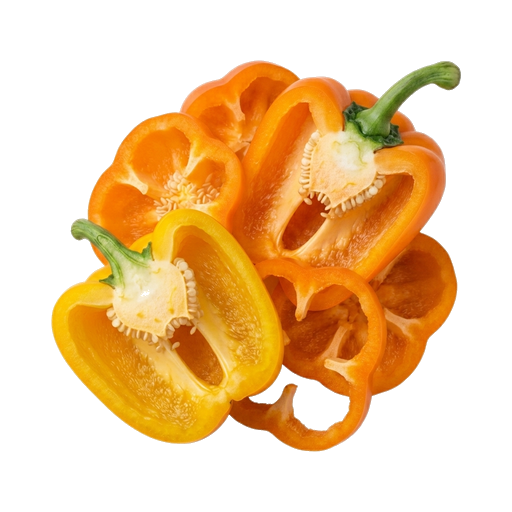
Bell pepper
A sweet vegetable with firm flesh and a hollow center, available in red, yellow, orange, and green. Red and yellow peppers are sweeter with a more pronounced fruity flavor, while green ones are more bitter and herbaceous. Used raw in salads, roasted, stewed, stuffed, or sliced for soups and stews; when selecting, look for firm specimens without wrinkles or soft spots, and when substituting, keep in mind that green pepper will give a sharper and more bitter result than red.
About
Bell pepper is one of the most versatile vegetables in the kitchen. Its sweet taste, juicy flesh, and bright color make it indispensable in salads, hot dishes, and even appetizers. Unlike hot pepper varieties, bell pepper contains almost no capsaicin, making it suitable for any table and any level of cooking skill.
Taste and Aroma
Ripe bell pepper has a sweet taste with a light herbaceous note. Red and yellow peppers are sweeter, orange is also sweet but with fruity undertones. Green pepper is less sweet and slightly bitter, which makes it an interesting choice for spicy and savory dishes. The aroma of fresh pepper is light, fresh, slightly herbaceous — it becomes even more pronounced when sliced.
When choosing, focus on the color depending on the dish. Red pepper is versatile and works well for salads, soups, and stews. Yellow adds optimism to pasta and vegetable side dishes. Orange is a delicate choice for tender dishes. Green pepper is best used stuffed or in spicy sauces.
Role in Dishes
Bell pepper is good both raw and cooked. In its fresh form, it is ideal for salads, slices, and appetizers — it crunches, refreshes, and adds vitamins. With heat treatment, the pepper becomes softer, its flavor deepens and becomes more rich. Fried or baked pepper develops sweetness and acquires a light caramelization.
- Salads: vegetable, with feta, with chicken or seafood
- Soups: vegetable, cream soups, borscht
- Hot dishes: stew, pasta, risotto, pilaf
- Stuffed peppers: classic dish with meat, rice or vegetables
- Canning: marinated peppers, lecho
- Sauces and pastes: for dips, for meat, for fish
Combinations with other ingredients
Bell pepper pairs well with tomatoes, onions, and garlic — this is a classic base for many dishes. It works well with eggplant, zucchini, and other summer vegetables. Combines with meat (beef, chicken, pork), fish, and seafood. Black pepper, paprika, coriander, and cumin are suitable spices. Olive oil, lemon, and herbs (basil, parsley, oregano) emphasize its sweetness and freshness.
Selection and Storage
When buying, choose peppers with smooth, shiny skin without damage or soft spots. It should be heavy for its size — this is a sign of juiciness. Avoid peppers with wrinkled skin and a wilted appearance. Ripe peppers have a rich color, slightly unripe ones have a lighter shade, but they will ripen at home.
- Bell peppers keep in the refrigerator for 1–2 weeks in the vegetable drawer
- Store separately from fruits — they release ethylene and accelerate spoilage
- Don't wash before storage — moisture promotes rotting
- Keep sliced peppers in an airtight container for no more than 3–4 days
- You can freeze whole peppers or sliced ones — they'll keep for up to 6 months, but the texture will become softer
Tip: to peel the pepper, roast it in the oven at 200 degrees for 20–25 minutes, place it in a bag for 10 minutes, and then gently remove the skin. This technique brings out the sweetness and makes it easier to work with the vegetable.
Nutrition
per 100 g
- Calories
- 31 kcal
- Protein
- 1 g
- Fat
- 0.3 g
- Carbs
- 6 g
Measures and weight
- 1 pcs
- 150 g
Measure calculator
- Weight
- 100 g
- Calories
- 31 kcal