Usuba
Usuba
Buckwheat honey
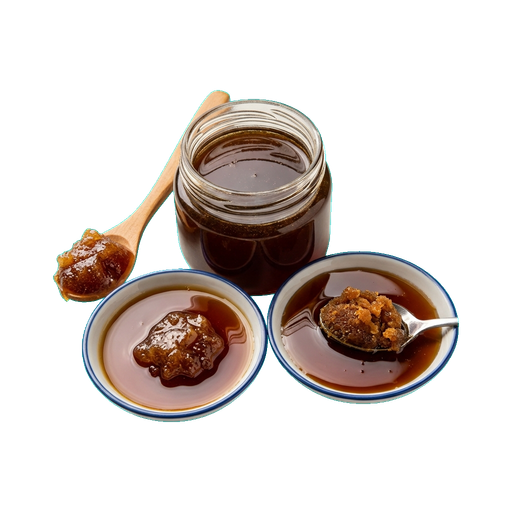
Buckwheat honey — a dark, almost brown honey with a rich, slightly bitter taste and pronounced aroma. It crystallizes faster than floral varieties and has a dense consistency. In cooking, it is used for marinades, sauces, baked goods, and beverages, where its deep flavor complements spicy and pungent dishes, and pairs well with meat and game.
About
Buckwheat honey is one of the most recognizable honey varieties by appearance and taste. Its dark, almost brown color and rich aroma immediately distinguish it on the shelf among light and delicate honeys. It is not just a sweetness, but a full-fledged ingredient with character that can transform both a simple breakfast and a complex sauce.
Taste and Aroma
Buckwheat honey smells of earth, bread, and light bitterness — not at all like the sweet floral aroma of its lighter counterparts. On the palate, it leaves an astringent aftertaste with a barely noticeable metallic note. The sweetness here is not bold, but rather cozy, with depth. If you're used to mild, delicate honeys, buckwheat honey might seem harsh, but it's precisely this expressiveness that makes it indispensable in cooking.
Where to use it
Buckwheat honey works well in marinades for meat and poultry — its bitterness balances richness and adds depth. It doesn't get lost in sauces with soy, oyster, or spicy bases. Try adding it to a glaze for duck or to a pork marinade. For breakfast, you can spread it on bread with butter or mix it into cottage cheese, but keep in mind that it will dominate the flavor rather than complement it delicately.
- Marinades and glazes for meat
- Sauces for game and poultry
- Baked goods with spices (ginger cookies, honey cupcakes)
- Mead and tinctures
- Beverages: hot tea with lemon and ginger
Pairings with other ingredients
Buckwheat honey loves the company of strong flavors. It pairs perfectly with ginger, cinnamon, cloves, and black pepper. Sharp and acidic components — mustard, vinegar, lemon — highlight its natural tartness. With savory sauces based on garlic or red pepper, it becomes even more interesting. Avoid combining it with delicate, floral aromas — they will simply get lost.
Selection and Storage
When choosing, pay attention to the color — real buckwheat honey is dark, from brown to almost black. If the honey is too light, it's not buckwheat honey. The consistency can be either liquid or crystallized — both options are normal. Crystallization occurs faster than in light honeys, this is a natural process.
Store honey in a glass or ceramic container at room temperature, away from direct sunlight. An airtight lid is mandatory. Buckwheat honey can be stored for years without loss of quality. If it has thickened and crystallized, this is not spoilage: simply place the jar in warm water for a few minutes, and it will regain its fluidity. A refrigerator for storage is not required and is even undesirable.
Nutrition
per 100 g
- Calories
- 304 kcal
- Protein
- 0.3 g
- Fat
- 0 g
- Carbs
- 82 g
Measures and weight
- 1 tbsp
- 21 g
- 1 tsp
- 7 g
- 1 cup
- 350 g
Measure calculator
- Weight
- 100 g
- Calories
- 304 kcal