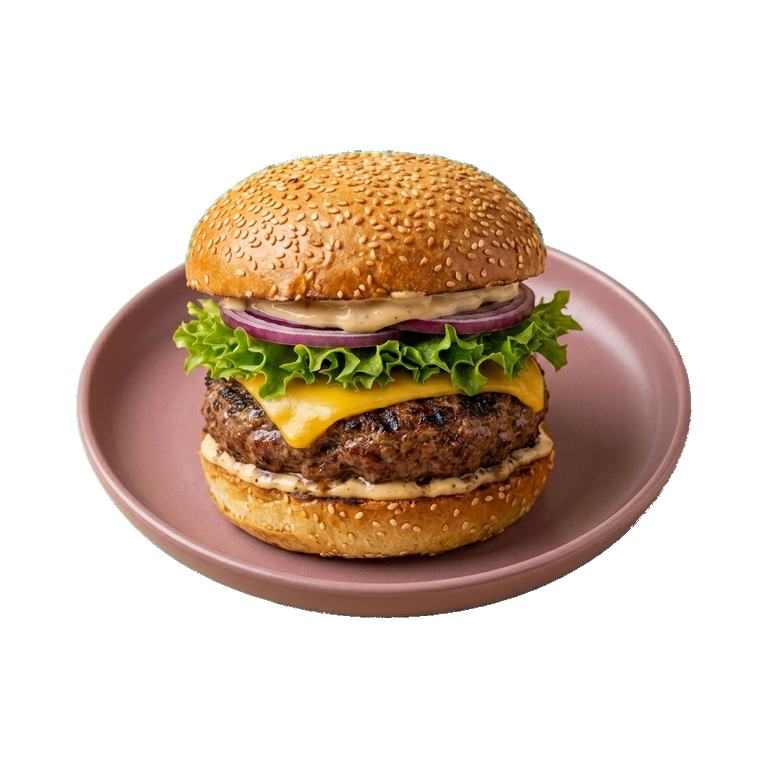
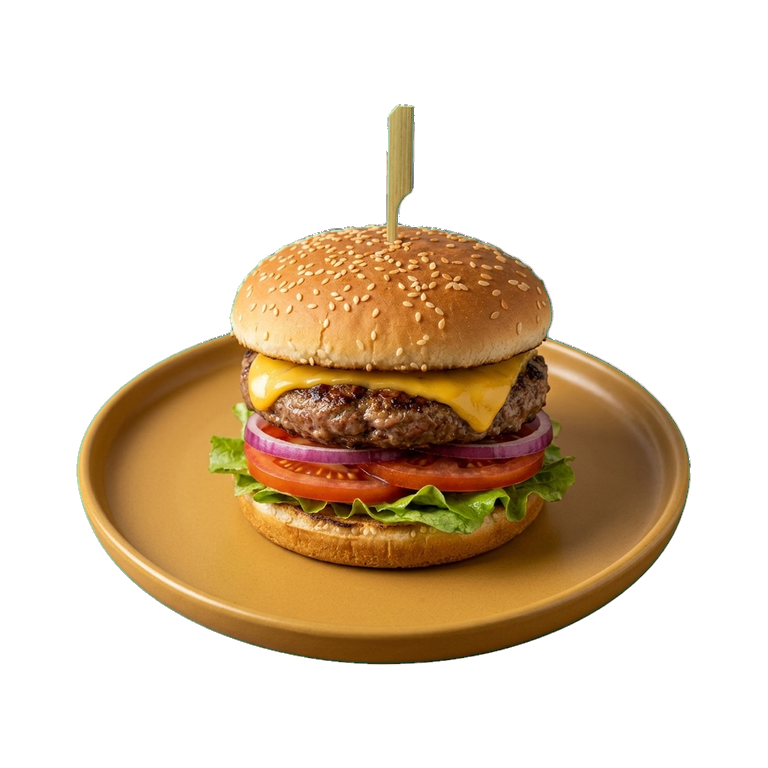
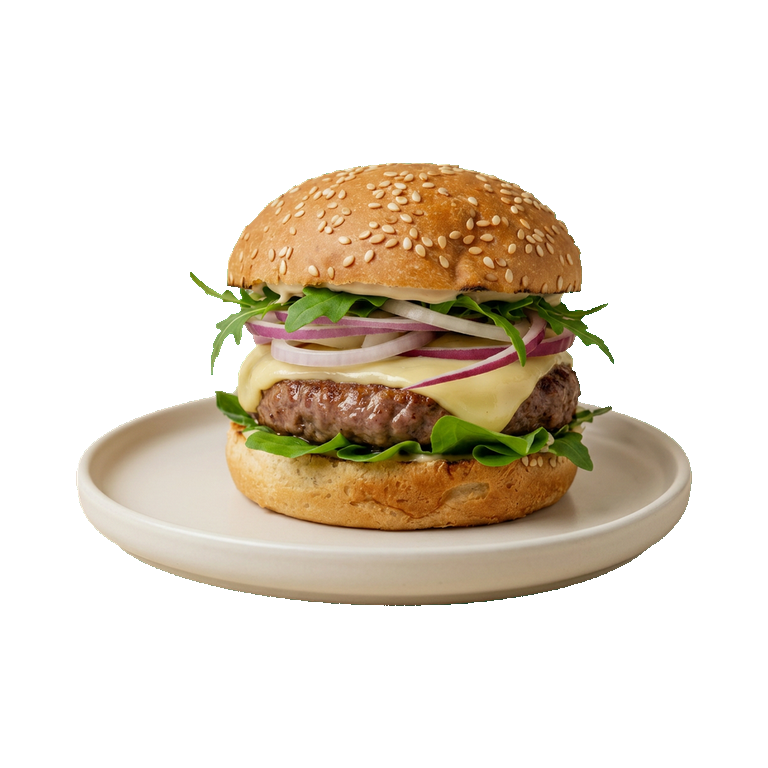
Usuba
Usuba
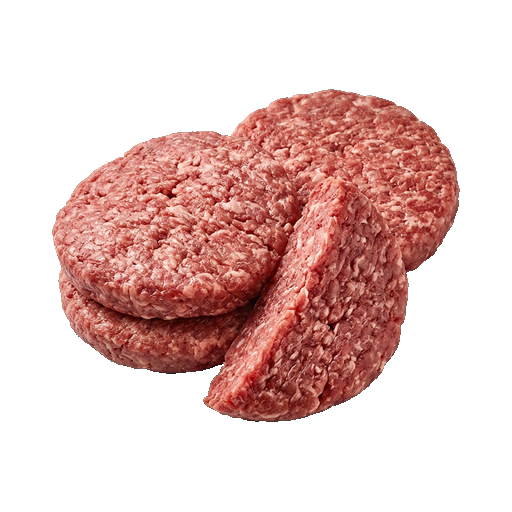
Burger patty
A burger patty is a compressed semi-finished product made from ground beef, typically containing spices, breadcrumbs, and binding ingredients to maintain its shape during frying. The patty has a dense consistency and, when cooked properly, develops a crispy exterior while keeping a juicy center. It absorbs sauces well and pairs nicely with vegetables and a bun. When selecting a patty, pay attention to the fat percentage in the ground meat — meat that is too lean will result in a dry patty, while optimal fat content ensures juiciness and rich flavor.
About
A burger patty is not just a meat disc between buns. It is the foundation that defines the entire character of the dish. Its quality, structure, and flavor determine whether the burger will be juicy and aromatic or dry and bland. A proper patty should hold its shape when frying, remain soft inside, and absorb sauces well.
Ingredients and Structure
A classic burger patty is made from ground beef — usually a mixture of meat with varying fat percentages. Fat here is not an enemy, but a helper: it makes the patty juicy and prevents it from drying out during cooking. The optimal ratio is 80% meat to 20% fat, although in premium versions, fattier cuts may be used.
Binders are often added to ground meat: breadcrumbs, egg, or starch. They help prevent cutlets from falling apart during cooking. Salt and pepper are essential, but many chefs also add other spices: garlic powder, onion powder, paprika, or even Worcestershire sauce for depth of flavor.
Cooking and Processing
The patty should be formed carefully, without mixing the ground meat for too long — this makes it tough. It's enough to combine the ingredients into a uniform mass. The shape should be slightly flattened: this way the patty cooks more evenly and makes better contact with the bun. The diameter is usually slightly larger than the bun, since the patty shrinks a bit during frying.
- Fry the cutlet over high heat for 3–4 minutes on each side for medium doneness
- It is important not to flip the cutlet too often — this damages the crust
- After frying, it is useful to leave the cutlet on a paper towel for a minute to remove excess fat
- Some chefs use a grill instead of a pan for a more pronounced smoky aroma
Selection and Storage
Ready-made burger patties are sold as frozen semi-finished products. When choosing, pay attention to the color: it should be uniform, without dark spots. The packaging should not be damaged, and the patty itself should not be clumped together. Check the production date and expiration date.
Frozen cutlets should be stored at a temperature of minus 18 degrees and below. In the freezer, they maintain quality for up to three months. It's better to thaw them in the refrigerator overnight rather than at room temperature — this way the cutlet won't lose moisture and will remain juicy. If you're in a hurry, you can fry them straight from the freezer, adding just about a minute to the cooking time.
Role in burger
A cutlet is the anchor of flavor. It should be distinctive enough not to get lost among the sauces, salad, and cheese, but not overpower them. A hot, freshly fried cutlet melts the cheese if placed on top, and its heat warms the bun and activates all the other burger components.
The thickness of the patty affects its texture: thin (8–10 mm) will turn out crispy on the outside and more uniform, thick (15–20 mm) will remain juicier inside, but requires more careful frying. The choice depends on your preference and the type of bun — for delicate buns, a denser patty that holds its shape well is better suited.
Nutrition
per 100 g
- Calories
- 215 kcal
- Protein
- 20.5 g
- Fat
- 13 g
- Carbs
- 2.5 g
Measures and weight
- 1 pcs
- 100 g
Measure calculator
- Weight
- 100 g
- Calories
- 215 kcal