Usuba
Usuba
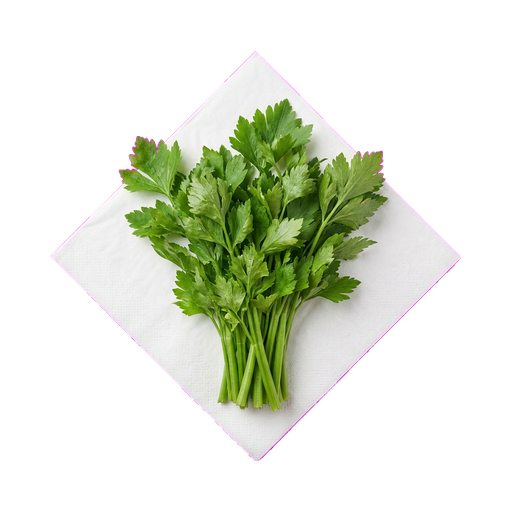
Celery greens
Celery leaves have a fresh, slightly peppery taste with herbal notes and a distinctive spicy aroma. They are used both raw in salads and garnishes, and added to soups, sauces, and hot dishes at the end of cooking to preserve their bright flavor and crisp texture. When selecting, it's best to choose young leaves with thin petioles—they are more tender and less fibrous than mature plants.
About
Celery greens are the leaves and petioles of a young plant, which often remain in the shadow of root celery. Meanwhile, it is the greens that possess a more vibrant aroma and have a gentler effect on the dish. It is easier to digest and brings freshness where the root would be too intense.
Aroma and Taste
Celery greens smell fresh and herbal with a barely perceptible spiciness. The taste is more delicate than the root: not sharp, but rather green, with a slight bitterness and pleasant crispy texture. Young leaves are softer and more tender than old ones — this is important to keep in mind when choosing.
Role in the kitchen
Celery leaves work well in both fresh salads and appetizers, as well as in hot dishes. Add them to soup or stew at the end of cooking to preserve the aroma and bright color. They are great as a garnish, in sauces, omelets, and fish dishes.
Pairings
- With tomatoes, onions and carrots in vegetable mixes
- With fish and seafood
- With potatoes and other root vegetables
- With lemon and olive oil in dressings
- With parsley and dill in mixed greens
Selection and Storage
Look for bunches with bright green, crisp leaves without spots or signs of wilting. The stems should be crunchy, not soft. Young greens are thinner and more tender — they are preferable for fresh dishes.
- Store in the refrigerator wrapped in a damp cloth or placed in a container with a lid
- Keep separate from fruits that release ethylene
- Use within 5–7 days for maximum freshness
- Can be frozen in an airtight bag, but the texture will change — suitable for soups and sauces
Before use, rinse the greens with cold water and pat dry. If the stems are thick, remove their fibrous part. The leaves can be torn by hand or cut depending on the dish — this is not critical, but whole leaves look more beautiful in salads.
Nutrition
per 100 g
- Calories
- 13 kcal
- Protein
- 0.7 g
- Fat
- 0.1 g
- Carbs
- 2.1 g
Measures and weight
- 1 tbsp
- 4.5 g
- 1 tsp
- 1.5 g
- 1 cup
- 75 g
- 1 bunch
- 100 g
Measure calculator
- Weight
- 100 g
- Calories
- 13 kcal