Usuba
Usuba
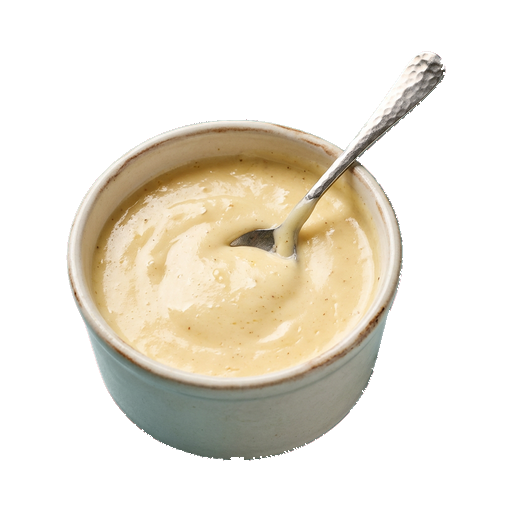
Cheese sauce
Cheese sauce is a delicate creamy gravy made from butter, flour, and milk with added grated cheese, which gives dishes a rich buttery and creamy flavor with a subtle saltiness. It is used for casseroles, pasta, and vegetables as well as for meat and fish dishes, creating a golden crust when baked. When preparing, it is important to add the cheese at the end, when the sauce has cooled slightly, so it does not curdle, and for a more interesting flavor, you can combine several types of cheese with different aging levels.
About
Cheese sauce is not just a seasoning, but a foundation that transforms simple dishes into hearty and appetizing meals. It is made from processed cheese, cream, and butter, creating a creamy consistency with a rich flavor. The sauce clings to pasta, vegetables, and meat, creating an even coating rather than just sitting on top. This quality makes it indispensable in the kitchen for those who value practicality and results.
Taste and Texture
Cheese sauce envelops the tongue with softness and leaves a lingering aftertaste. Its flavor depends on the type of cheese: sharp varieties provide piquancy, mild ones offer tenderness. The consistency should be liquid enough to flow off spaghetti, but not watery. A good sauce holds its shape on a spoon and does not separate as it cools.
Where to use cheese sauce
- Pasta and pasta dishes — classic application, especially for penne and farfalle
- Grilled or baked vegetables — broccoli, cauliflower, potatoes acquire a new dimension
- Mashed potatoes — sauce is mixed directly into hot mashed potatoes for a creamy texture
- Meat dishes — chicken, steak or cutlets get an additional layer of flavor
- Casseroles and lasagna — sauce serves as a binding layer between components
- Cream soups — a few spoonfuls of cheese sauce enrich vegetable or mushroom soups
Selection and Storage
When buying ready-made cheese sauce, pay attention to the ingredient list — the fewer additives, the better. The sauce should be homogeneous, without lumps or layering. If you're making it yourself, use cheese with good melting properties: cheddar, gouda, or emmental. Avoid overly hard varieties that don't provide the right consistency.
- Ready-made sauce in a sealed container is stored in the refrigerator for 3–5 days
- Before use, gently reheat the sauce in a water bath to restore creaminess
- If the sauce has thickened, thin it with milk or cream in small portions
- Freezing is possible, but the texture may change — it's better to prepare the sauce fresh
Cheese sauce works as a universal lifesaver in the kitchen: add it to yesterday's leftover vegetables or pasta, and the dish will be transformed. The main thing is not to overcomplicate it: a good sauce doesn't require exotic ingredients, just quality cheese, cream, and a little patience during cooking.
Nutrition
per 100 ml
- Calories
- 180 kcal
- Protein
- 8.5 g
- Fat
- 14 g
Measures and weight
- 1 tbsp
- 15.8 g
- 1 tsp
- 5.3 g
- 1 cup
- 262.5 g
Measure calculator
- Weight
- 100 g
- Calories
- 171 kcal