Usuba
Usuba
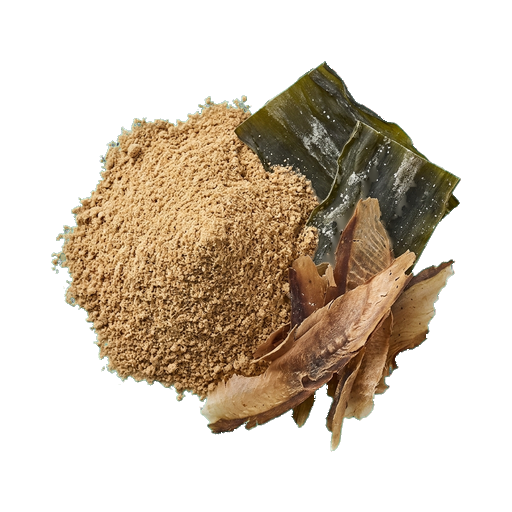
Dashi powder
Dashi powder is a ready-made blend of dried and ground kombu seaweed, mackerel flakes, and other ingredients that serves as a base for quick dashi preparation without prolonged steeping. It has a rich umami flavor with a subtle oceanic sharpness and is used for soups, broths, sauces, and marinades in Japanese cuisine. When selecting, it is important to check the ingredients and ensure there is no excess salt or additives. For storage, keep in a tightly sealed container in a dry place to preserve the aroma and properties.
About
Dashi powder is a concentrated foundation of Japanese cuisine that transforms a simple broth into a deep, multi-layered flavor in just seconds. If you've ever tried a perfectly balanced miso soup with umami or ramen noodles with rich broth, you've already encountered this ingredient. Dashi powder simplifies cooking without requiring hours of simmering and complex manipulations.
Aroma and Flavor
Dashi powder smells of the sea and smoke at the same time — it's the aroma of dried seaweed and fish flakes, which form its base. To the taste, it's not fish in the direct sense, but rather its echo, a delicate umami background that doesn't overpower other ingredients, but rather emphasizes them. The main property of dashi is umami, the fifth taste, which makes food more substantial and satisfying.
Ingredients and Types
Classic dashi is made from two components: kombu (sea kelp) and bonito (dried fish). Dashi powder is these ingredients dried and ground into fine crumbs. There are variations with the addition of shiitake mushrooms, nori seaweed, or even vegetables. Some manufacturers offer versions with reduced salt content, which is convenient if you are monitoring your salt intake.
Where to use
- Miso soup — dissolve the powder in hot water, add miso paste and tofu
- Broth for udon or ramen noodles — a base that saves hours of cooking
- Sauces and marinades — a pinch of powder deepens the flavor of soy sauce or mirin
- Rice dishes and side dishes — dashi instead of water when cooking gives rice a delicate flavor
- Vegetable dishes — dashi works as a flavor enhancer without requiring meat or fish
How to Cook
The standard proportion is one teaspoon of powder per glass of hot water. Let it steep for 2–3 minutes to allow the flavor to fully develop. The powder dissolves unevenly, so small particles may remain — this is normal, but if you prefer a clear broth, strain it through a sieve. Do not boil dashi for long: high temperature destroys delicate aromas, so add it to already prepared dishes or slightly cooled water.
Selection and Storage
Look for powder in airtight packaging without lumps — this is a sign that the ingredient was stored correctly. The brighter the brown color, the higher the quality. Cheap options often contain starch and flavor enhancers instead of natural components, so check the ingredients. Store dashi powder in a cool, dry place in an airtight container — moisture is its enemy. With proper storage, the shelf life is 6–12 months.
Combinations with other ingredients
Dashi works perfectly with miso paste, creating a classic umami combination. With soy sauce, dashi powder enhances saltiness and depth. Mirin and sugar alongside dashi balance the flavor, adding sweetness. Fresh ginger, garlic, and herbs contrast nicely with its oceanic background. Vegetables — carrots, radishes, mushrooms — become more vibrant in dashi broth.
Dashi powder is not exotic, but a practical kitchen helper. One package will replace hours of cooking and open the door to Japanese cuisine, even if you have no experience.
Nutrition
per 100 g
- Calories
- 340 kcal
- Protein
- 50 g
- Fat
- 5 g
- Carbs
- 20 g
Measure calculator
- Weight
- 100 g
- Calories
- 340 kcal