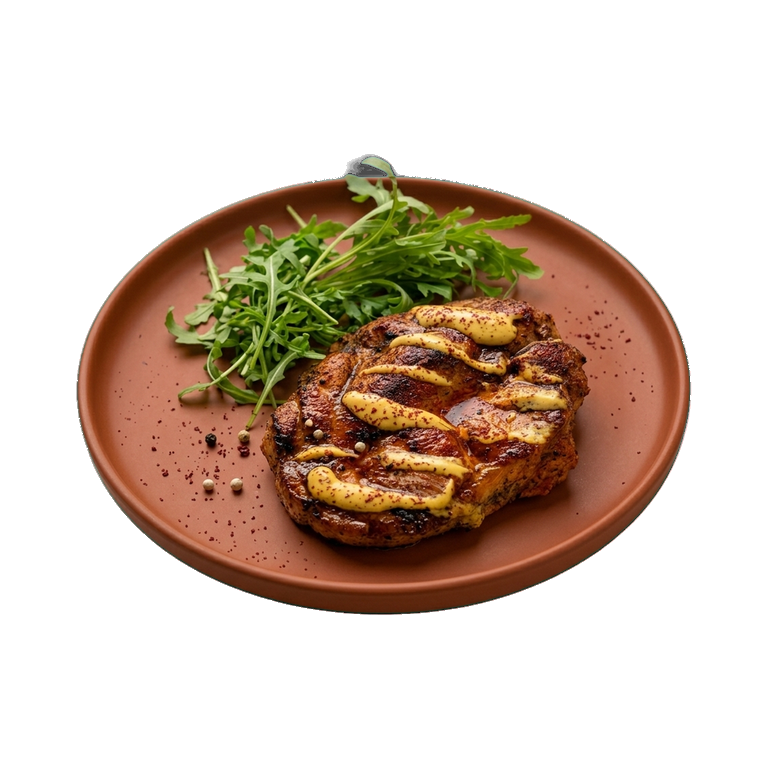
Usuba
Usuba
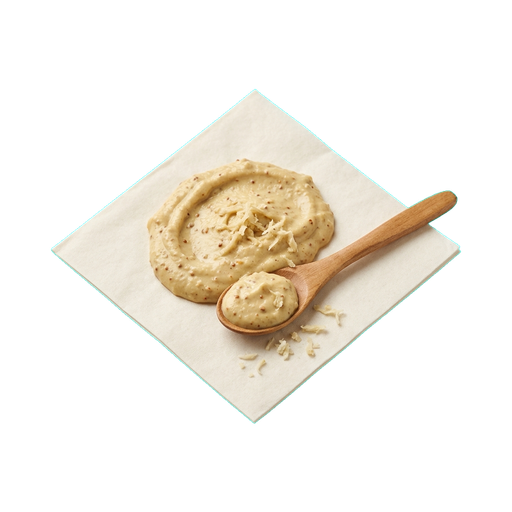
Dijon mustard with horseradish
Sharp mustard with horseradish addition, which combines the hot flavor of both ingredients in one sauce. It has a sharp, piercing aroma and intense burning taste with characteristic bitterness. Used as a seasoning for meat dishes, sausages, cheese and as a base for marinades and sauces. It works well for adding sharpness and depth to flavor compositions.
About
Dijon mustard with horseradish is a sharp condiment that combines a mild mustard base with a sharp, pungent horseradish. This combination creates a multi-layered flavor: first you feel the classic mustard piquancy, and then comes a wave of heat from the horseradish. This combination is ideal for those who are not afraid to experiment and are looking for a condiment with character.
Taste and Aroma
Mustard provides a stable, slightly sweet base with a subtle tartness, while horseradish adds an aggressive sharpness that unfolds gradually. The aroma immediately reveals the presence of horseradish — sharp, almost pungent, but not unpleasant. On the tongue, you feel a tingling sensation that intensifies after a few seconds. This condiment is not for background use: it demands respect and proper dosing.
Where to use
- Meat dishes — boiled beef, smoked meat, ham, sausages. The sharpness of the seasoning cuts through the richness and adds contrast.
- Fish and seafood — especially good with smoked fish and oysters, where its pungency becomes an asset.
- Sandwiches and open-faced sandwiches — a small amount will turn a simple snack into a full-fledged taste experience.
- Cheese and delicacies — suitable for hard and semi-hard varieties, especially smoked ones.
- Sauces and marinades — can be added to the base for meat marinade or used as part of a spicy sauce.
Combinations with other ingredients
- Honey and sweet sauces — contrast with the heat and create balance.
- Butter — softens the burn when added to sauces.
- Garlic and onion — enhance the spicy profile of the seasoning.
- Vinegar — natural companion that deepens flavor complexity.
- Herbs (dill, parsley) — add freshness and slightly soften the heat.
Selection and Storage
When choosing, pay attention to the consistency — it should be uniform, without separation. The color is usually yellow-brown with visible mustard seeds. Check the production date: fresh seasoning has a more pronounced aroma and is sharper in taste. If the smell seems muted, this is a sign that the mustard has lost its potency.
Store best in a cool dark place, tightly sealed in a glass jar. The refrigerator is ideal, especially during warm seasons. With proper storage, the spice retains its sharpness and aroma for several months. After opening, ensure that water or foreign particles do not get in — this can cause mold.
Start with a small amount. The sharpness of horseradish can be surprising, and it's better to add more than to try to save the dish. This mustard works as an accent, not as the main component.
Nutrition
per 100 g
- Calories
- 150 kcal
- Protein
- 6 g
- Fat
- 10 g
- Carbs
- 7 g
Measures and weight
- 1 tbsp
- 16.5 g
- 1 tsp
- 5.5 g
- 1 cup
- 275 g
Measure calculator
- Weight
- 100 g
- Calories
- 150 kcal