Usuba
Usuba
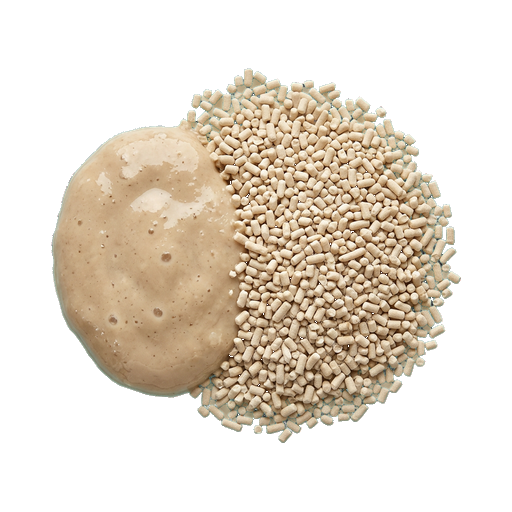
Instant Yeast
Instant yeast is activated microorganisms that begin working immediately after being added to dough without any prior activation. They contain nutrients and leavening agents that accelerate fermentation, reducing dough rising time by 20–30 percent compared to regular yeast. Used for bread, rolls, pizza, and pastries when quick results are needed, but they require precise adherence to proportions, as overdosing can lead to excessive porosity or uneven rising.
About
Fast-acting yeast is a microorganism that works noticeably more actively than regular yeast. It contains more live cells per gram and is often enriched with nutrients, which speeds up the fermentation process. If you're in a hurry or want to reduce dough rising time, this option solves the problem without compromising the quality of the finished bread or buns.
How they work and when to use them
Fast-acting yeast begins to actively multiply at 25–27 degrees and does not require pre-activation. You simply mix it with dry ingredients, add liquid — and the process begins. The first rise of the dough takes approximately half the time compared to regular yeast. This is especially convenient when you need to bake fresh bread in a couple of hours or when the kitchen is cool.
Use instant yeast for wheat and rye bread, enriched doughs, buns, pizza, and focaccia. They work well in bread makers where you need to stick to a strict time schedule. For long cold fermentation or complex multigrain loaves, they are less suitable — those require slower fermentation to develop flavor.
Dosage and application details
Fast-acting yeast is typically used in an amount of 7–10 grams per 500 grams of flour. This is approximately 20–30 percent less than regular yeast, because it is more concentrated. If you add too much, the dough will rise too quickly and may over-ferment, which will damage the structure and flavor.
The temperature of water or milk for mixing should be comfortable — around 26–28 degrees. Too hot liquid will kill some cells, too cold will slow down the process. The first rise at room temperature takes 30–50 minutes instead of the usual 60–90. Don't rush — focus on the volume of the dough, not the clock. It should increase approximately one and a half to two times.
What you will get
Bread made with fast-acting yeast turns out fluffy and soft if you follow the proportions and temperature regime correctly. The porosity may be slightly more uniform than with long fermentation, but this is not a drawback — for everyday bread it's actually more convenient. The taste will be fresh and neutral, without the complex notes that long fermentation provides.
Selection and Storage
- Check the production date and expiration date — live yeast loses activity over time.
- The packaging must be hermetically sealed and undamaged. Moisture and air kill microorganisms.
- Store in a cool place — ideally in the refrigerator at 4–8 degrees or in the freezer. At room temperature, activity decreases quickly.
- After opening, transfer the remainder to an airtight container. An open package loses its properties within a few days.
Fast-acting yeast is a practical choice for those who want to save time without compromising on quality. They work reliably if you maintain the correct temperature and dosage. Ideal for weekdays when you need fresh bread quickly, but still want it to taste good.
Nutrition
per 100 g
- Calories
- 335 kcal
- Protein
- 46.7 g
- Fat
- 7 g
- Carbs
- 38 g
Measures and weight
- 1 tbsp
- 7.5 g
- 1 tsp
- 2.5 g
- 1 cup
- 125 g
Measure calculator
- Weight
- 100 g
- Calories
- 335 kcal