Usuba
Usuba
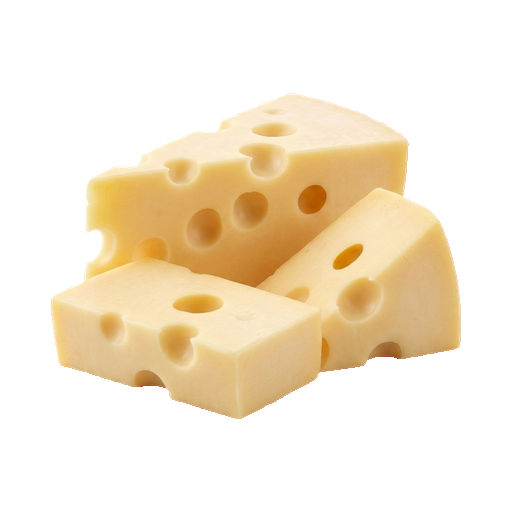
Emmental cheese
A dense Swiss cheese with a sweet nutty flavor and characteristic large holes. Thanks to its soft texture, it melts well, making it ideal for fondue, hot sandwiches, and baked dishes. When choosing, pay attention to the size and even distribution of the 'eyes' — this is a sign of proper aging, and cheese with mold or dark spots should be avoided.
About
Aroma and Flavor
Emmental is recognized by its sweetish, slightly nutty flavor with a delicate acidity. It is a hard cheese with a smooth texture, although it is pierced by characteristic round holes inside. The aroma is mild, milky, without sharpness — which is why it is so versatile in the kitchen. The longer the cheese is aged, the more pronounced its flavor becomes and the more brittle its texture.
Role in dishes
Emmental is the workhorse of cooking. It melts beautifully without becoming oily, making it ideal for casseroles, lasagna, and cream soups. On a sandwich, it holds its shape and doesn't get lost in flavor next to ham or bacon. Thin slices are great in salads, where they add creaminess without being overwhelming.
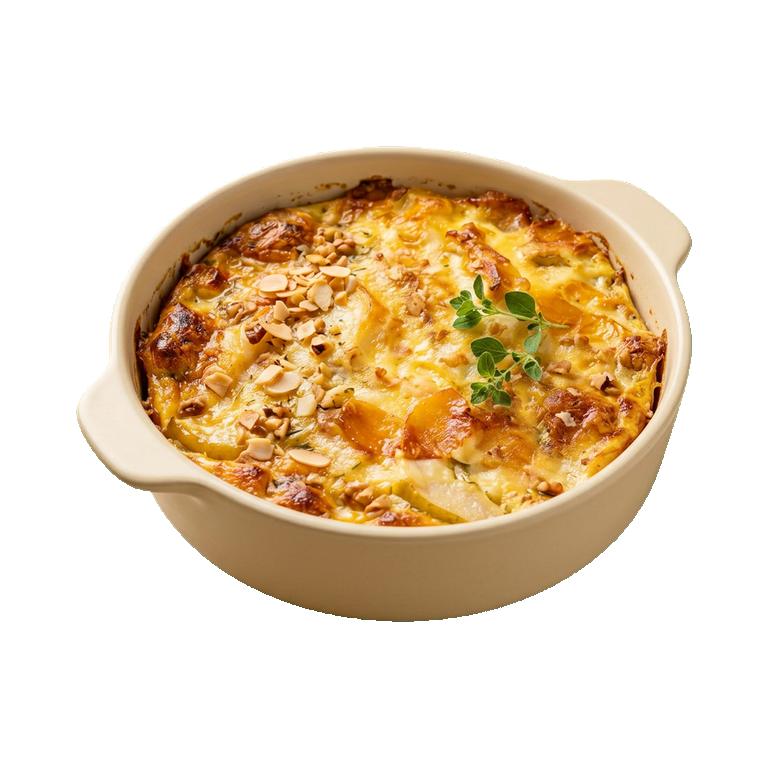
In hot dishes, cheese behaves predictably: it melts evenly, doesn't curdle, and forms a golden crust. It's used in fondue, omelets, and potato gratins. Even in bread or buns it works well — adding depth without overpowering other ingredients.
Combinations and pairings
Emmental pairs well with white wines and light beer. On the table, it goes nicely with pear, apple, and a thin slice of ham. In hot dishes, it works well alongside potatoes, onions, mushrooms, and tomatoes. It can be combined with other cheeses — it doesn't overpower but rather complements them.
Selection and Storage
When choosing, pay attention to the color — it should be light yellow, without dark spots. The holes should be neat and approximately the same size. Smell the cheese: the aroma should be pleasant, milky, without mold or ammonia. If you are buying sliced cheese, make sure the cut is fresh and not dried out.
Store Emmental in the refrigerator, wrapped in parchment paper or foil — plastic wrap traps moisture and damages the texture. A whole piece keeps for two to three weeks, sliced cheese for one week. Before using, let the cheese warm at room temperature for half an hour to bring out its flavor.
Practical Tips
- For fondue, use young Emmental — it melts more softly and evenly
- If you're making a casserole, grate the cheese on a coarse grater — this way it will distribute more evenly and melt faster
- For sandwiches, slice thinly — the cheese will adhere better to the bread and won't look bulky
- Don't add Emmental to the dish at the very end of cooking if you want it to dissolve; give it a couple of minutes on the heat
Nutrition
per 100 g
- Calories
- 420 kcal
- Protein
- 28.5 g
- Fat
- 33 g
- Carbs
- 3.4 g
Measures and weight
- 1 slice
- 25 g
Measure calculator
- Weight
- 100 g
- Calories
- 420 kcal