Usuba
Usuba
Ghee
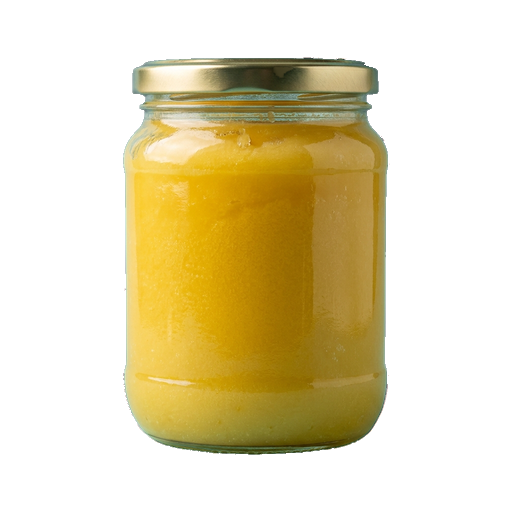
Clarified butter with a pronounced buttery flavor and nutty aroma, obtained through prolonged heating of butter with the removal of milk proteins and moisture. Thanks to its high smoke point, ghee is ideal for frying and sautéing over high heat, and also gives dishes a characteristic golden tint and depth of flavor. When substituting ghee for regular butter, keep in mind that it is more concentrated in taste, so less is needed, and it stores well at room temperature due to the absence of milk components.
About
What is ghee and why it deserves a place in your kitchen
Ghee is clarified butter obtained by slowly heating butter and removing milk solids. The result is pure milk fat with a golden color and nutty aroma. It's not just cooking oil, but a full-fledged ingredient that changes the flavor of a dish and allows cooking at higher temperatures than regular butter.
The main advantage of ghee is that it stores much longer than butter — at room temperature for months, in the refrigerator for over a year. Milk proteins, which spoil quickly, have been removed, so the butter does not require strict temperature control and will not become rancid.
Aroma and Taste
Ghee smells like butter, but more intensely with pronounced nutty notes. The taste is rich, buttery, with a slight caramel undertone. When you add ghee to a finished dish, it gives it a richness and depth that vegetable oil cannot provide. When heated, the aroma becomes even more vibrant.
Where and how to use
Ghee is suitable for frying, stewing, baking, and even grilling. Its smoke point is higher than butter, so it won't burn with intense heat. Use it for sautéing meat, vegetables, cooking rice or potatoes.
- Indian dishes: curry, pilaf, paneer and flatbreads are cooked in ghee
- Vegetables: sautéing root vegetables, mushrooms, broccoli
- Cereals and side dishes: rice, buckwheat, bulgur acquire special softness and aroma
- Meat and fish: creates a golden crust and retains juiciness
- Baking and sweets: added to dough or used for greasing baking pans
Ghee can also be added to finished dishes at the end of cooking — this way it retains maximum aroma. A spoonful of ghee placed on hot soup or vegetable stew will transform their taste.
How to Choose and Store
When purchasing, pay attention to the color — quality ghee should be transparent, golden, or light yellow. If the oil is cloudy or has a white sediment, this may indicate a violation of the preparation process. Smell it — the aroma should be pleasant, buttery, without any rancidity.
Store ghee in a glass jar with a tight-fitting lid at room temperature in a dark place or in the refrigerator. When cooled, it may thicken or even become solid — this is normal. Before use, simply let it warm up a bit or use a spoon to separate the desired amount.
Ghee is an investment in the quality of your cooking. Once you try cooking with it, you'll understand why it's valued in kitchens around the world. Start with a small jar and experiment: fry vegetables, cook porridges, add it to soups. Your taste buds will thank you.
Nutrition
per 100 g
- Calories
- 899 kcal
- Protein
- 0.3 g
- Fat
- 99.5 g
- Carbs
- 0 g
Measures and weight
- 1 tbsp
- 14 g
- 1 tsp
- 4.7 g
- 1 cup
- 232.5 g
Measure calculator
- Weight
- 100 g
- Calories
- 899 kcal