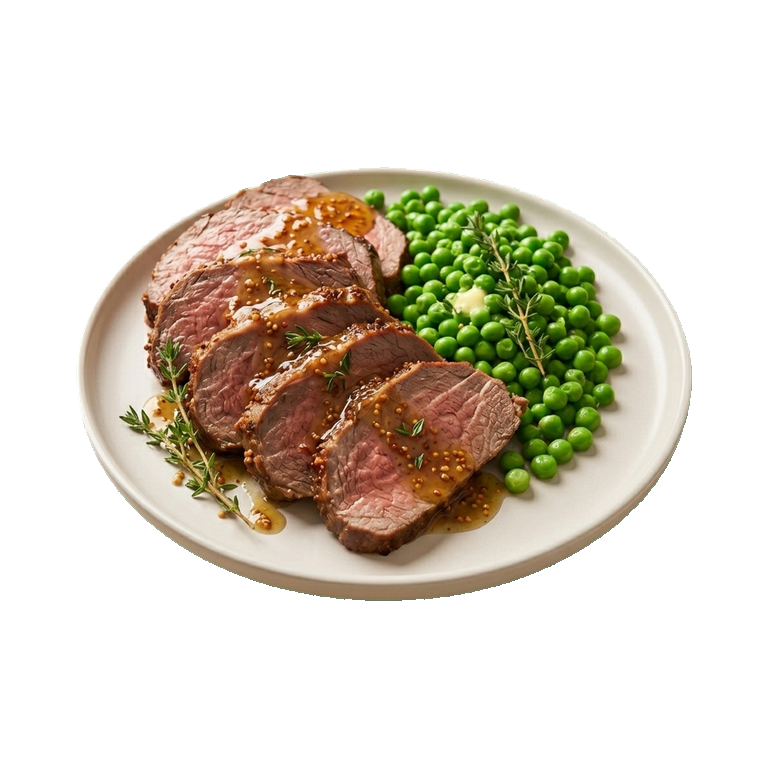
Usuba
Usuba
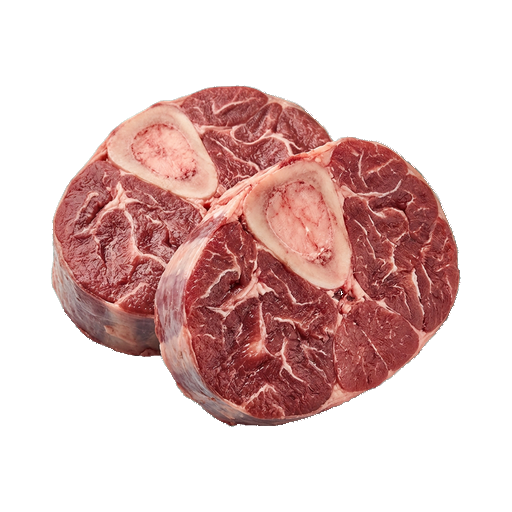
Beef Knuckle
Beef shank is a cross-cut section of a cow's leg that includes bone, meat, and connective tissue. During prolonged stewing or boiling, the meat becomes tender, and collagen released from the bones and cartilage transforms into gelatin, giving the broth richness and body. Shank is ideal for soups, stews, and meat jellies, requires a minimum of 2–3 hours of slow cooking, and pairs well with root vegetables, tomato, and spices.
About
Beef shank is the front or hind leg of a cow, cut across the bone. The piece looks like a thick disc with bone in the center, surrounded by layers of meat, fat, and connective tissue. It is this structure that makes shank ideal for long braising: bone marrow and collagen turn into gelatin, and the meat becomes tender and literally falls off the bone.
Taste and Texture
Knuckle provides a rich, deep meaty flavor with a noticeable sweetness from the bone marrow. After hours of braising, the meat becomes tender, almost melting in your mouth, and the broth gains thickness and roundness. This is not a delicacy, but a true workhorse ingredient that delivers results rather than elegance.
Where and how to cook it
Knuckle requires time and patience — it's not for quick dinners. It is braised in red wine, beer, or rich broth for at least three to four hours until the meat begins to fall apart. German, Swiss, and Italian cuisines build entire dishes around it: ossobuco, eintopf, braised meat with vegetables.
- Ossobuco — a classic Italian braised dish with white wine, tomatoes and fragrant gremolata
- German eintopf — a one-pot dish with potatoes, carrots and spices
- Meat soup or broth — shanks simmer for hours, imparting all their strength to the liquid
- Braised in red wine with mushrooms and shallots
How to Choose and Store
Look for pieces that are 4–5 centimeters thick with a good layer of fat and light-red meat. The bone should be moist, without dark spots. The smell should be fresh, meaty, without any sourness. If you're buying in advance, freeze the knuckle in a vacuum — it will keep perfectly well for two to three months.
Before cooking, remove the pork knuckle from the refrigerator an hour before preparation — this will ensure it cooks evenly. Pat dry with paper towels, season with salt and pepper. If the recipe requires it, sear on all sides over high heat until golden brown — this will add depth to the flavor.
Pork knuckle is an ingredient that teaches patience. You can't rush it, you can't cook it in haste. But the result is worth it: meat that literally melts, and broth that you'll want to drink with a spoon.
What to combine it with
Pork knuckle loves acidity — red wine, tomatoes, vinegar. They cut through the richness and make the dish lighter. Root celery, carrots, onions, garlic, bay leaf, juniper, and black pepper work well with it. Fresh herbs — parsley, thyme — are added at the end so they don't lose their aroma.
- Red wine — the basis for classic braising
- Tomatoes and tomato paste — add acidity and depth
- Root vegetables — carrots, celery, parsnip create a sweet base
- Spices — juniper, coriander, clove emphasize meaty flavor
- Mushrooms — white or button mushrooms add umami and meatiness
Nutrition
per 100 g
- Calories
- 206 kcal
- Protein
- 26.3 g
- Fat
- 10.8 g
- Carbs
- 0 g
Measures and weight
- 1 pcs
- 800 g
Measure calculator
- Weight
- 100 g
- Calories
- 206 kcal