Usuba
Usuba
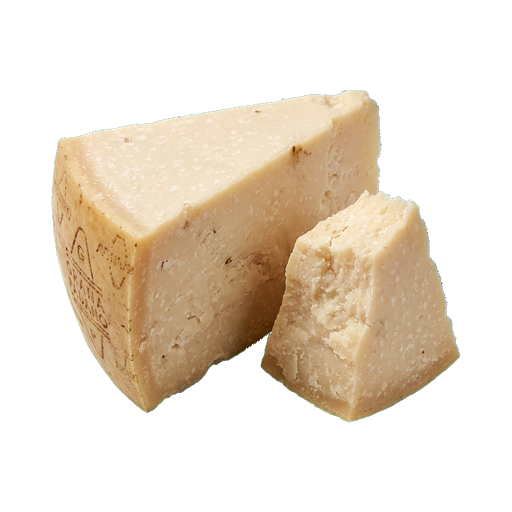
Grana Padano
A hard Italian cheese with a granular structure, aged for no less than 12 months and featuring a complex nutty flavor with a subtle saltiness. Used both for grating over pasta and soups and for slicing into thin shards to serve with appetizers. When selecting, pay attention to authenticity markings and light creamy color — quality Grana Padano crumbles well and has a pleasant rich aroma.
About
Aroma and flavor
Grana Padano is a hard cheese with a crystalline structure that gives it a characteristic crunch when bitten. The taste is complex and multi-layered: first you feel saltiness, then nutty notes unfold, and in the aftertaste sweetness appears with a hint of caramel. The longer the cheese is aged, the more concentrated and sharp its flavor becomes. Young cheese (12 months) is softer and more delicate, while mature cheese (24-36 months) is dense with pronounced piquancy.
Role in dishes
Versatility is Grana Padano's main advantage in the kitchen. Young cheese cuts well into thin slices for a cheese board or can be added to salads, where it won't overpower other ingredients. Mature cheese becomes a tool for accentuating flavor: its shavings are sprinkled over risotto, pasta, vegetable side dishes, and soups just before serving. The cheese is also grated for breading cutlets and added to forcemeats — it gives dishes depth and saltiness.
Product Pairings
- With pasta — a classic combination, cheese complements any sauces
- With vegetables — tomatoes, eggplants, zucchini, mushrooms acquire rich flavor
- With meat — beef steaks, chicken fillet, ham benefit from the cheese's piquancy
- With fruits — pears, apples, figs create a contrast between sweetness and salt
- With nuts — walnuts, almonds enhance the cheese's nutty profile
Selection and Storage
When purchasing, check the labeling: the inscription on the rind indicates the age of the cheese. For everyday use, 12-month aging is suitable; for special dishes, choose 24-36 months. The cheese should be firm, without cracks or dark spots. Store Grana Padano in the refrigerator, wrapped in parchment or plastic wrap — this way it won't dry out or absorb foreign odors. With proper storage, the cheese maintains its quality for up to three months.
Tip: if you are cooking a dish where cheese is the main component (for example, risotto), add it at the end and do not heat it for long. This will preserve its complex flavor and texture. For hot dishes, it is better to grate the cheese just before serving.
Nutrition
per 100 g
- Calories
- 398 kcal
- Protein
- 33 g
- Fat
- 29 g
- Carbs
- 0 g
Measures and weight
- 1 slice
- 20 g
Measure calculator
- Weight
- 100 g
- Calories
- 398 kcal