Usuba
Usuba
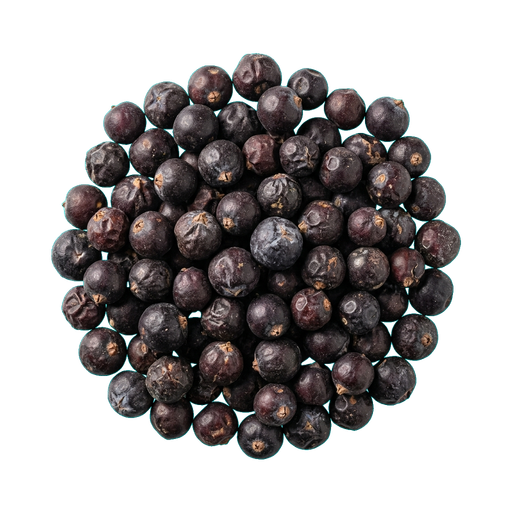
Juniper berries
Juniper berries are dried fruits with a sharp, slightly sweet taste and a pronounced coniferous aroma, used as a spice in cooking. They add a deep, slightly bitter note to dishes and are often used when marinating meat, fish, and vegetables, as well as in sauces and stews. When choosing, pay attention to the dark color of the berries and their integrity — quality berries should be dense, without mold and a musty smell.
About
Juniper berries are not just a spice, but one of the main aromatic anchors in cooking. They give dishes a coniferous bitterness, subtle sweetness, and spicy heat all at once. In the kitchen, they are used not for decoration, but to create depth of flavor: they transform the character of meat, fish, marinades, and even beverages.
Aroma and taste
When you crush a juniper berry between your fingers, you immediately feel a sharp coniferous aroma — that's the main highlight. To taste, they are bitter, slightly astringent, with a barely perceptible sweetness at the end. This bitterness is not aggressive, but noble: it doesn't overpower the dish, but emphasizes its natural flavor. Fresh berries smell more vibrant, dried ones — more concentrated.
Where to use them
- Marinades for meat and game — berries soften fibers and add spice
- Brines and fermented vegetables — give vegetables a light bitterness and coniferous aroma
- Meat stews and braises — especially with beef, venison, wild boar
- Fish dishes — work well with fatty fish, neutralizing heaviness
- Sausages and pâtés — classic component in meat products
- Beverages — base for infusions, liqueurs, beer, sometimes added to compotes
How to Work with Berries
Dried berries should be slightly crushed before use — this way they release their aroma faster and more fully. If you drop a whole berry into the marinade, it will work more slowly, but more evenly. For stews and braised dishes, add them at the beginning of cooking together with other spices. In beverages, they are often placed whole or slightly crushed. Usually one or two berries are enough per serving, but it all depends on the intensity you want to achieve.
Selection and Storage
Look for berries that are dark blue or black in color with a matte bloom — this is a sign of ripeness. They should be firm, without mold or off-odors. Dried berries are stored for a long time in an airtight container, away from light and moisture — up to two years without loss of quality. If the berries start to smell musty or lose their aroma, it's time to replace them.
What it pairs with
- Black pepper and bay leaf — a classic trio for marinades
- Thyme, rosemary, sage — coniferous spices enhance each other
- Garlic and onion — create a deep aromatic base
- Clove and cinnamon — if you need a more spicy, sweet note
- Coriander and cumin — for a more exotic direction
Juniper berries are a spice that does not tolerate haste. They should be added with an eye toward prolonged cooking: in marinades several hours before use, in stews at the beginning of braising. Then they will reveal all their depth, rather than simply impart a superficial coniferous flavor.
Nutrition
per 100 g
- Calories
- 150 kcal
- Protein
- 3.7 g
- Fat
- 2.2 g
- Carbs
- 27 g
Measures and weight
- 1 tbsp
- 7.5 g
- 1 tsp
- 2.5 g
- 1 cup
- 125 g
- 1 pcs
- 0.2 g
Measure calculator
- Weight
- 100 g
- Calories
- 150 kcal