Usuba
Usuba
Orange juice concentrate
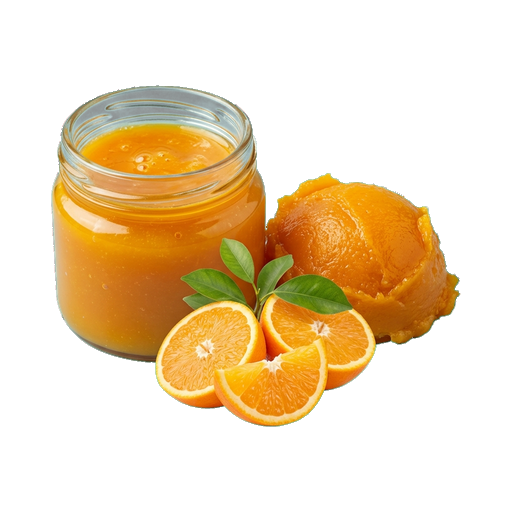
Concentrated orange juice is produced by removing most of the water from freshly squeezed juice, which preserves the bright citrus flavor and aroma in a compact form. It dissolves well in liquids and is used for preparing beverages, sauces, marinades, and baked goods, adding natural sweetness and acidity. When choosing, it is important to pay attention to the composition — quality concentrate contains only orange juice without additives, and before use it is typically diluted with water in the proportion indicated on the package.
About
Concentrated orange juice is the workhorse of the home kitchen. It saves refrigerator space, requires no urgent use, and is always ready to save the day when you need a bright orange tartness in a sauce, beverage, or baked good. It is not a substitute for freshly squeezed juice, but rather a standalone ingredient with its own logic of application.
Taste and Aroma
Concentrate is an orange squared: sweetness and acidity are heightened here, the bitterness of the peel stands out more distinctly. The aroma is intense, almost volatile, but lacks the freshness of fresh juice. When you dilute it with water, you get a drink with a slightly flat but recognizable taste. In a dish, concentrate works as an enhancer — a few spoonfuls add expressiveness without making the dish watery.
Where does he work
- In marinades for poultry and pork — concentrate quickly adds the required acidity and sweetness without requiring long reduction
- In sauces and glazes — a teaspoon instead of half a cup of juice, result is denser and more vibrant
- In baking and creams — adds orange flavor without excess moisture, works well in sponge cakes and mousses
- In beverages — diluted with water, ice, or sparkling water for a quick refreshing drink
- In jams and compotes — enhances citrus profile, helps preserve bright color
How to dose
The concentrate is very potent — start with a teaspoon per serving and add to taste. In marinades, usually 2–3 tablespoons per kilogram of meat is enough. For a beverage, the ratio is approximately 1 part concentrate to 3–4 parts water, but this depends on how sweet you like it. Remember: if you overdo it, the dish will become cloying and one-dimensional.
Selection and Storage
Look for concentrate without additives, where the ingredients contain only orange and possibly a preservative. Frozen concentrate keeps longer than liquid concentrate in a bottle — check the packaging date. Keep an opened package in the refrigerator in a tightly sealed container; frozen concentrate can be stored for months, liquid concentrate for several weeks. Before using, let it thaw at room temperature or add it directly to a hot dish.
Successful Pairings
- With soy sauce and ginger — Asian marinades for chicken and seafood
- With honey and mustard — glazes for roasted meat
- With vanilla and cinnamon — in creams and pastry creams
- With cloves and black pepper — in hot drinks and mulled wine
- With coconut milk — in curries and Asian soups
Concentrated orange juice is not a luxury, but a convenience. It gives you control over the flavor and consistency of your dish, saves time on reduction, and takes up minimal space. Keep it on hand, and it will become a reliable helper in marinades, sauces, and beverages.
Nutrition
per 100 g
- Calories
- 240 kcal
- Protein
- 4 g
- Fat
- 0.5 g
- Carbs
- 56 g
Measures and weight
- 1 tbsp
- 19.5 g
- 1 tsp
- 6.5 g
- 1 cup
- 325 g
Measure calculator
- Weight
- 100 g
- Calories
- 240 kcal