Usuba
Usuba
Cornmeal
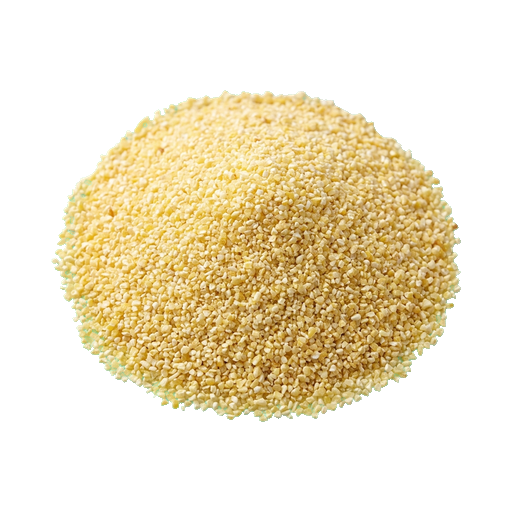
Cornmeal is a coarse-grained flour made from dried corn that absorbs liquid well and is used for preparing porridges, polenta, and traditional dishes. It has a slightly sweet taste and yellow color, making it versatile for side dishes and bases for various recipes. When selecting, pay attention to color and aroma — quality cornmeal should be uniform, free from mold and off-odors, and requires cool, dry storage to prevent it from becoming rancid.
About
Cornmeal is ground corn kernels that are easy to find in any store and cost next to nothing. But don't let the simplicity fool you: it's one of the most versatile and rewarding ingredients in the kitchen. The grains cook quickly, absorb the flavors of neighboring ingredients well, and work in both sweet and savory dishes.
Taste and Texture
Cornmeal has a soft, slightly sweet taste with a subtle nutty undertone. The size of the particles affects the result: fine cornmeal produces a delicate, almost creamy consistency, while coarse cornmeal creates a more crumbly and grainy texture. During cooking, cornmeal expands in volume by approximately three times and becomes soft, but with proper preparation, the grains remain slightly separate rather than turning into a mushy porridge.
Where to use
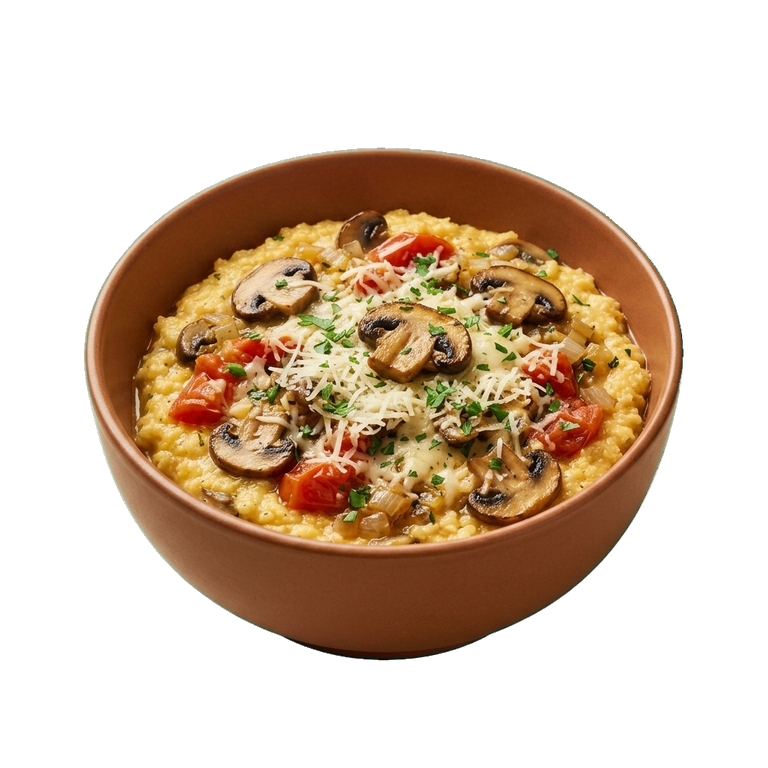
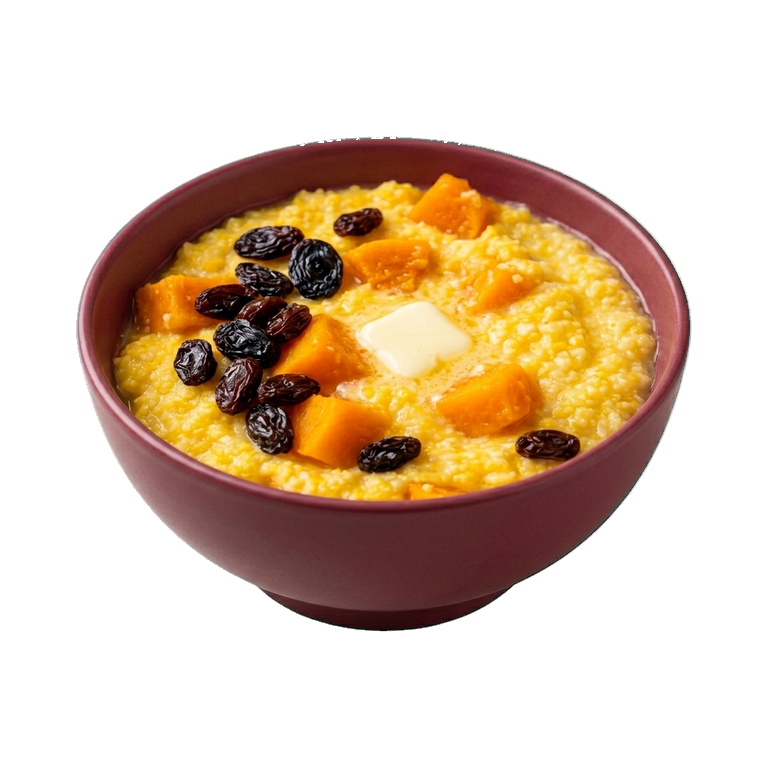
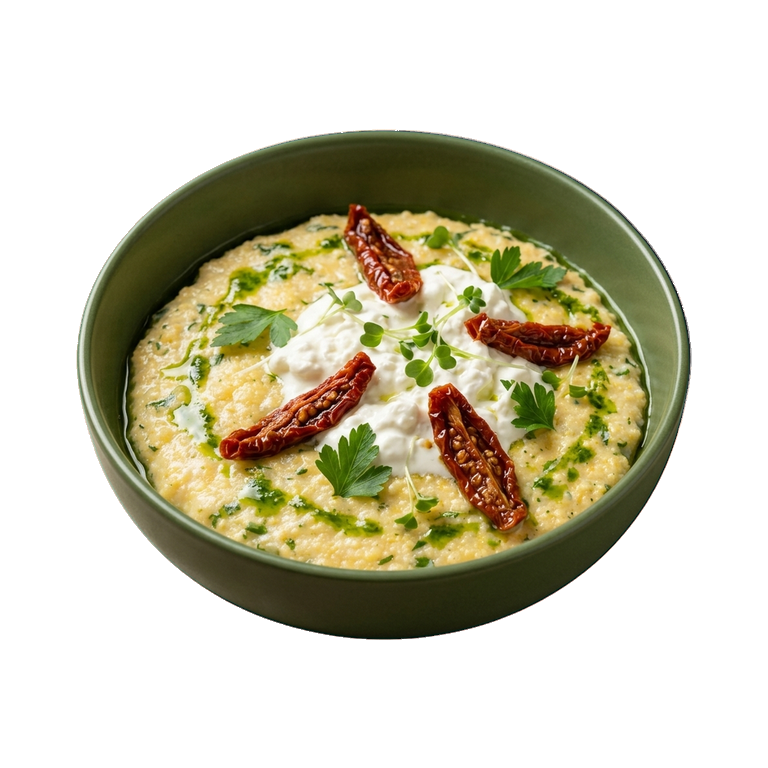
Cornmeal is the base for polenta, which is served as a side dish to stew or meat, or prepared as a standalone dish. It makes an excellent breakfast porridge when milk, butter, and a pinch of salt are added. The grain is added to bread dough for crunch and yellow color, used in breading instead of or together with breadcrumbs, and is used to make corn cakes and pancakes.
- Polenta — boiled porridge with butter and cheese, base for casseroles
- Side dish for meat and vegetable dishes instead of rice or buckwheat
- Breakfast porridge with milk, fruits and honey
- Breading for cutlets, fish and vegetables
- Component of bread dough and pancakes
Pairings and Seasonings
Cornmeal pairs well with butter — butter, olive oil, coconut oil. Cheese (especially Parmesan or Gorgonzola) makes it richer. Herbs — rosemary, thyme, basil — add aroma. With sweet additions — cinnamon, vanilla, cocoa — cornmeal becomes the base for desserts. Tomatoes, mushrooms, onions, and garlic — classic companions in savory versions.
Selection and Storage
Pay attention to the color: yellow cereal is the most common, white is less common and has a more delicate taste. Check the package date and make sure there are no lumps or foreign odors in the package. Store the cereal best in an airtight container or tightly sealed bag in a cool dry place — this way it will keep for several months. In humid conditions, cereal can become damp and spoil.
When cooking, use a ratio of one to three or one to four (grain to liquid) depending on your desired consistency. The liquid can be water, broth, milk, or a mixture of these. Cook over low heat for 15–25 minutes, stirring occasionally to prevent lumps. The cooked grain can be left fluffy or mashed into a puree — it all depends on the recipe and your preference.
Nutrition
per 100 g
- Calories
- 337 kcal
- Protein
- 8.3 g
- Fat
- 1.2 g
- Carbs
- 75 g
Measures and weight
- 1 tbsp
- 11.3 g
- 1 tsp
- 3.8 g
- 1 cup
- 187.5 g
Measure calculator
- Weight
- 100 g
- Calories
- 337 kcal