Usuba
Usuba
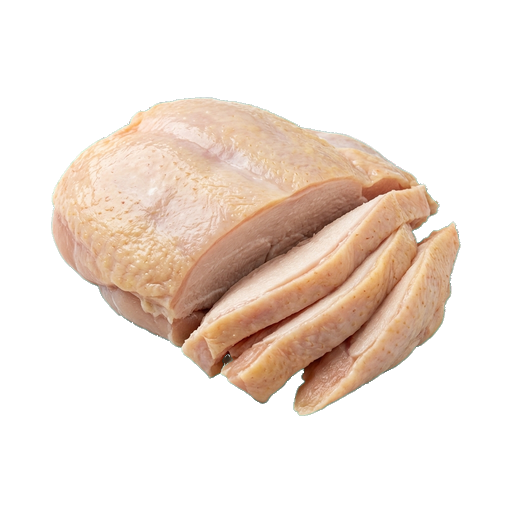
Chicken breast with skin
Chicken breast with skin — tender white meat protected by a layer of fat and skin that preserve juiciness during cooking and impart a richer flavor to the dish. The skin becomes crispy when pan-fried or roasted, while the breast itself remains soft and moist if not overcooked. A versatile ingredient for frying, roasting, making soups and stews, it requires less cooking time than dark meat, yet takes longer to cook than skinless fillets.
About
Chicken breast with skin is a versatile ingredient that works across different cuisines and cooking techniques. The skin here is more than just decoration: it stores fats that make the meat juicier, add depth to the dish's flavor, and help retain moisture during frying, baking, or boiling. If you're used to using only skinless fillets, it's worth trying this option — the difference in results is noticeable.
Aroma and Taste
Meat under the skin remains more tender and aromatic than fillet. The skin itself, when properly prepared, becomes crispy and golden — this is a separate source of pleasure. During cooking, fats from the skin infuse the meat, creating a more saturated flavor. Even if you boil the breast in broth, the skin enriches it, making it more full-bodied.
How to cook
Skin-on chicken breast is great in any format. On a skillet, fry it skin-side down so it browns and releases its fats — this will take 5–7 minutes. In an oven at 200 degrees, the breast cooks for 25–35 minutes, depending on size. You can boil it in broth or cook it on a grill. The main thing is not to dry it out: check doneness by internal temperature (65–70 degrees) or by ensuring the juices run clear.
- Dry the skin with a paper towel before cooking — this will help it brown better
- Salt and season 15–20 minutes before cooking so the spices are absorbed into the meat
- Don't flip frequently on the pan — give the skin time to become crispy
- If cooking in the oven, place the breast skin-side up so it doesn't stick to the bottom
What pairs well with
Chicken skin works well with acidic sauces — lemon, tomato, and white wine-based ones. It can be cooked with herbs (thyme, rosemary), garlic, and mustard. In Asian cuisine, it suits marinades with soy sauce, ginger, and honey. Root vegetables, potatoes, and greens make ideal side dishes — they will absorb the released juices.
Selection and Storage
Pay attention to the color: the skin should be light yellow or pale, and the meat underneath should be pink. Avoid breasts with dark spots or slime. Store fresh chicken breast in the refrigerator for no more than 2–3 days in the coldest part. If you don't plan to cook it sooner, freeze it — it will last 2–3 months in the freezer. Thaw in the refrigerator, not at room temperature.
Chicken breast with skin is not just an economical choice, it's an investment in a more flavorful dish. The skin protects the meat from drying out, enriches it, and gives you the opportunity to achieve a crispy crust. Try it next time instead of fillet — you'll feel the difference.
Nutrition
per 100 g
- Calories
- 161 kcal
- Protein
- 18.3 g
- Fat
- 9.3 g
- Carbs
- 0 g
Measure calculator
- Weight
- 100 g
- Calories
- 161 kcal