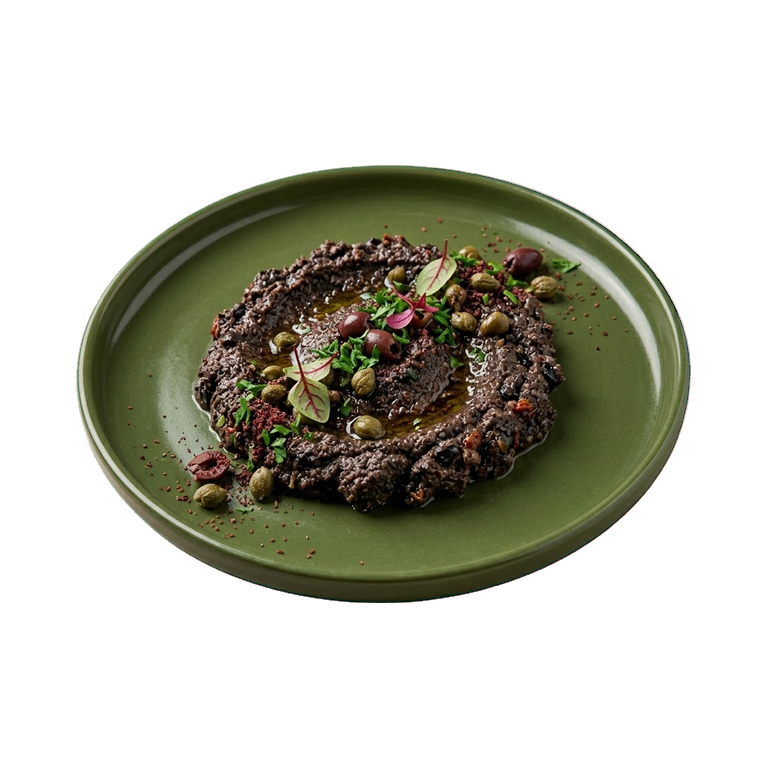
Usuba
Usuba
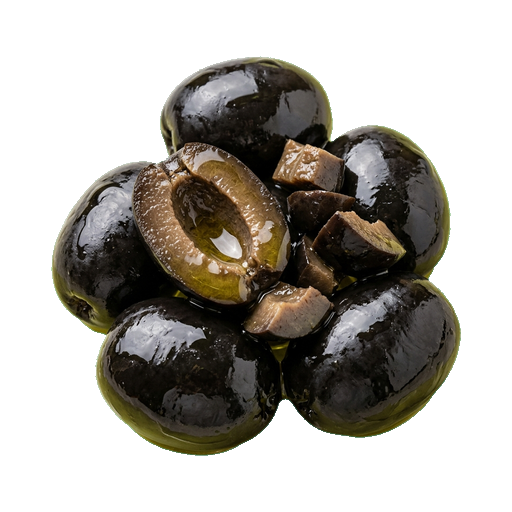
Olives in olive oil
Canned olives in their own oil are a ready-to-use ingredient for appetizers, salads, and hot dishes that requires no additional preparation. The fruits have a soft flesh with a characteristic salty taste and a subtle bitterness, while the surrounding oil absorbs their aroma. When using, it is important to take into account the saltiness of the product and, if necessary, rinse the olives before adding them to the dish to avoid over-salting the finished meal.
About
Olives in olive oil are a ready-made product that saves time in the kitchen and gives you two ingredients in one jar. Ripe fruits preserved in their own oil become a universal helper: you add them to salads, spread them on bread, serve them with cheese, or use them as a base for sauce. The oil they float in absorbs all the aromas and becomes liquid gold for dressings.
Aroma and Taste
Ripe olives have a soft, slightly nutty flavor with a barely noticeable bitterness. They are not aggressive — quite the opposite, delicate and rounded. The oil in which they are preserved enhances this softness, adding oiliness and smoothness. If there are herbs or spices in the jar, they permeate both the fruits and the oil, creating a unified aromatic bouquet.
Role in dishes
- In salads, olives add saltiness, texture, and visual contrast. The oil from the jar becomes the base for the dressing.
- As an appetizer, they're perfect straight from the jar — with bread, cheese, and tomatoes. A simple but satisfying combination.
- In pasta or risotto, olives work as an accent: a few pieces added at the end of cooking bring depth and saltiness.
- In sauces and tapenades, olives become the base, adding richness and character.
- On pizza or in focaccia — a classic choice that never disappoints.
Pairings
Olives pair well with tomatoes, lemon, garlic, and fresh herbs. They don't conflict with fish, seafood, and meat. Capers, anchovies, feta cheese — these are natural companions in appetizers. The oil from the jar can be used to enrich soups, as a finishing oil for vegetable dishes, or as a base for marinade.
Selection and Storage
- Choose jars where olives are completely submerged in oil — this guarantees their preservation and flavor.
- Pay attention to the ingredients: minimum ingredients means maximum flavor. Olives, oil, salt — that's all.
- If you love herbs, choose jars with rosemary, garlic, or pepper — they enrich the oil.
- After opening, keep the jar in the refrigerator. Olives in oil keep for a long time — oil serves as a preservative.
- Don't pour out the oil after the olives — use it for dressings, marinades, or enriching dishes.
Olives in olive oil are not just a preservative, but an ingredient that works on two fronts. The fruit provides flavor and texture, while the oil provides fat and aroma. Keep a jar in your pantry, and you'll always have a ready-made solution for a quick snack, salad, or sauce.
Nutrition
per 100 g
- Calories
- 150 kcal
- Protein
- 1 g
- Fat
- 15 g
- Carbs
- 4 g
Measures and weight
- 1 tbsp
- 14.3 g
- 1 tsp
- 4.8 g
- 1 cup
- 237.5 g
- 1 can
- 300 g
Measure calculator
- Weight
- 100 g
- Calories
- 150 kcal