Usuba
Usuba
Quinoa flour
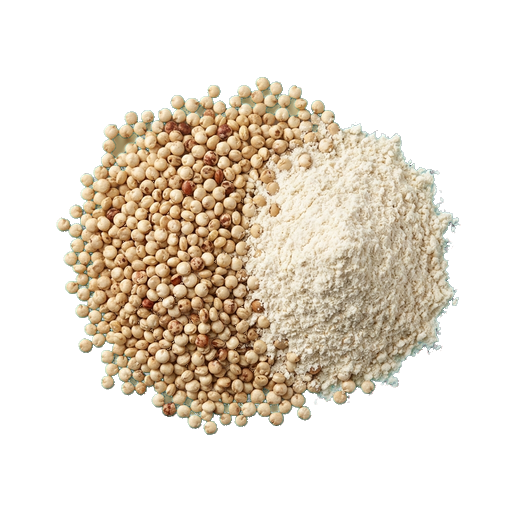
Quinoa flour is made from ground quinoa seeds and is distinguished by a delicate nutty flavor with a slight bitterness. It is gluten-free, making it suitable for people with gluten intolerance, but has a dense consistency and requires the addition of binding ingredients when baking. Quinoa flour is used in pancakes, muffins, cookies, and as an addition to regular flour to enrich dishes with protein and micronutrients.
About
Quinoa flour is a fine, delicate powder of beige or cream color, obtained by grinding quinoa grains. It is naturally gluten-free, making it ideal for people with gluten intolerance. Its flavor is subtle, slightly nutty, with earthy notes that add depth to baked goods and appetizers.
Taste and aroma
Unlike wheat flour, quinoa flour is not bland. It brings a subtle bitterness and nutty undertone to the dough, which are especially noticeable in cookies, bread, and pancakes. The aroma is delicate, not sharp — it tends to complement rather than dominate. This quality makes it versatile: it works in both sweet and savory recipes.
Role in dishes and pairings
Quinoa flour is rarely used on its own — it's dense and can produce a dry result. It works best when mixed with other flours: add 20–30% quinoa flour to wheat or rice flour, and you'll get a more interesting texture and nutritional value. It's great for cookies, muffins, pancakes, and even pie dough.
- Pairs well with honey, brown sugar, and cinnamon in sweet baked goods
- Great with herbs, garlic, and olive oil in savory pastries
- Complements nut and seed fillings
- Works as a coating for fish and vegetables instead of regular flour
Selection and Storage
When purchasing, pay attention to the color — it should be uniform, without dark specks or lumps. Check the production date: quinoa flour oxidizes faster than regular flour due to its oil content. The smell should be clean, without mustiness.
Store flour in an airtight container in a cool, dry place or in the refrigerator — this will keep it fresh longer. At room temperature it keeps for 2–3 months, in the refrigerator — up to six months. If you notice a rancid smell, it's better not to use such flour.
Practical Tips
- Start small: add 15–20% quinoa flour to your usual recipe to understand how it affects the result
- Increase the amount of liquid in the dough by 5–10% — quinoa flour absorbs more moisture
- In bread and pies, it helps the structure if mixed with gluten-containing flour
- For vegan baking, quinoa flour is an excellent helper: it makes products more moist and nutritious
Nutrition
per 100 g
- Calories
- 370 kcal
- Protein
- 14 g
- Fat
- 6 g
- Carbs
- 69 g
Measures and weight
- 1 tbsp
- 9 g
- 1 tsp
- 3 g
- 1 cup
- 150 g
Measure calculator
- Weight
- 100 g
- Calories
- 370 kcal