Usuba
Usuba
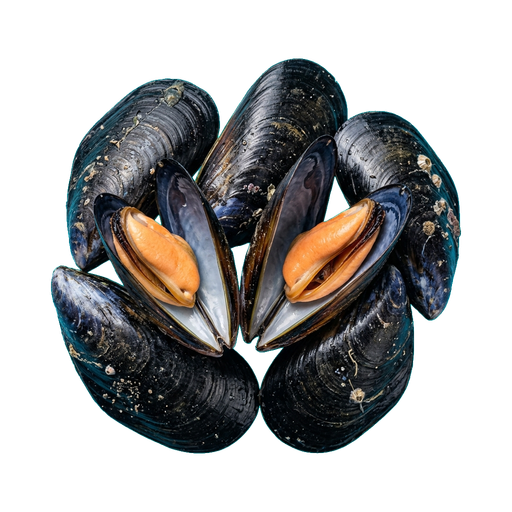
Mussels in shells
Mussels in shells are marine bivalve mollusks with tender meat of a slightly sweet flavor and a delicate iodine aroma. They cook quickly, usually in 3–5 minutes, and require preliminary cleaning of seaweed and the beard. When selecting, prefer tightly closed or slightly open shells that close when touched, and discard any mussels that do not open during cooking.
About
Fresh seafood flavor that's easy to cook
Mussels in shells are a seafood that commands respect from professionals and brings joy to home cooks. Black shells conceal tender meat with a bright briny ocean flavor. Their main advantage: they cook in just minutes and require no complex preparation. If you've never cooked seafood at home before, mussels are the perfect entry point.
What to pay attention to when choosing
Live mussels should be tightly closed or snap shut with a light tap. A shell without cracks, free from mud or ammonia odor — the first sign of freshness. The weight should feel substantial: if a mussel is light, it's likely empty inside. Buy mussels from trusted sources where there is a fast product turnover.
At home, mussels are stored in the refrigerator at a temperature just above freezing, wrapped in a damp towel, but not in an airtight container — they need air circulation. Cook them on the day of purchase or at most the next day. Frozen mussels are more convenient for spontaneous cooking: they keep longer, but the taste will be less vibrant.
How to cook and what to pair with
The simplest way is white wine, garlic, and butter. Mussels open in 3–5 minutes, releasing all their oceanic character into the sauce. Closed shells after cooking should be discarded — this is a sign that the mussel was dead before cooking. The meat is removed with a fork or eaten directly from the shell, washed down with the aromatic sauce.
- With dry white wine and fresh parsley — a classic that never goes out of style
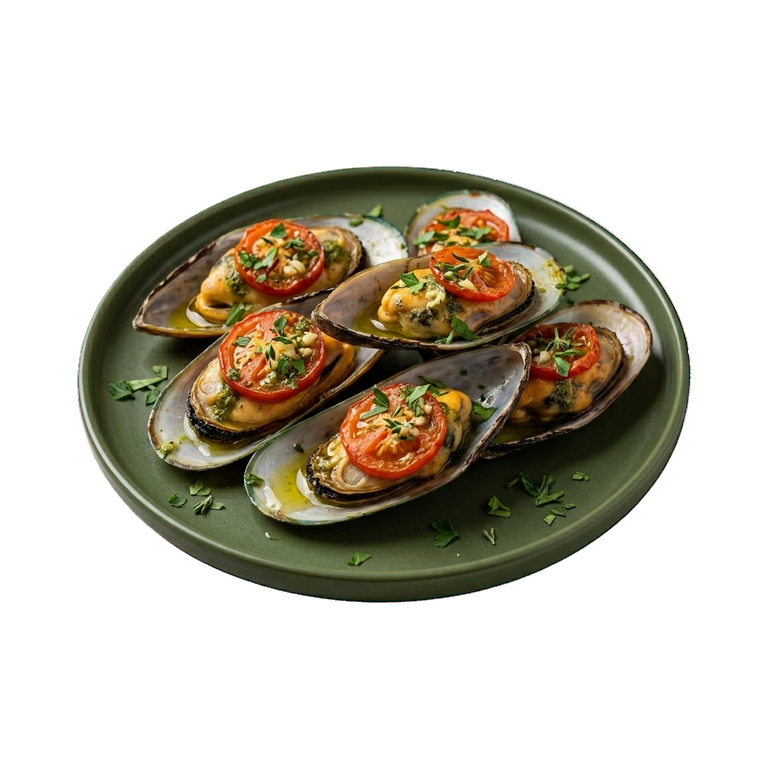
- In tomato sauce with fresh tomatoes and basil — Mediterranean style
- With hot pepper, lemon and olive oil — for those who love contrast
- In creamy saffron sauce — festive option
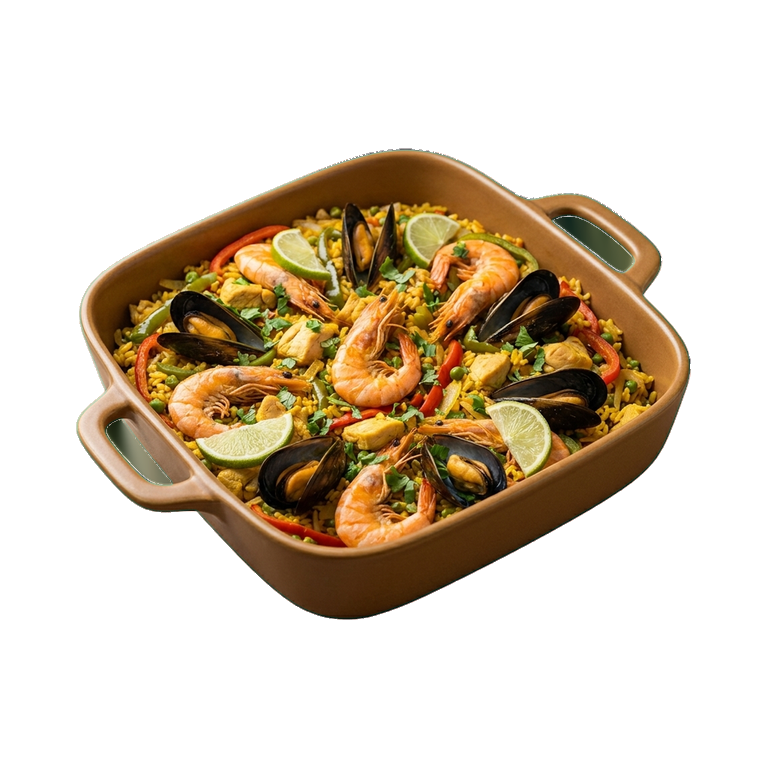
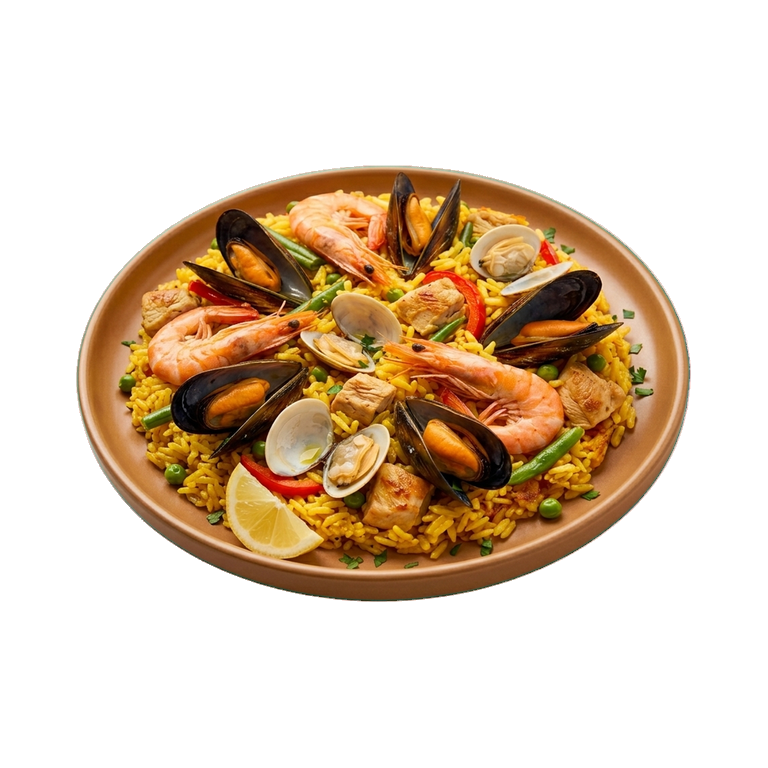
- In pasta, risotto or paella — mussels give all their flavor to the grains and pasta
Practical Tips
Before cooking, rinse the mussels under cold running water, brushing off algae and dirt with a brush. If you see a "beard" (byssus) — thin threads that the mussel uses to attach to a surface — simply pull it down and remove it.
Do not overcook. Overcooked mussels become rubbery and lose their sweetness. As soon as most of the shells have opened, turn off the heat. If you're in a hurry, you can cook the mussels separately and add them to the dish at the end — this way they will remain more tender.
The sauce in which the mussels were cooked is liquid gold. It absorbs all the sea flavor and becomes the perfect base for bread or a sauce base for a side dish. Don't pour it out.
Nutrition
per 100 g
- Calories
- 77 kcal
- Protein
- 11.5 g
- Fat
- 2 g
- Carbs
- 3.3 g
Measures and weight
- 1 pcs
- 25 g
Measure calculator
- Weight
- 100 g
- Calories
- 77 kcal