Usuba
Usuba
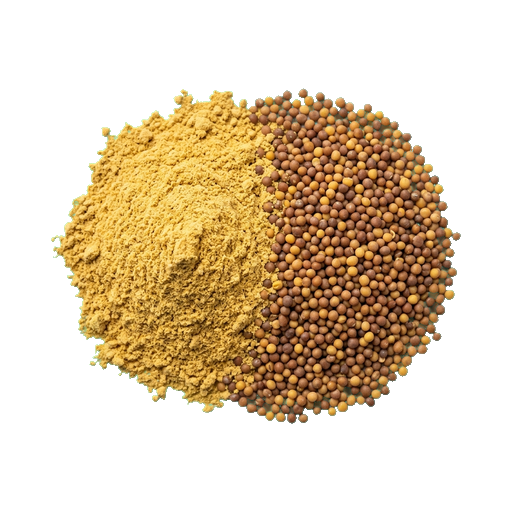
Mustard powder
Mustard powder is ground mustard seeds with a sharp, piquant flavor and a characteristic pungent aftertaste. It is used as a standalone seasoning or as a base for mustard pastes, and is added to marinades, sauces, and dressings to enhance flavor. When choosing mustard powder, pay attention to its freshness — over time the sharpness diminishes, so it's better to buy in small quantities and store in an airtight container away from light and moisture.
About
Mustard powder is ground mustard seeds that transform an ordinary dish into something vibrant and piquant. Unlike prepared mustard, powder gives you complete control over the intensity of flavor and allows you to experiment with dosage. It's a versatile helper that works in marinades, sauces, and even baking.
Spiciness and Aroma
Mustard powder has a characteristic pungency that doesn't appear immediately but unfolds gradually. This is not the sharpness of pepper — here a more subtle, slightly bitter mechanism is at work that irritates the nasal passages and creates a sensation of "inner heat". The aroma is bright, somewhat sharp, with earthy notes.
The intensity depends on the seed variety and storage conditions. Fresh powder is more potent, and over time the heat gradually diminishes. If you add it to a cold dish, the pungency is more pronounced; in a hot dish it becomes milder and more harmonious.
Where to use
- Marinades for meat and fish — powder helps soften fibers and adds depth of flavor
- Sauces and dressings — mixes with mayonnaise, sour cream or vegetable oil
- Salad dressings — adds piquancy without excess liquid
- Sausages and pâtés — traditional ingredient that adds spiciness and preserving properties
- Baking and bread — a pinch enhances saltiness and adds piquancy
- Vegetable preserves — works as a natural preservative
Successful Pairings
Mustard powder works well with black pepper, turmeric, and paprika — they enhance each other and create a multi-layered flavor profile. With herbs (dill, tarragon, thyme), the powder becomes more refined and less aggressive. Acidity — lemon juice, vinegar, wine — softens its sharpness and makes the taste more harmonious.
Selection and Storage
Choose mustard powder that is bright yellow or brownish in color (depending on the seed variety) without lumps and foreign odors. The packaging should be airtight — moisture is the enemy of mustard powder. Check the packaging date: fresh powder works more effectively.
- Store in an airtight container in a cool, dark place
- Avoid moisture — even a small amount of water causes clumping
- Shelf life is about a year, but the pungency gradually decreases
- If the powder has caked, sift it through a strainer or grind it in a mortar
Dosage
Start with a quarter teaspoon per serving and add more to taste. Remember: mustard powder works subtly — its sharpness doesn't appear immediately. If you're preparing a marinade, let it sit for 15–20 minutes to assess the true intensity of flavor. For a milder result, dissolve the powder in liquid (vinegar, wine, broth) before adding it to the dish.
Nutrition
per 100 g
- Calories
- 370 kcal
- Protein
- 24 g
- Fat
- 11 g
- Carbs
- 33 g
Measures and weight
- 1 tbsp
- 9 g
- 1 tsp
- 3 g
- 1 cup
- 150 g
Measure calculator
- Weight
- 100 g
- Calories
- 370 kcal