Usuba
Usuba
Octopus
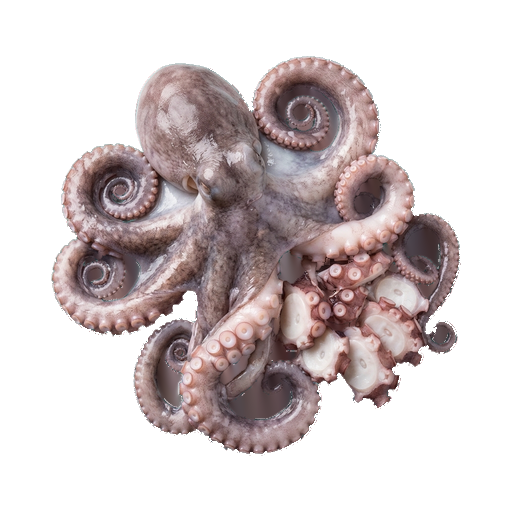
Octopus is a sea mollusk with tender, slightly sweet meat that requires proper preparation before cooking. Its meat is high in protein but can be tough, so octopus should either be stewed for a long time or quickly seared over high heat to avoid a rubbery texture. When selecting fresh octopus, pay attention to the firmness of the tentacles and a pleasant sea smell without ammonia notes.
About
Octopus is one of the most interesting seafood ingredients for cooking. Its meat is tender, slightly sweet, with a characteristic sea note. The texture is dense, but with proper preparation becomes soft and pleasant. It is not just a delicacy, but a versatile product that works both in simple appetizers and in complex restaurant dishes.
Taste and Aroma
Octopus has a pronounced seafood flavor — not sharp and not "fishy", but rather mineral and clean. The meat contains natural sweet notes that are especially pronounced with minimal processing. The smell of fresh octopus is the smell of the sea: salty, slightly iodine-like, but not unpleasant at all. If you detect an ammonia or musty smell, it's a sign of staleness.
The intensity of taste depends on the size: young specimens are more tender and delicate, while large octopuses have a more pronounced, almost meaty flavor. During prolonged cooking, the meat becomes softer but loses the brightness of aroma. Therefore, many chefs prefer quick cooking over high heat or marinating before preparation.
Role in dishes and cooking methods
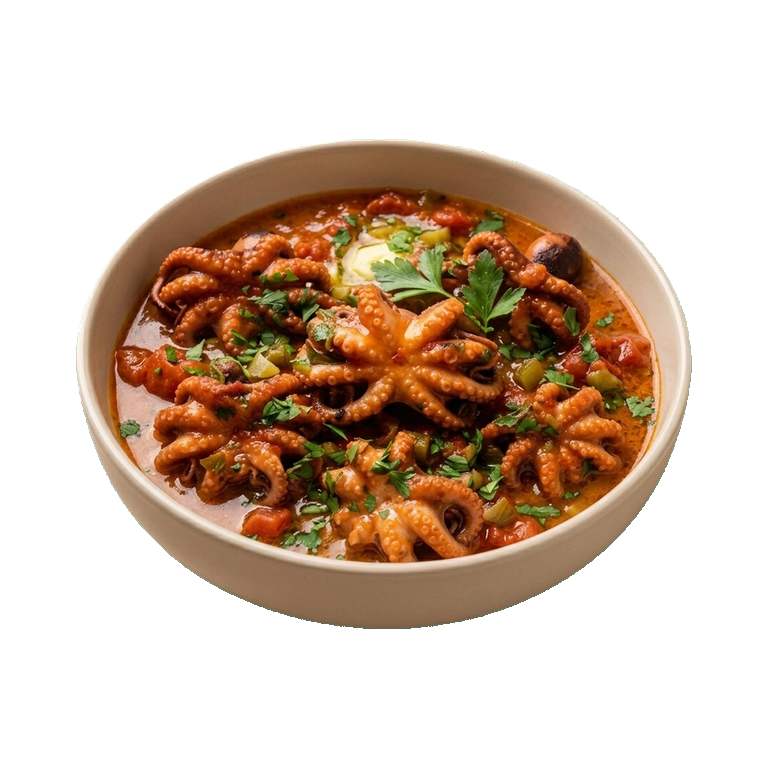
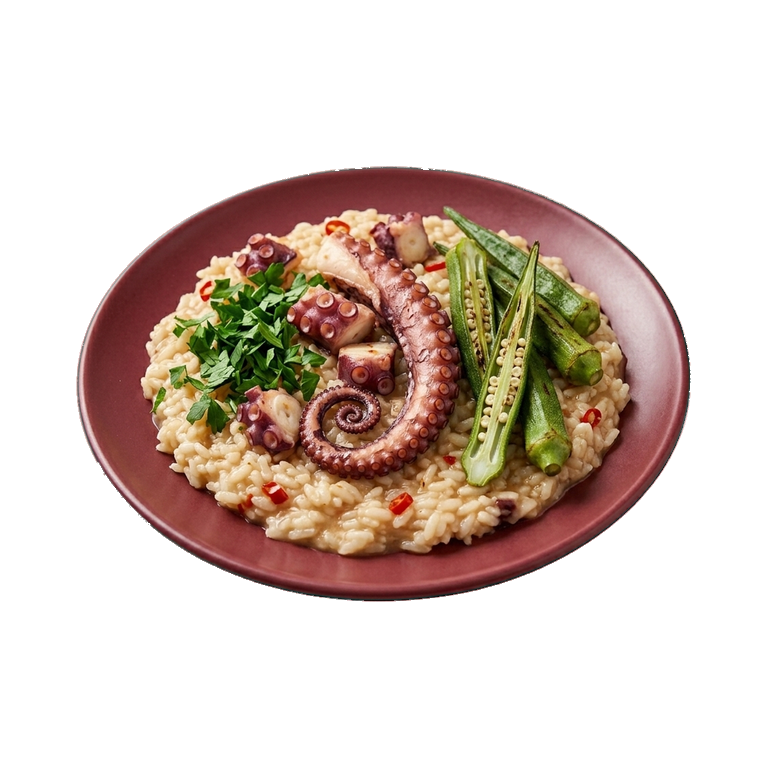
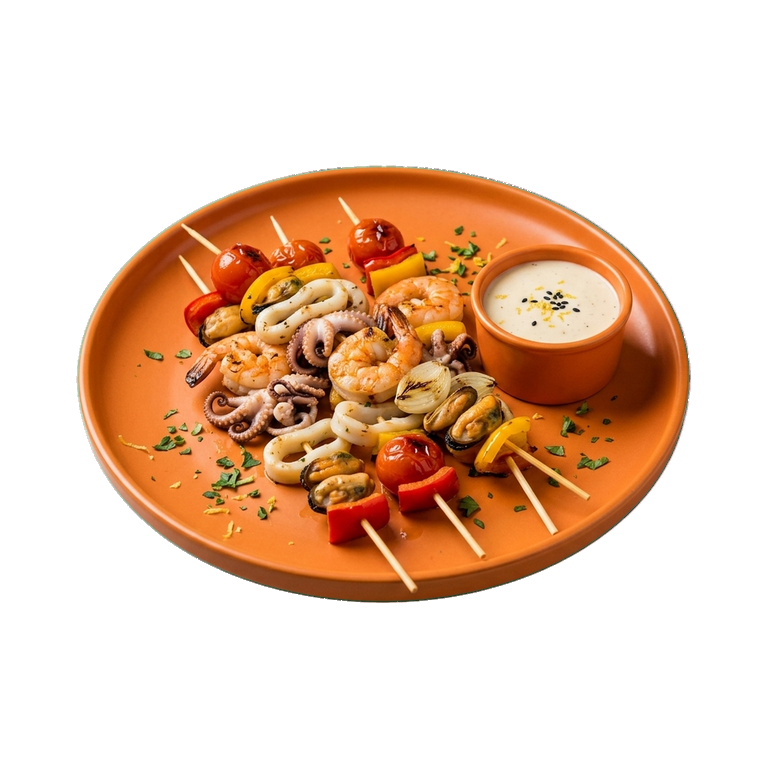
Octopus is versatile: it can be boiled, grilled, stewed, steamed, or marinated raw. Boiled octopus becomes the foundation for cold appetizers with lemon and olive oil. Charred on the grill—it's a standalone dish requiring only salt and pepper. Stewed in red wine or tomato sauce, it transforms into a complete hot dish. Raw marinated octopus (ceviche) reveals the freshness and delicacy of the meat.
- Boiling: 45–60 minutes until tender, then cool before slicing
- Grilling: pre-boil, then quickly sear on a hot grate
- Stewing: in dry white wine, tomatoes or broth for 30–40 minutes on low heat
- Marinating: in lemon juice, olive oil and spices for 2–4 hours
Pairings and Seasonings
Octopus pairs wonderfully with lemon and lime — the acidity highlights its freshness and gently softens the briny flavor. Olive oil is its natural companion. Garlic adds depth, chili pepper creates contrast, parsley and cilantro refresh. Tomatoes, white wine, capers, and olives are classic partners. Don't be afraid to experiment with Asian seasonings: soy sauce, ginger, and sesame oil reveal entirely new dimensions in octopus.
Selection and Storage
When choosing fresh octopus, pay attention to its color: it should be uniform, without dark spots or bruises. The meat should be firm and not sticky. The smell should be of the sea, without any foreign notes. The tentacles should be whole, with suckers firmly adhering to the skin. If the octopus is chilled, use it within a day. Frozen octopus keeps for several months and is often even more tender than fresh, because the ice breaks down the muscle fibers.
Size matters: small octopuses (200–400 grams) are ideal for whole cooking, medium ones (500–1000 grams) are versatile, and large ones are better cut into pieces before cooking. Before cooking, rinse the octopus thoroughly under cold water and remove the ink sac if it was not removed during butchering.
Nutrition
per 100 g
- Calories
- 82 kcal
- Protein
- 14.9 g
- Fat
- 1 g
- Carbs
- 0 g
Measures and weight
- 1 pcs
- 500 g
Measure calculator
- Weight
- 100 g
- Calories
- 82 kcal