Usuba
Usuba
Spicy Tomato Sauce
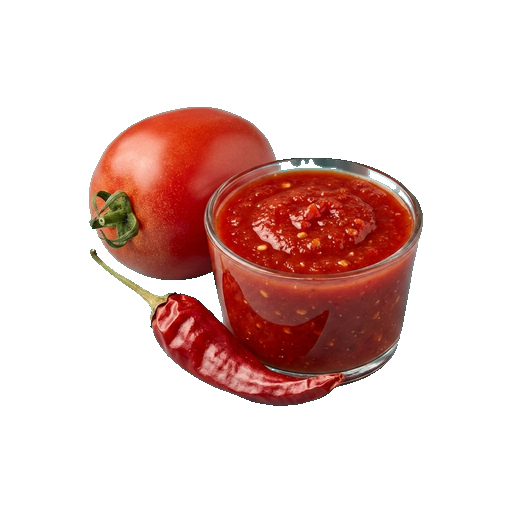
Hot tomato sauce is a pureed or chopped tomato paste with the addition of hot peppers, spices, and seasonings. It has a rich sweet and sour flavor with a pronounced heat and is used as a condiment for meat, fish, appetizers, and as the main sauce for pasta dishes. When choosing, pay attention to the consistency and heat level — homemade sauce can be varied by the amount of pepper, while store-bought versions often contain preservatives and thickeners.
About
Spicy tomato sauce is one of the most versatile helpers in the kitchen. It's not just a seasoning, but a full-fledged ingredient that transforms a dish with just one spoonful. When you need brightness, depth, and warmth all at once, it's exactly what solves the problem. Cooking with it is simple, and the result is always impressive.
Taste and Aroma
Tomato forms the base — its natural acidity and sweetness. But spicy tomato sauce doesn't stop there. Chili pepper or other hot components add heat that builds gradually, unfolding slowly over time. The composition often includes garlic, spices and seasonings that create a multi-layered flavor profile.
The consistency is usually medium — neither liquid nor thick, convenient for spreading, dipping, and adding to hot dishes. The aroma is expressive: tomato with sharp and spicy notes that immediately catch your attention.
Where to use it
Spicy tomato sauce works everywhere you need energy and flavor accent. It's the perfect addition to appetizers: it's great with chips, crackers, vegetables and meat. It's used to make marinades for chicken, fish and seafood — the spiciness penetrates the texture and reveals new dimensions.
In hot dishes, sauce becomes the foundation or the finishing touch. Add it to rice, pasta, soups, and stews — it will unite the flavors and create harmony. For pizza, sandwiches, and wraps, it's a quick way to add character. Even a simple omelet or a fried egg is transformed with a spoonful of such sauce.
- Dipping sauce for appetizers and fast food
- Marinade component for meat and fish
- Additive for soups, stews and braised dishes
- Base for pizza or pasta instead of traditional tomato sauce
- Seasoning for eggs, breakfasts and light appetizers
Selection and Storage
When choosing, pay attention to the list of ingredients. Quality sauce contains tomatoes, pepper, garlic, and spices — without unnecessary thickeners and preservatives. The consistency should be homogeneous, without separation. Check the expiration date and packaging integrity.
Store an open jar or tube in the refrigerator in an airtight container. Most commercial varieties keep for 2–3 weeks after opening. If you make the sauce at home, it will last a week in the refrigerator and several months in the freezer. Before using frozen sauce, let it thaw at room temperature or reheat it directly in the dish.
Cooking tip
If the sauce is too spicy, dilute it with sour cream, yogurt, or butter — this will soften the heat without losing flavor. For hot dishes, add the sauce at the end of cooking to preserve the brightness of the aromas. If you cook with it for a long time, the spiciness may weaken slightly — take this into account when calculating the amount.
Nutrition
per 100 ml
- Calories
- 32 kcal
- Protein
- 1.2 g
- Fat
- 0.3 g
- Carbs
- 6.5 g
Measures and weight
- 1 tbsp
- 15.8 g
- 1 tsp
- 5.3 g
- 1 cup
- 262.5 g
Measure calculator
- Weight
- 100 g
- Calories
- 30 kcal