Usuba
Usuba
Pico de gallo
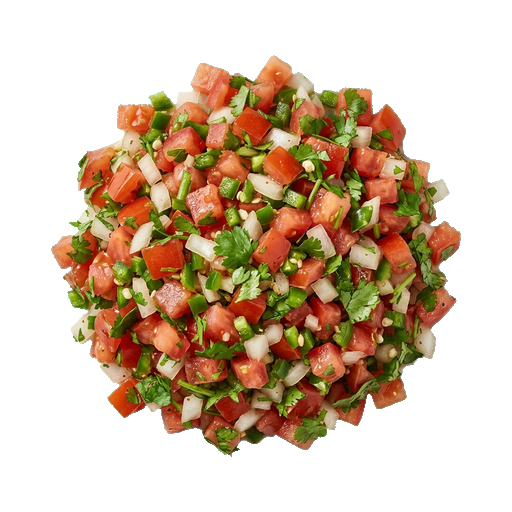
Fresh Mexican salsa made from finely chopped tomatoes, onions, cilantro, and jalapeños with lime juice and salt. Its sharp, vibrant flavor with a spicy note perfectly complements tacos, enchiladas, nachos, and other Mexican dishes. Prepared right before serving to preserve the crispy texture and freshness of the ingredients.
About
Pico de gallo is neither a sauce nor a salad in the traditional sense, but rather something in between: a fresh, crispy mixture of finely chopped vegetables that preserves the texture of each component. Unlike guacamole or salsa, there is no puree, no uniformity here. Each piece remains distinct, and this is precisely what makes pico de gallo a versatile condiment for many dishes.
What it consists of and how it looks
- Tomatoes (usually ripe but firm varieties are used so they don't fall apart)
- Onion (red or white — finely chopped, sometimes lightly marinated in lemon juice)
- Fresh cilantro or parsley (greens add aroma and freshness)
- Chili pepper (green serrano or jalapeño — for spiciness)
- Lemon or lime juice (acidity highlights flavors and prevents browning)
- Salt (minimal amount, added at the end so vegetables don't release juice)
In appearance — a bright, contrasting mosaic of red, white, green, and yellow. In taste — vibrant, with a clear boundary between the sweetness of tomato, the sharpness of pepper, the piercing acidity of lime, and the sharp bitterness of onion. No blending, no uniform consistency. This dish is for those who appreciate texture and each component individually.
Where to use and how to combine
- With tacos, enchiladas and other Mexican dishes — a classic application
- As a side dish for fried fish or seafood — acidity and freshness balance the richness
- As an appetizer with tortilla chips or crackers
- A complement to avocado, cheese, grilled meat dishes
- A filling for sandwiches instead of traditional tomato
Pico de gallo works well with creamy textures: avocado, sour cream, yogurt. With heavy, fatty dishes, it plays the role of a refreshing contrast. With light dishes, it complements and enhances the flavor. It can be served separately so each guest can add the desired amount, or mixed directly into the dish before serving.
How to Choose and Store
It's best to prepare pico de gallo right before serving — freshness and crunchiness are lost within a few hours. If you need to prepare it in advance, chop the vegetables 2–3 hours before serving and keep them in the refrigerator, but add lemon juice and salt only at the end, otherwise the tomatoes will release moisture and the mixture will become mushy.
- Choose ripe but firm tomatoes — overripe ones will fall apart when sliced
- It's better to soak onions slightly in cold water or lemon juice — this will soften their sharpness
- Add herbs at the last moment so they don't darken and don't lose their aroma
- Chop pepper finely and remove seeds if you want less heat
Pico de gallo stored in an airtight container in the refrigerator will keep for 1–2 days, but the flavor and texture won't be the same. This dish lives in the present moment — prepare it fresh, and it will fully reveal itself.
Nutrition
per 100 g
- Calories
- 30 kcal
- Protein
- 1 g
- Fat
- 0.3 g
- Carbs
- 6 g
Measures and weight
- 1 tbsp
- 12 g
- 1 tsp
- 4 g
- 1 cup
- 200 g
Measure calculator
- Weight
- 100 g
- Calories
- 30 kcal