Usuba
Usuba
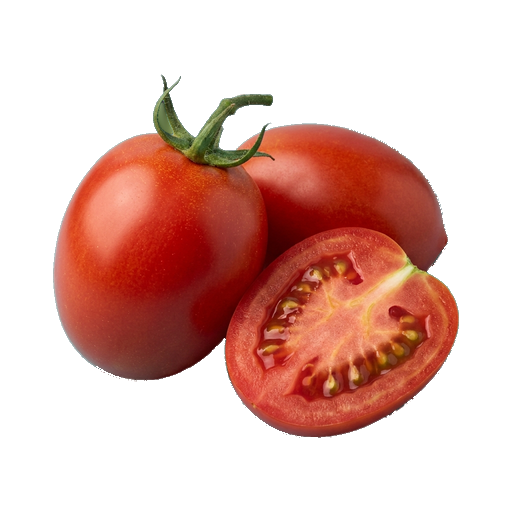
Plum tomatoes
Plum tomatoes are elongated tomatoes with firm flesh and minimal seeds, perfectly suited for canning, sauces, and pastes. Their meaty structure provides a concentrated sweet-tart flavor and allows for quick reduction into sauces without excess liquid. When selecting, prefer tomatoes without cracks and soft spots, and for fresh dishes, check that they are ripe but not overripe.
About
Plum tomatoes are elongated medium-sized tomatoes that look like small plums. They are denser than regular round tomatoes, contain fewer seeds and less water, and their flesh is almost meaty. It is these qualities that make them indispensable in the kitchen — they don't fall apart during cooking and hold their shape in sauces and stews.
Taste and Aroma
Plum tomatoes deliver a concentrated tomato flavor — sweet, with a subtle tang and a deep, almost honey-like note. With prolonged cooking, the taste becomes even more intense. Their aroma is delicate, not sharp, but distinct. These are not the tomatoes you eat fresh in salads; their strength truly unfolds with heat treatment.
Where to cook them
- Tomato sauces and purees — the foundation for pasta, pizza, and soups. Plum tomatoes are cooked until soft, pressed through a sieve or blended to create a smooth sauce with rich flavor.
- Stews and braised dishes — halves or quarters retain their shape and don't become soggy, decorating the dish and adding sweetness.
- Canning — their dense structure is ideal for whole preserves, they don't deform during sterilization.
- Soups and broths — add depth and roundness to the flavor without requiring prior skin removal.
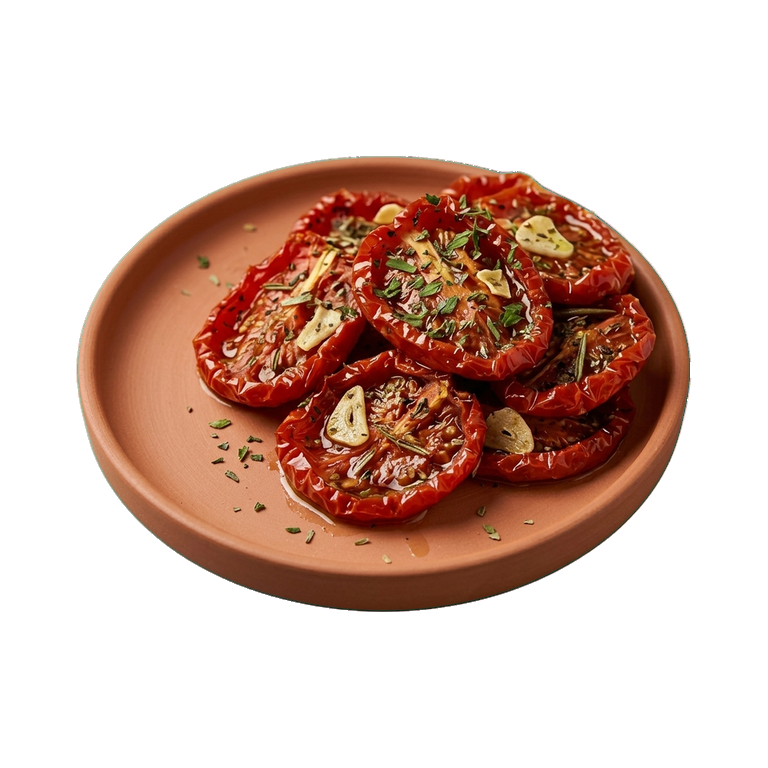
- Baked dishes — become sweeter and more intense in flavor when baked.
How to Choose and Store
Choose tomatoes with smooth, deep red skin free of dents and soft spots. They should be firm to the touch but not hard—they should give slightly when pressed. Ripe plum tomatoes can be stored in the refrigerator for up to two weeks, and underripe ones can be left at room temperature for several days.
- Do not wash before storage — moisture will speed up spoilage.
- Store separately from apples and bananas — they release ethylene, which will accelerate ripening and softening.
- For long-term storage, freeze whole tomatoes or puree — they work perfectly for sauces.
Practical Tips
If you need to peel a tomato, dip it in boiling water for a minute, then in ice water — the skin will come off easily. For sauces, plum tomatoes don't need to be peeled: fine skin fibers are invisible in the finished dish. To enhance the flavor during cooking, add a pinch of sugar — it will bring out the natural sweetness and balance the acidity.
Plum tomatoes are not so much an ingredient for fresh dishes as they are the workhorse of the kitchen. They are reliable, delicious, and always deliver predictable results.
Nutrition
per 100 g
- Calories
- 20 kcal
- Protein
- 1 g
- Fat
- 0.2 g
- Carbs
- 3.9 g
Measures and weight
- 1 pcs
- 60 g
Measure calculator
- Weight
- 100 g
- Calories
- 20 kcal