Usuba
Usuba
Sesame seeds with wasabi
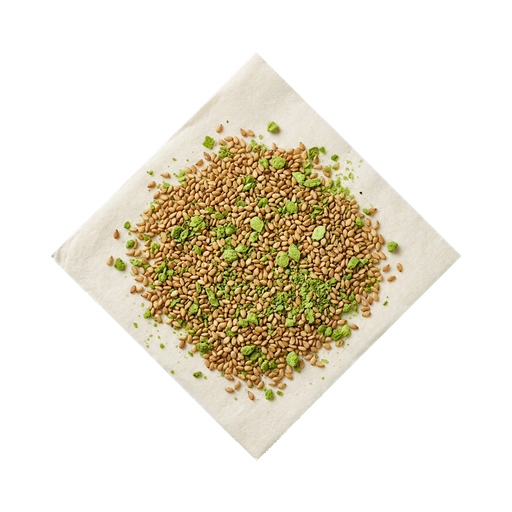
A blend of roasted sesame with sharp wasabi creates a piquant seasoning that delivers both a nutty aroma and intense heat. It's used as a topping for sushi, salads, fish dishes, and noodles, adding spiciness and texture at the last moment before serving. Wasabi loses its intensity during storage, so it's best to keep this seasoning in an airtight container in a cool place and add it gradually, adjusting to your desired level of heat.
About
This seasoning is a compromise between Eastern sophistication and bold audacity. Sesame with wasabi combines the nutty softness of seeds with the piercing heat of the root, creating a seasoning that works as a flavor enhancer rather than just an addition. You don't need much of it: a pinch on the plate changes the perception of the dish.
Aroma and Taste
Sesame gives the seasoning a warm, slightly sweet nutty background. Its seeds, usually lightly roasted, add a crunchy texture and depth. Wasabi takes the second act — sharp, piercing, with a barely perceptible bitterness. Together they create a multi-layered profile: first you feel the nutty roundness, then the heat builds, lingering long but without overpowering other flavors.
Where and how to use it
This seasoning works everywhere you need a spicy note with texture. Sprinkle it on sushi rolls to enhance the heat without extra moisture. On avocado, cream cheese, or pâtés, it creates contrast. Try it on fried fish, especially salmon or mackerel — wasabi will highlight the richness, while sesame adds crunchiness.
- Salads with squid, octopus or shrimp — the seasoning complements the seafood flavor
- Cream soups made from pumpkin or mushrooms — the spiciness contrasts with the softness
- Eggs — omelets, poached eggs, salads with egg
- Vegetable chips, popcorn or nuts — enhances the snack
- Butter for bread or ready-made sauces
Dosage and Precautions
Wasabi is not a garnish, but an active ingredient. Start with a quarter teaspoon per serving. The heat can be unexpected for those unfamiliar with Eastern spices. Add gradually, tasting as you go. Remember: wasabi in seasoning is already dried and pressed, so its effect is more concentrated than fresh root.
Selection and Storage
Buy seasoning in a sealed package. A good sign is visible individual sesame seeds, and uniform color without dark clumps. Wasabi in the composition should be natural (although mustard is often used as a substitute — this is acceptable for the price, but the taste will be milder).
Store in a tightly sealed jar in a dark, cool place. Moisture is the enemy of spice. If the jar is kept on the kitchen counter near the stove, the spice will lose its potency faster. With proper storage, it maintains its flavor and aroma for 6–8 months. If wasabi starts to taste bitter or develops a musty smell — it's time to replace it.
This seasoning is not a background flavor. Use it when you want a dish to suddenly come alive — when you need a sharp note, texture, and oriental character in a single pinch.
Nutrition
per 100 g
- Calories
- 500 kcal
- Protein
- 18 g
- Fat
- 40 g
- Carbs
- 15 g
Measures and weight
- 1 tbsp
- 9 g
- 1 tsp
- 3 g
- 1 cup
- 150 g
Measure calculator
- Weight
- 100 g
- Calories
- 500 kcal