Usuba
Usuba
Quail egg yolk
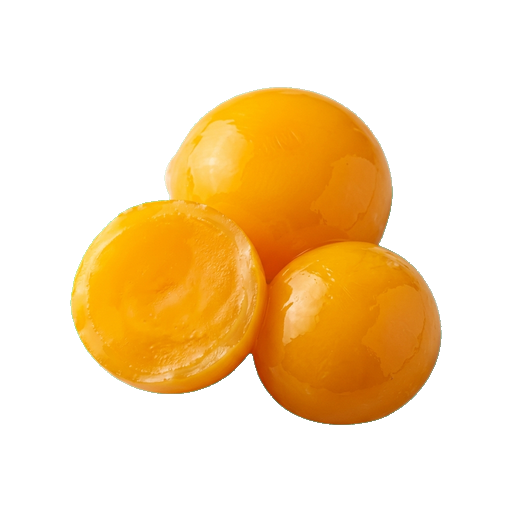
Quail egg yolk differs from chicken egg yolk with its more saturated yellow color and creamy consistency due to high fat and carotene content. It has a delicate, tender flavor with barely noticeable sweetness and is ideal for emulsifying sauces, making mayonnaise, cream, or delicate pâtés. When working with quail egg yolks, it is important to remember that they oxidize faster and require more careful handling than chicken yolks, so it is best to use them immediately after cracking the egg.
About
Quail yolk is a concentrated portion of richness. It is three times smaller than a chicken yolk, but denser in composition: darker in color, thicker in consistency, more saturated in taste. When you crack a quail egg, the yolk hardly spreads, holds its shape and looks like a miniature precious gem on a white background. This is not just aesthetics — such a structure indicates a high concentration of fats and micronutrients.
Taste and Aroma
Quail yolk has a sharper smell than chicken yolk — it distinctly carries notes of game and forest. The taste is bright, almost buttery, with pronounced richness. This is not a drawback, but a characteristic: the yolk coats the tongue and leaves a long aftertaste. When you cook with quail yolks, they don't dissolve into the dish; instead, they become its main star — even a small amount is noticeable.
Where and how to use
- In sauces and creams — the yolk becomes a binding base, giving silkiness and depth
- In pastry dough — makes it more tender and flaky, gives a golden color
- In pâtés and forcemeat dishes — enhances flavor and improves texture
- In desserts and ice cream — creates a creamy structure, enriches the taste
- As a garnish or dish detail — boiled yolk looks stunning and emphasizes premium quality
Selection and Storage
Quail eggs are sold in specialized departments or health food stores. The shell should be intact, without cracks or spots. Eggs are stored longer than chicken eggs — up to three weeks in the refrigerator at a temperature of 2–4 degrees. Separating the yolk from the white is more convenient than with a chicken egg: the shell is thinner, and the yolk itself holds its shape better.
If a recipe calls for one chicken yolk, replace it with two quail yolks — this is an approximate equivalent by volume, although quail yolk will have a noticeably stronger flavor intensity.
Pairings
Quail yolk works well with delicate flavors: butter, white fish, mushrooms, truffle. Its richness is balanced with acidity — lemon juice, white wine, vinegar. In meat dishes, yolk suits game, beef, liver. It pairs with sweet flavors in classic desserts — creams, mousses, meringues.
Nutrition
per 100 g
- Calories
- 320 kcal
- Protein
- 15.8 g
- Fat
- 28.5 g
- Carbs
- 0.6 g
Measures and weight
- 1 pcs
- 5 g
Measure calculator
- Weight
- 100 g
- Calories
- 320 kcal