Usuba
Usuba
Baking powder
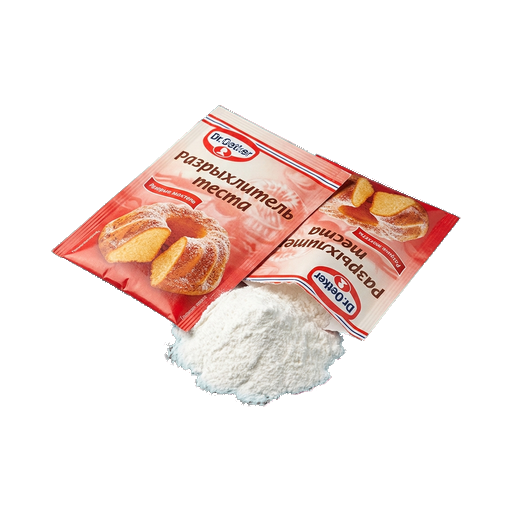
This is a chemical leavening agent that contains baking soda, acid, and stabilizers, ensuring even dough rise during baking. It is used for cakes, cupcakes, cookies, and other baked goods, added directly to dry ingredients before mixing with wet components. When choosing, it is important to check the expiration date, as the leavening agent loses effectiveness over time, and follow the recommended amount in the recipe to avoid a bitter aftertaste or uneven rise of the baked goods.
About
Baking powder is one of the most reliable helpers in the kitchen when you need to achieve an airy texture in baked goods without the hassle of yeast and sourdough. It's a ready-made mixture that works when heated and creates gas bubbles directly in the dough. The result is predictable: sponge cakes rise evenly, cupcakes turn out fluffy, and pancakes become light.
How it works
Baking powder contains baking soda and an acidic component (usually acidic salts) that react when mixed with liquid and heated. This reaction produces carbon dioxide — the very gas that makes dough rise. The ready-made mixture is already balanced, so you don't need to guess at the proportions of baking soda and citric acid.
When and how to use
Baking powder is ideal for quick baked goods: cupcakes, muffins, pancakes, fritters, cookies, and light sponge cakes. It is added to dry ingredients before mixing with wet ones. The typical dosage is one teaspoon per cup of flour, but it's always better to check the recommendation on the packaging of the specific product.
- Biscuits and cupcakes — basic area of application
- Pancakes and fritters — leavening agent makes them airier than just baking soda
- Cookies — especially soft and crumbly
- Quick breads and buns — when there's no time to wait for fermentation
- Breading for frying — gives a crispy crust
Important points to keep in mind
Baking powder starts to work when it comes into contact with moisture and heat. Therefore, the prepared dough should be sent to the oven immediately — don't delay, otherwise the gas will escape and the baked goods will collapse. If the recipe requires the dough to rest before baking, use baking powder in two stages: half into the dough, and add the other half right before shaping.
Store baking powder in a dry place, tightly sealed. Moisture is the enemy of this product: it triggers the reaction prematurely, and the baking powder loses its effectiveness. After opening the package, transfer the contents to a container with a tight lid. With proper storage, baking powder maintains its properties for several months.
Baking powder is not a replacement for yeast in complex baked goods, but for everyday baking it is an indispensable helper. It provides consistent results, saves time, and requires no special skills. Simply add the required amount to your flour, and your baked goods are guaranteed to turn out fluffy and light.
Nutrition
per 100 g
- Calories
- 96 kcal
- Protein
- 0.1 g
- Fat
- 0.1 g
- Carbs
- 23 g
Measures and weight
- 1 tbsp
- 12 g
- 1 tsp
- 4 g
- 1 cup
- 200 g
Measure calculator
- Weight
- 100 g
- Calories
- 96 kcal