Usuba
Usuba
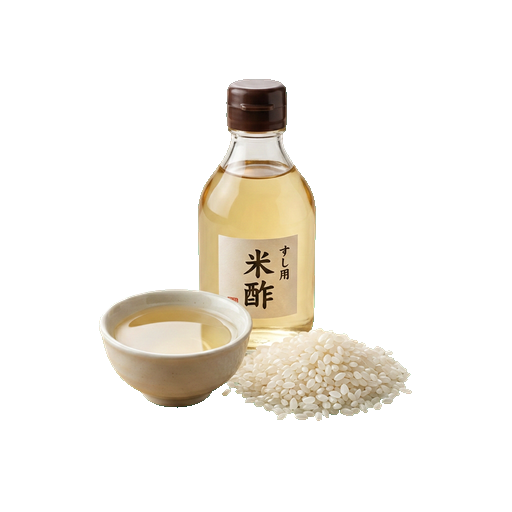
Rice vinegar for sushi
A soft and delicate vinegar with subtle acidity and barely noticeable sweetness, derived from fermented rice. Primarily used for preparing sushi rice, giving it a characteristic flavor and helping the grains remain fluffy. When selecting, pay attention to the alcohol content and absence of artificial additives — quality rice vinegar should not have a sharp smell and should dissolve well in warm rice.
About
Rice vinegar is not just a sour seasoning, but a foundation that maintains the entire flavor balance of sushi. Mild, delicate, with a barely perceptible sweetness, it bears no resemblance to sharp wine or apple vinegar. When you mix it with rice, magic happens: the grains become glossy, slightly sticky, and acquire that distinctive tanginess that makes sushi a recognizable dish.
Taste and Aroma
The main feature of rice vinegar is its delicacy. Acidity typically ranges from 4–5%, which is considerably milder than most other vinegars. At the same time, you can feel a barely noticeable sweetness that comes from the rice itself. The aroma is delicate, almost imperceptible — it doesn't overpower but rather enhances.
How to choose and use
- Look for the word "rice" on the label and acidity no higher than 5%. Special brands for sushi often already contain sugar and salt, which saves time when cooking rice.
- Standard proportion: for 500 g of cooked rice, take 3–4 tablespoons of vinegar, 1 tablespoon of sugar, and half a teaspoon of salt. But if the vinegar already has additives, sugar and salt are needed in smaller amounts or not needed at all.
- Mix the vinegar with warm rice while it's still steaming. This way it will be absorbed evenly and the rice will acquire the right consistency — moist, but not soggy.
- Store in a cool place in a sealed bottle. Rice vinegar keeps for a long time and does not require refrigeration if you haven't opened the bottle.
Role in dishes
Rice vinegar works not only in sushi. Its mildness makes it ideal for vegetable marinades, Asian salads, and light dressings. It pairs well with fish and seafood, as it doesn't overpower their delicate flavor. Even a drop of rice vinegar added to plain rice as a side dish will add depth and a subtle tanginess.
Pairs well with
- Soy sauce is a classic pairing that creates a full flavor spectrum: acidity, saltiness, and umami.
- Ginger and wasabi are spicy components that rice vinegar balances and softens.
- Nori, avocado, cucumber, and crab meat — all these sushi ingredients get the necessary acidity and freshness from the vinegar.
- Sugar and salt — they don't compete with the vinegar, but complement it, creating a balanced rice mix.
Practical tip
If you're making sushi for the first time and are afraid of using too much vinegar, start with half the recommended amount. You can always add more acidity to the rice, but it's harder to overdo it. Remember: rice vinegar for sushi is not a condiment that should be noticeable, but rather a foundation on which the entire flavor rests.
Nutrition
per 100 ml
- Calories
- 18 kcal
- Protein
- 0.1 g
- Fat
- 0 g
- Carbs
- 0.4 g
Measures and weight
- 1 tbsp
- 15.2 g
- 1 tsp
- 5 g
- 1 cup
- 252.5 g
Measure calculator
- Weight
- 100 g
- Calories
- 18 kcal