Usuba
Usuba
Salted sticks
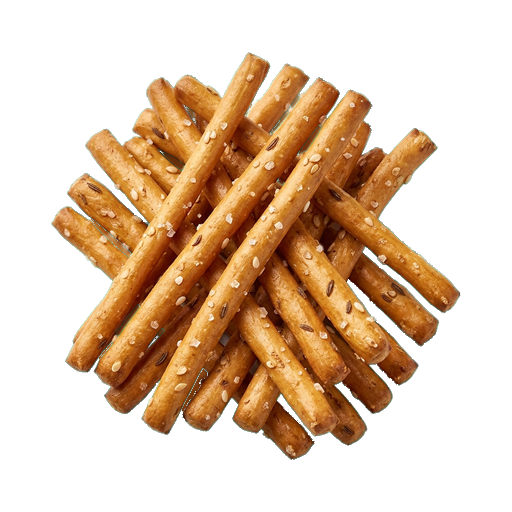
Crispy breadsticks made from wheat flour with added salt, often topped with sesame or caraway seeds. They serve as a snack to pair with beer and other beverages, and are also used in salads and soups to add texture and salty flavor. When choosing, pay attention to freshness and crispness — over time, the breadsticks become softer and lose their appeal.
About
Salted sticks are a versatile snack that appears on the table between main courses, is served with beer or tea, and becomes a lifesaver when you need a quick bite. They crunch, are salted just enough to stimulate appetite, and require no preliminary preparation. Despite their simplicity, they are a serious ingredient for a culinary expert — the sticks work well in salads, soups, side dishes, and even in more complex dishes.
Taste and Texture
The main thing about salted breadsticks is the contrast between the crispy crust and the soft, slightly springy center. The taste is straightforward: salt, a light bread undertone, sometimes notes of wheat or rye. Quality breadsticks don't leave a feeling of dryness in your mouth, while poor ones become hard and tasteless. The intensity of salt varies — from delicate salting to aggressive, which literally stings your tongue.
How to use in the kitchen
Salted sticks work in two modes: as a standalone snack and as a dish component. In the first case, they simply lie next to cheese, sausage, or nuts on a cutting board for appetizers. In the second — they are crumbled into salads for crunch, added to soup for texture, used as a garnish for cold appetizers, or even placed in bread dough to add a salty accent.
Pairings
- With soft cheeses — sticks become a contrast to the creamy texture
- In salads with fresh vegetables — add necessary crunch and salt
- With beer or light alcoholic drinks — a classic pairing
- With avocado and tomatoes — the saltiness of the sticks emphasizes the sweetness of the tomato
- In cream soups — breadcrumbs of the stick float on the surface, adding texture
Selection and Storage
When purchasing, pay attention to the integrity of the packaging — the sticks should be whole, without crumbs at the bottom of the bag. A good sign is if they are still slightly warm or smell like fresh baking. Avoid sticks that seem too soft or moist. After opening the package, store them in an airtight container or a zip-lock bag — the sticks quickly absorb moisture from the air and lose their crispness. With proper storage, they maintain their freshness for two to three weeks.
Salted sticks are not just a snack. They are texture, salt and crunch that work in dozens of dishes if you know where to put them.
Nutrition
per 100 g
- Calories
- 390 kcal
- Protein
- 10 g
- Fat
- 8 g
- Carbs
- 70 g
Measures and weight
- 1 tbsp
- 4.5 g
- 1 tsp
- 1.5 g
- 1 cup
- 75 g
Measure calculator
- Weight
- 100 g
- Calories
- 390 kcal