Usuba
Usuba
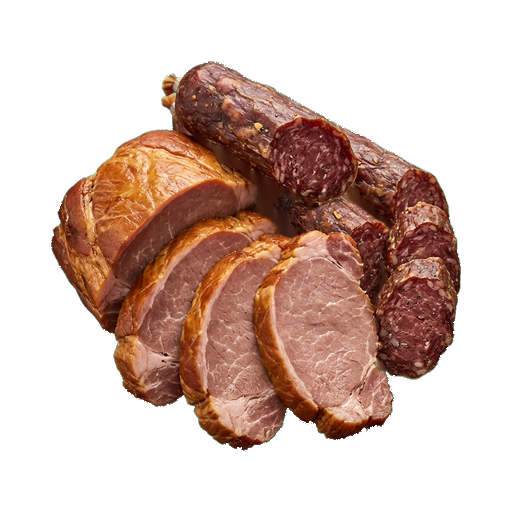
Smoked meat
Smoked products are meat and fish products processed with smoke through hot or cold smoking. They acquire a characteristic smoky aroma, golden hue, and dense texture, while their taste becomes rich and slightly sharp. In cooking, smoked products are used as a standalone dish, added to soups, salads, pasta, and appetizers. When choosing, it is important to pay attention to color (it should be uniform), smell (without foreign impurities), and composition (minimal additives and preservatives).
About
Smoked products are foods that have undergone thermal processing with smoke. The process gives them a characteristic aroma, deep flavor, and extends their shelf life. In cooking, smoked products work both as a standalone dish and as an ingredient that instantly adds depth and richness to any dish.
Aroma, taste and texture
Smoked products are recognized at first whiff — their smoky, slightly sweet aroma is impossible to confuse with anything else. The taste depends on the type of wood, temperature, and smoking duration. Cold smoking gives a delicate, subtle flavor; hot smoking produces a more intense and rich taste. Texture varies: meat remains juicy, fish becomes denser, cheese becomes brittle.
Role in dishes
Smoked products are a reliable helper when you need to quickly add character to a dish. Smoked sausage in pasta, smoked lard in borscht, smoked fish in salad — each time it saves time and guarantees results. They work in both hot dishes (soups, stews, casseroles) and cold appetizers.
Combinations with other ingredients
Smoked products love bright, fresh companions. Acidity (vinegar, lemon, tomatoes) balances their density. Spiciness (pepper, mustard) enhances smoky notes. Soft creamy products (sour cream, cheese, butter) soften the intensity. Herbs (dill, parsley, onion) refresh and lighten the flavor profile.
- Smoked fish + cream cheese + fresh dill
- Smoked meat + white cabbage + mustard
- Smoked sausage + potato + mayonnaise
- Smoked cheese + walnuts + honey
Selection and Storage
When choosing smoked meats, pay attention to the color — it should be uniform, without dry spots or mold. The smell should be pleasant and smoky, without sourness or mustiness. The packaging should be intact, without condensation inside. If you buy sliced meat — ask for a fresh cut.
Smoked meats last longer than fresh meat or fish, but that doesn't mean you can forget about them in the refrigerator. Keep them in the coldest part of the refrigerator, in airtight packaging or wrapped in parchment — this way they won't dry out or absorb foreign odors. Most smoked meats last 2–4 weeks, some hard varieties longer. Check before using: if an odd smell or slime appears, it's better not to risk it.
Smoked products do not need to be overcooked — they are already ready to eat. If you add them to a hot dish, place them at the end so they don't lose their aroma and don't dry out.
Main Types
- Smoked meat (brisket, ribs, ham) — juicy, with a bright smoky flavor
- Smoked fish (mackerel, trout, herring) — tender, with a sea sweetness
- Smoked sausages (hunter's, amateur, doctor's) — versatile in use
- Smoked cheese — a rare guest, but an impressive ingredient for appetizers
- Smoked lard — a classic for sandwiches and salads
Measure calculator
- Weight
- 100 g