Usuba
Usuba
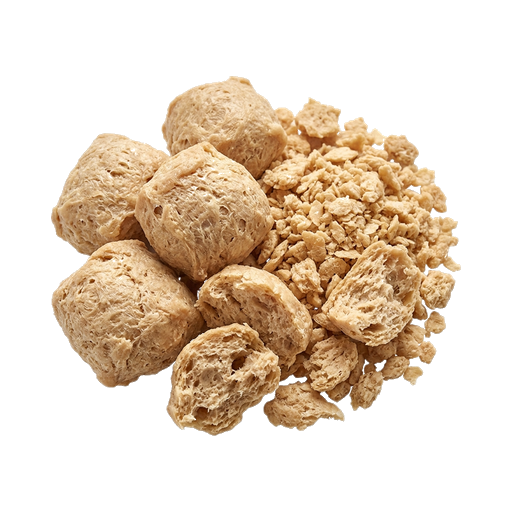
Soy meat
Soy meat is a textured plant-based protein derived from soybeans that resembles ground meat or meat pieces in structure. The product has virtually no flavor of its own, so it easily absorbs the aromas of marinades, sauces, and spices, making it suitable for use in any meat dishes — from stews and pilafs to cutlets and fillings. When choosing, pay attention to the particle size: fine texture works for ground meat and sauces, coarse texture is better for pilaf and stews, and before cooking it should be soaked in hot water or broth to swell and become softer.
About
Soy meat is a textured plant-based protein derived from defatted soy flour. It is not a meat imitation in the conventional sense, but rather an independent ingredient with its own logic of use. The product is supplied as dry flakes or chunks and requires pre-soaking in liquid before cooking. Thanks to its porous structure, soy meat absorbs the aromas and flavors of surrounding ingredients, making it a versatile kitchen helper.
Texture and cooking behavior
After soaking in hot water, broth, or milk, soy meat softens and acquires a meaty, fibrous texture. Hydration time usually takes 10–15 minutes. It's important not to overcomplicate the process: simply pour boiling water in approximately a 1:2 ratio and let it sit. The finished product holds its shape well when frying, stewing, and baking, doesn't fall apart in sauces, and doesn't turn into mush.
The taste of soy meat is neutral, almost imperceptible. This is its main advantage: it takes on the flavor of marinades, spices, and sauces. If you soak it in a strong beef broth with pepper and garlic, you get one result. If you use vegetable broth with herbs — something completely different. The texture remains recognizably meaty, but the flavor profile depends entirely on its surroundings.
Where to use in dishes
Soy meat works everywhere you need a minced or chunky texture. It is perfectly suited for dishes with intense flavors, where its neutrality becomes an advantage.
- Bolognese and meat sauces — soak in broth, fry with onions and garlic, add tomatoes and herbs
- Tacos and burritos — season with hot spices and lime, creates a spicy, stringy filling
- Ground meat for dumplings and cutlets — mix with bread, egg and spices, fry or boil
- Stews and braised dishes — braise long in sauce, absorbing its flavors
- Pilaf and risotto — added together with rice, takes on the taste of the broth
Combinations and Seasonings
Soy meat pairs well with all traditional meat spices. Black pepper, cumin, paprika, turmeric, oregano — all of these will enhance the impression of meatiness. Hot spices (chili, cayenne pepper) work especially effectively, giving the dish character. Acidity is also a helper: lemon juice, vinegar, or tomatoes make the flavor brighter and more complex.
Soaking is already half the battle. If you pour soy meat not just with boiling water, but with a strong vegetable or mushroom broth with the addition of soy sauce and garlic, it will already have a flavor base. Then you'll just need to cook it properly.
Selection and Storage
When purchasing, pay attention to the color: good soy meat has a light brown or beige shade, without dark spots or lumps. Check the packaging date — the product stores well, but freshness is still important. Dry soy meat lasts almost forever in an airtight container in a cool place, protected from moisture and light.
Hydrated soy meat (already soaked) can be stored in the refrigerator for 2–3 days. If you're preparing it in advance, it's better to freeze it after soaking — this way it won't spoil and will remain ready to use. Thaw it at room temperature or add it directly to a hot dish.
Nutrition
per 100 g
- Calories
- 296 kcal
- Protein
- 48 g
- Fat
- 1.5 g
- Carbs
- 22 g
Measure calculator
- Weight
- 100 g
- Calories
- 296 kcal