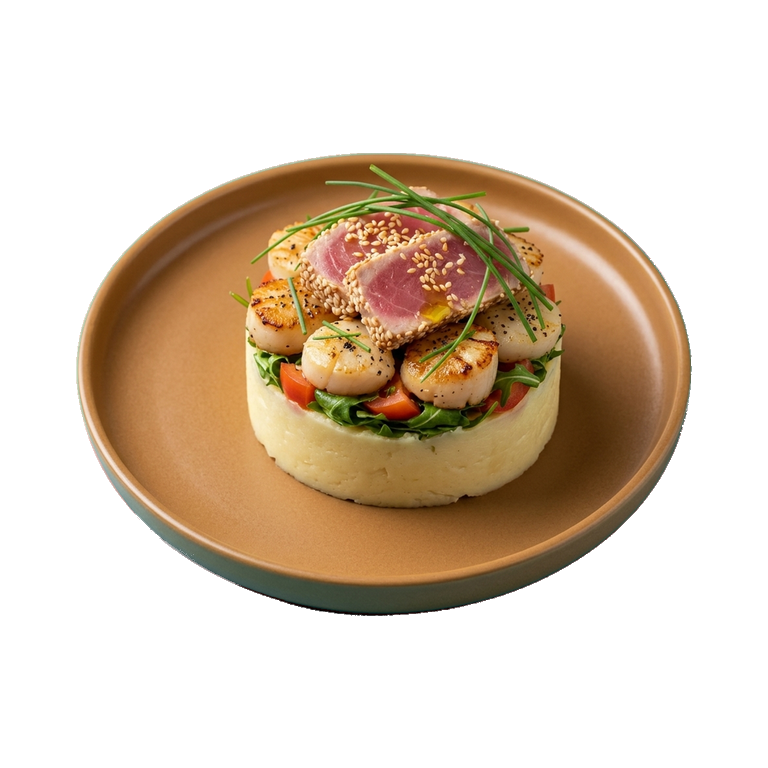
Usuba
Usuba
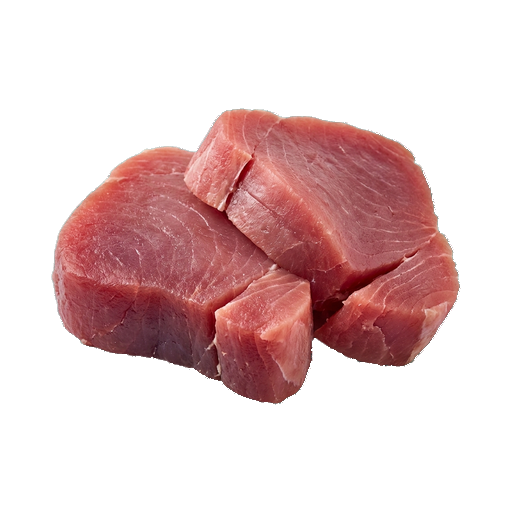
Tuna Steak
Tuna steak is a thick cross-section slice of tuna fillet that retains its shape when frying due to the dense structure of the meat. It features a rich seafood flavor with a subtle sweetness and tender texture in the center if not overcooked. When selecting, pay attention to the bright red or pink color of the meat and the absence of ammonia smell — these are signs of freshness and proper storage.
About
What is tuna steak and why chefs love it
Tuna steak is a thick cross-section slice of fillet, cut perpendicular to the fish's backbone. Unlike fillet, steak retains its fibrous structure and holds its shape during cooking. Tuna meat is dense, almost meaty, with a subtle ocean aroma and natural sweetness. It is this texture and flavor that make steak an ideal choice for quick searing over high heat.
Taste and Aroma
The flavor depends on the type of tuna and the cut. Red meat (from the back) is richer in taste with a pronounced mineral tone. White meat (from the belly) is more tender and softer. Fresh steak smells like the ocean, but not fish — the smell should be clean and pleasant. When properly cooked over high heat, a crispy crust forms on the outside while the meat inside remains tender and slightly moist.
How to Cook Tuna Steak
The golden rule: don't overcook. A 2–3 cm thick steak cooks for 2–3 minutes on each side on a hot skillet or grill. The meat should remain pink inside — this guarantees juiciness. Before cooking, dry the steak with paper towels and salt generously. Add oil to the skillet only after it has heated well.
- Lemon juice, olive oil and fresh herbs (dill, parsley) — a classic accompaniment
- Spicy sauces based on wasabi or ginger highlight the natural flavor
- Asian marinades with soy sauce, mirin and garlic — an excellent choice for marinating before cooking
- Salad of fresh vegetables or seaweed — a light side dish that doesn't overload the dish
How to Choose and Store
Look for steaks with bright red or dark red color, without dark spots and darkening around the edges. The meat should be firm, not soft. Fresh steak has a shine and moist appearance. Smell is the main indicator: nothing should smell like ammonia or rotten.
Store steak in the coldest part of the refrigerator, wrapped in parchment paper or plastic wrap. Fresh steak is suitable for cooking for 1–2 days. If you plan to cook it later, freeze it in an airtight bag — steak will keep in the freezer for up to three months. Before cooking, let it thaw in the refrigerator, not at room temperature.
Tuna steak is a choice for those who appreciate simplicity and quality. Minimal processing, maximum flavor. A few minutes in a pan, a good sauce and fresh vegetables — and you have a restaurant-quality dinner at home.
Nutrition
per 100 g
- Calories
- 144 kcal
- Protein
- 23.3 g
- Fat
- 4.9 g
- Carbs
- 0 g
Measures and weight
- 1 pcs
- 150 g
Measure calculator
- Weight
- 100 g
- Calories
- 144 kcal