Usuba
Usuba
Fresh pepper
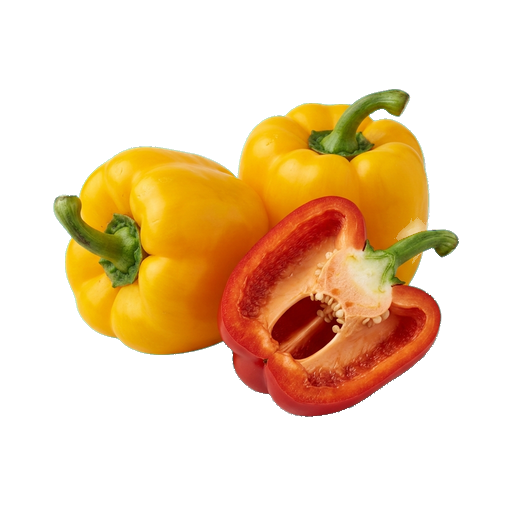
Sweet pepper with thin skin and juicy flesh adds vibrant flavor and crispy texture to dishes. Choose fruits with a smooth surface free from dents; they should be firm and heavy for their size. Red, yellow, and orange peppers are sweeter than green, which has a herbaceous flavor and denser texture.
About
Fresh pepper is one of the most versatile vegetables in the kitchen. It works both raw and after processing, changing the character of the dish depending on the cooking method. Its main advantage is that it doesn't require complex preparation, and the result is always predictable and delicious.
Aroma and taste
Sweet pepper varieties are distinguished by a mild, slightly fruity flavor with a barely noticeable bitterness at the finish. Red peppers are sweeter and more aromatic than green peppers because they ripen longer on the bush. Yellow and orange peppers occupy an intermediate position. Hot varieties provide piquancy and a warming effect that is great during cold weather.
When bell pepper is raw, its flavor is bright and fresh, with a crispy texture. With heat treatment, it becomes softer, its sweetness unfolds more fully, and the aroma concentrates. On a grill or in the oven, pepper acquires smoky notes and a caramel aftertaste.
Role in Dishes
Sweet pepper is the basis for vegetable stews, stuffed dishes, and salads. It is added to soup for volume and sweetness, included in sauces, marinades, and dressings. As a side dish, pepper is fried with onions or grilled. Hot pepper is used more sparingly — as a seasoning and flavor accent in the main dish.
- Raw: salads, appetizers, side dishes for main courses
- Stewed: stew, pasta, sauces, filling for vegetable dishes
- Fried: as a standalone dish or component of a combined side dish
- Grilled or baked: for salads, appetizers and main courses
- Spicy: seasoning for meat, fish, rice dishes and soups
Successful Pairings
Sweet pepper pairs well with tomatoes, onions, garlic, and eggplant — this combination creates classic vegetable compositions. With meat, pepper works as a softening and flavoring element. For fish, a lemon or vinegar accent works well together with pepper. Chili pepper enhances spicy notes in dishes with ginger, turmeric, and coriander.
- Tomatoes and eggplants — classic vegetable trio
- Onion and garlic — the base for sautéing peppers
- Olive oil — the best fat for heat treatment
- Herbs: parsley, basil, cilantro — fresh partners
Selection and Storage
Choose peppers with smooth, firm skin free of dents and soft spots. The color should be vibrant and uniform. A heavy pepper in your hand is a good sign, indicating that the flesh is dense and juicy. Avoid peppers with wrinkled skin or signs of rot.
In the refrigerator, peppers are stored for 7–10 days in the vegetable compartment. If you need to store them longer, freeze them sliced or whole — peppers freeze well and are suitable for stewing and cooking. Sliced peppers wrapped in plastic wrap will last 3–4 days in the refrigerator.
- Refrigerator: 7–10 days in the vegetable compartment
- Freezer: sliced or whole, up to 3 months
- Room temperature: 2–3 days, only if the pepper is fully ripe
Fresh bell pepper is a vegetable that always comes to the rescue. Need a quick appetizer? Slice it into strips. Making a stew? It's the foundation. Looking for a bright accent in a salad? Pepper provides both color and flavor. Its simplicity and versatility make it indispensable in any kitchen.
Nutrition
per 100 g
- Calories
- 31 kcal
- Protein
- 1 g
- Fat
- 0.3 g
- Carbs
- 6 g
Measures and weight
- 1 pcs
- 150 g
Measure calculator
- Weight
- 100 g
- Calories
- 31 kcal