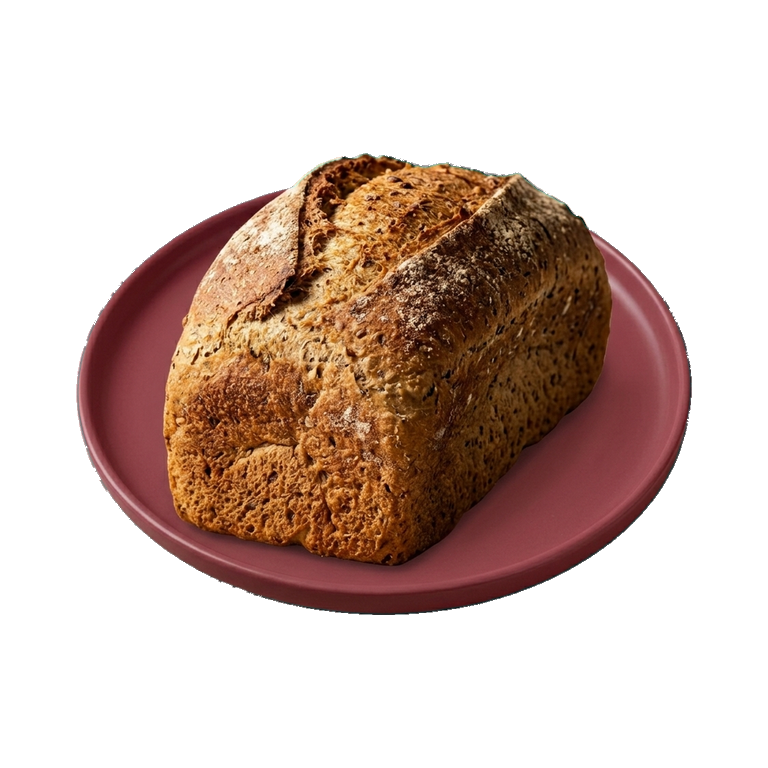
Usuba
Usuba
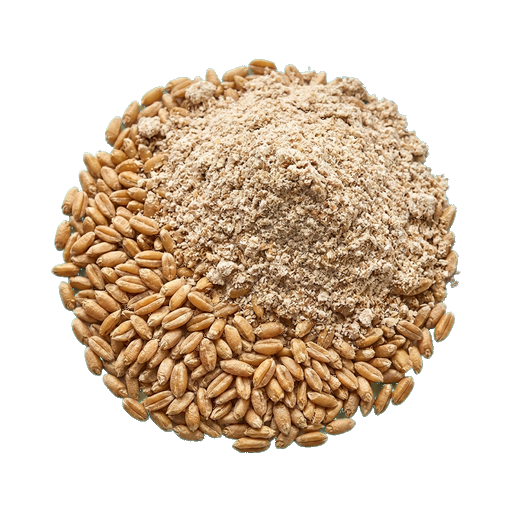
Unsifted flour
Whole wheat flour contains all parts of the grain, including bran and germ, giving it a darker color and denser structure compared to refined flour. It is rich in fiber and micronutrients, but requires more liquid in the dough and can make baked goods denser and less airy. This flour is used for bread, rolls, and cookies when a more pronounced grain texture and nutritional value are desired.
About
Unsifted flour is flour that has not been passed through a sieve after grinding. It retains all grain particles, including larger bran and germ fragments. Such flour is denser and heavier than sifted flour, with a pronounced texture. It is used not for refined baking, but for practical, hearty, and wholesome cooking.
Texture and character
Unsifted flour has a coarser, slightly grainy structure. When you knead the dough, you immediately feel this grittiness — the flour doesn't dissolve smoothly, but rather clings to the liquid. The dough becomes less plastic than dough made from sifted flour and requires more liquid for the desired consistency. Baked goods made with such flour turn out denser, with a noticeable structure, rather than airy.
Where it is used
- Coarse bread and rye bread — unsifted flour works here as the main ingredient
- Pancakes and fritters — they become more filling and hold their shape better
- Cookies and gingerbread — especially if you need a crumbly or dense texture
- Pies and filled pastries — the dough holds its shape better and doesn't spread
- Breading for cutlets and fish — flour doesn't clump and gives a crispy crust
How to cook with it
When mixing dough, add liquid gradually — unsifted flour absorbs it more slowly. If the recipe is designed for sifted flour, increase the amount of liquid by 10–15 percent. For a thin layer (pancakes, flatbreads), sift the flour before using — this will help avoid lumps. For dense dough (pies, cookies), sifting is not necessary.
Selection and Storage
Check the packaging — good unsifted flour should be uniform in color, without any off-odors or lumps. If the flour has clumped, break it up with a fork or sift it before using. Store in an airtight container in a cool place — unsifted flour oxidizes faster than sifted flour, so the shelf life is shorter, approximately 2–3 months.
Difference from sifted
- Contains more fiber and nutrients
- Produces a more filling dish with noticeable texture
- Requires more liquid when mixing
- Not suitable for delicate baking (sponge cakes, soufflés, pastries)
- Cheaper than sifted flour
Unsifted flour is not a mistake in the recipe, but a deliberate choice. It's worth keeping on hand if you bake homemade bread, pies, or love pastries with character rather than airy cakes.
Nutrition
per 100 g
- Calories
- 340 kcal
- Protein
- 10.3 g
- Fat
- 1.1 g
- Carbs
- 70.6 g
Measures and weight
- 1 tbsp
- 9 g
- 1 tsp
- 3 g
- 1 cup
- 150 g
Measure calculator
- Weight
- 100 g
- Calories
- 340 kcal