Usuba
Usuba
Wasabi
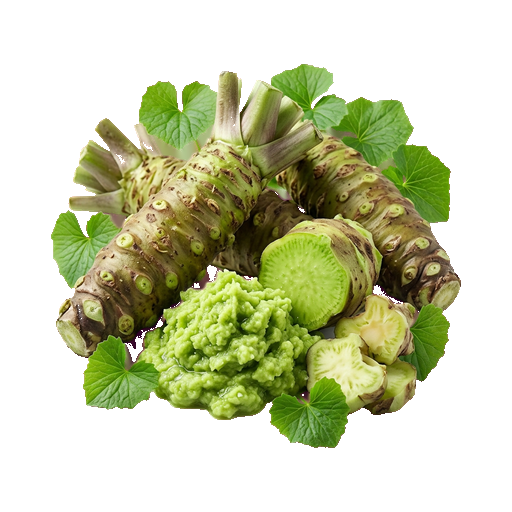
A sharp paste made from the rhizome of a Japanese plant with a pungent, piercing taste and a distinctive aroma that burns in the nose. In cooking, it is used as a condiment for sushi, sashimi, and other Japanese dishes, where it adds piquancy and helps mask the smell of raw fish. When choosing, pay attention to the consistency — authentic wasabi has a dense texture, while tubes often contain a horseradish-based imitation, so for genuine flavor it is better to use fresh root or quality powder.
About
Wasabi is a sharp paste that transforms a simple dish into an experience. Its sharp, piercing taste makes you feel every nuance of food, and that's why it has become an integral part of Japanese cuisine. But wasabi is not just spiciness for the sake of spiciness. It is a complex ingredient that requires understanding and respect.
Aroma and spice
Wasabi burns not the tongue, but the nose and sinuses — this is the main difference from chili pepper. The heat comes in a wave, rises quickly and passes just as fast. Along with the burning sensation, you will feel herbal, slightly sweet notes with a mineral undertone. This is not an aggressive flavor, but rather an awakening one, making you pay closer attention to your food.
Which wasabi to choose
- Fresh root — a rarity in ordinary stores, but if you find it, it's the best option. Grate finely on a fine grater right before serving. Maximum sharpness, vibrant aroma.
- Paste in a tube — convenient, stores for a long time, but often contains starch and food coloring instead of real wasabi. Check the ingredients.
- Powder — diluted with water to the desired consistency. Quality varies, but good powder gives decent results for a reasonable price.
- Tubes with real wasabi content — more expensive, but the taste and sharpness are noticeably different for the better.
Where to use wasabi
Wasabi is a true companion to sushi and sashimi. Its sharpness contrasts with the delicacy of fish and helps reveal its flavor. But don't limit yourself to just that. The paste works great in marinades for meat, in sauces for seafood, in salad dressings. Even a spoonful of wasabi in mayonnaise or sour cream will create an interesting sauce for steak or vegetables.
Dosage and Storage
- Start with a small amount — a pea-sized portion. Wasabi does not forgive generosity.
- Keep fresh root in the refrigerator in tight packaging, use within a week.
- Close paste in a tube or jar hermetically, store in a cool place away from light.
- Powder lasts the longest — in a dry cabinet in a hermetic container it keeps for months without loss of quality.
Balance in the dish
Wasabi works best when its heat is balanced with sweetness, salt, and acidity. Soy sauce, rice vinegar, and ginger pair well with wasabi. Together they create harmony, where each ingredient enhances the other. Remember: wasabi is a flavor enhancer, not its enemy.
If you're making sushi at home, place the wasabi between the rice and filling — this way the heat will distribute evenly and won't be sharp. It's a simple technique that noticeably improves the result.
Nutrition
per 100 g
- Calories
- 109 kcal
- Protein
- 4.8 g
- Fat
- 0.6 g
- Carbs
- 21 g
Measures and weight
- 1 tbsp
- 16.5 g
- 1 tsp
- 5.5 g
- 1 cup
- 275 g
Measure calculator
- Weight
- 100 g
- Calories
- 109 kcal