Usuba
Usuba
Vegan Sour Cream
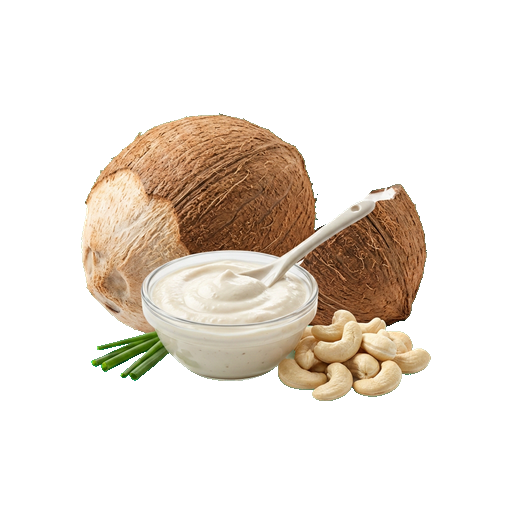
Vegan sour cream is a plant-based substitute for dairy sour cream made from coconut milk, cashews, soy, or other plant-based ingredients with the addition of lemon juice or vinegar for acidity. In texture and taste, it closely resembles traditional sour cream, though it may be slightly softer or, conversely, denser depending on the composition. It is used in sauces, baked goods, side dishes, and as a standalone dressing — when substituting regular sour cream, keep in mind that some versions may require a slightly larger amount due to their less intense flavor.
About
Vegan sour cream is a plant-based alternative to dairy sour cream that has become popular not only in vegan kitchens. It is made from coconut milk, cashews, soy, or sunflower oil, with an acidic component added for its characteristic tangy flavor. The result is creamy, with a soft buttery aroma and the right consistency for most dishes.
Taste and Aroma
A good product is hardly distinguishable from ordinary sour cream by taste. The creamy base provides an unobtrusive buttery background, and the sourness manifests itself softly and naturally. Some coconut-based varieties may give a subtle tropical hint, but this won't interfere with either soup or borscht. As for smell, vegan sour cream smells roughly as neutral as its dairy counterpart — the main thing is that there are no extraneous synthetic flavorings in the ingredients.
Role in dishes
Vegan sour cream can easily replace dairy sour cream in almost any dish. It's added to borscht and cabbage soup, served with pancakes and fritters, and used in salads and cold appetizers. For hot dishes, you should check whether it separates when heated — quality options hold their shape well. In baking and desserts, vegan sour cream works as a thickener and adds softness, although some recipes may require slight adjustments to the liquid content in the dough.
Flavor Pairings
- Soups and borscht — a classic duo, sour cream softens the sharpness and richness of flavor
- Baked potatoes and vegetables — a natural companion, adds creaminess
- Pancakes, fritters, cheese pancakes — traditional combination works unchanged
- Salads based on fresh vegetables — easily replaces creamy dressings
- Pies and cupcakes — adds moisture and tenderness to the crumb
- Sauces and dips — a good base for herbal and garlic variations
Selection and Storage
When purchasing, pay attention to the consistency — it should be dense and uniform, without layers or lumps. Check the expiration date and composition: the fewer additives and stabilizers, the better. Some brands contain starch or guar gum for thickness — this is normal, but an excess of additives can leave an unpleasant aftertaste.
Keep the opened package in the refrigerator at a temperature of 2–6 degrees. Most vegan sour creams last 7–10 days after opening, but it's better to follow the manufacturer's recommendations. If the sour cream starts to separate or has a sour smell, it's time to throw it away. Freezing vegan sour cream is not recommended: when thawed, it may lose its consistency and separate.
Practical Tips
- If vegan sour cream seems too liquid, let it sit in the refrigerator — it will thicken
- For sauces, you can slightly dilute it with water or plant-based milk to achieve the desired consistency
- Add to hot dishes at the end of cooking to avoid separation
- Try several brands — taste and quality may vary, find your own option
Nutrition
per 100 g
- Calories
- 180 kcal
- Protein
- 3.5 g
- Fat
- 17 g
- Carbs
- 3 g
Measures and weight
- 1 tbsp
- 15 g
- 1 tsp
- 5 g
- 1 cup
- 250 g
Measure calculator
- Weight
- 100 g
- Calories
- 180 kcal