Usuba
Usuba
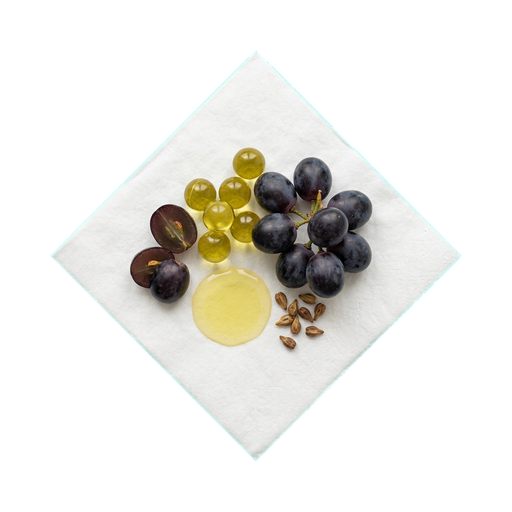
Grape seed oil
The oil is extracted from grape seeds using cold pressing and has a light nutty aroma with a neutral taste and a barely noticeable sweetness. Thanks to its high smoke point (around 200°C), the oil is well-suited for frying and heat treatment, and is also used in dressings and sauces. When choosing, pay attention to cold pressing and dark glass packaging, which protects the oil from oxidation.
Micronutrients
per 100 ml
Vitamins
About
Grape seed oil is one of the most versatile kitchen helpers that easily adapts to any cooking style. It is obtained from grape seeds left over after wine or juice production. This oil has a neutral taste, a high smoke point, and a rich composition, making it an ideal choice for both everyday use and more delicate dishes.
Aroma and Flavor
The main advantage of grape seed oil is its practically imperceptible taste. It does not overpower the natural aromas of ingredients, but only emphasizes them. The oil has a subtle, barely perceptible nutty note, which is revealed only upon careful tasting. The aroma is delicate and neutral, without sharp notes.
Role in Dishes
Grapeseed oil is a workhorse in the kitchen. Thanks to its high smoke point (around 200°C), it's perfect for frying, stewing, and baking. At the same time, it works delicately in cold dishes: you can add it to salad dressings, use it for finishing soups or vegetable side dishes.
- Frying vegetables, meat, fish and seafood
- Preparation of sauces and marinades
- Base for salad dressings
- Processing of finished dishes before serving
- Baking and dough preparation
Successful Combinations
The neutrality of grape seed oil allows it to harmonize with virtually any ingredient. It works especially well with spicy seasonings, herbs, and acidic components. Try combining it with lemon juice and garlic for dressings, with ginger and soy sauce for Asian dishes, and with balsamic vinegar for Italian salads.
Selection and Storage
When choosing, pay attention to the color of the oil — it should be light yellow or slightly greenish. If the bottle is transparent, you will be able to assess the clarity: quality oil has no cloudiness. Prefer cold-pressed oil if you plan to use it in cold dishes — it will retain more beneficial nutrients.
Store grape oil in a cool, dark place, away from direct sunlight and heat sources. Ideally, keep it in a kitchen cabinet or dark pantry. After opening, seal the bottle tightly. With proper storage, the oil retains its qualities for about a year. If you notice a rancid smell or color change, it's better not to use such oil.
Grapeseed oil is an ideal choice for those who value versatility. It doesn't compete with other oils on the shelf, but complements them, becoming the primary oil for everyday use.
Nutrition
per 100 ml
- Calories
- 884 kcal
- Protein
- 0 g
- Fat
- 100 g
- Carbs
- 0 g
Micronutrients
per 100 ml
Macronutrients
- Fiber
- 0 g
- Sugars
- 0 g
- Saturated fat
- 8.832 g
- Monounsaturated fat
- 14.812 g
- Polyunsaturated fat
- 64.308 g
- Omega-3 (EPA + DHA)
- 0 g
- Cholesterol
- 0 mg
- Water
- 0 g
Minerals
- Sodium
- 0 mg
- Potassium
- 0 mg
- Calcium
- 0 mg
- Magnesium
- 0 mg
- Phosphorus
- 0 mg
- Iron
- 0 mg
- Zinc
- 0 mg
- Selenium
- 0 mcg
Vitamins
- Vitamin A (RAE)
- 0 mcg
- Vitamin E
- 26.5 mg
- Vitamin C
- 0 mg
- Vitamin B1 (thiamin)
- 0 mg
- Vitamin B2 (riboflavin)
- 0 mg
- Vitamin B3 (niacin)
- 0 mg
- Vitamin B5 (pantothenic acid)
- 0 mg
- Vitamin B6
- 0 mg
- Vitamin B9 (folate, DFE)
- 0 mcg
- Vitamin B12
- 0 mcg
Measures and weight
- 1 tbsp
- 13.8 g
- 1 tsp
- 4.6 g
- 1 cup
- 230 g
Measure calculator
- Weight
- 100 g
- Calories
- 961 kcal