Usuba
Usuba
White chocolate
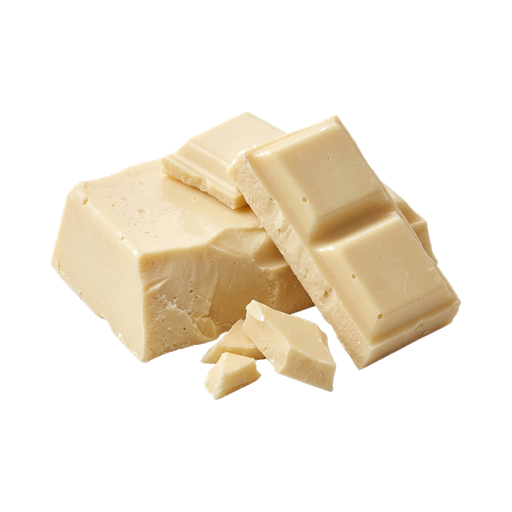
White chocolate is a confectionery product made from cocoa butter, sugar, and milk components without cocoa solids, which give regular chocolate its dark color. It has a soft creamy flavor with vanilla notes and melts well, which is why it is often used for glazing pastries, decorating desserts, and making chocolate sauces. When choosing white chocolate, pay attention to the cocoa butter content — the higher it is, the better the quality of the product and its flavor properties.
About
White chocolate is not quite chocolate in the classical sense, but in cooking its role is indispensable. It contains no cocoa mass, only cocoa butter, sugar, and milk components. This makes it light, sweet, and delicate, with a completely different texture and behavior during cooking compared to its dark and milk chocolate counterparts.
Aroma and Taste
The taste of white chocolate is first and foremost a creamy sweetness. Cocoa butter gives it a delicate nutty undertone and a subtle cocoa aroma, but without bitterness. Quality white chocolate smells of cream, vanilla, and milk — this is its main aromatic signature. If you're choosing between samples, look for one that smells natural, not synthetically sweet.
Role in dishes and pairings
White chocolate works in two modes: as a main component or as a contrasting accent. In confectionery, it is melted for ganaches, mousses, creams, and glazes — it creates a delicate, creamy texture. In baking, it is added to the dough or used for decoration. The main thing to remember: white chocolate is temperature-sensitive and burns easily, so it should be melted in a water bath or at low microwave power.
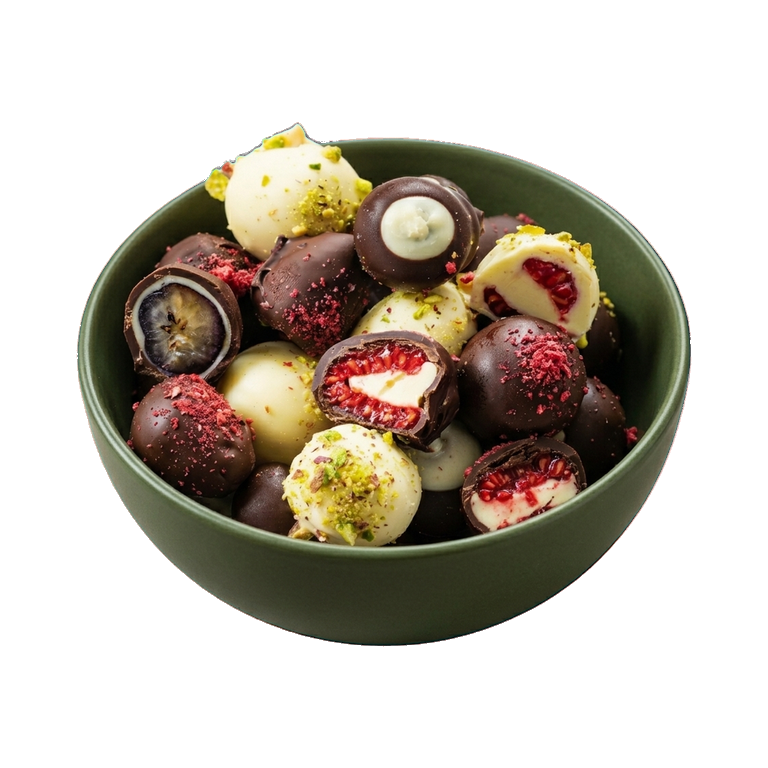
White chocolate pairs well with sour and fruity notes. Raspberry, strawberry, passion fruit, and lemon create a striking contrast with it. It works well with vanilla, cinnamon, ginger, and cardamom. Interestingly combines with salted caramel, sea salt, and even lavender. Avoid only very bitter components — they overpower the delicate profile.
Selection and Storage
- Check the composition: quality white chocolate contains cocoa butter, not palm oil or substitutes. The higher the percentage of cocoa butter, the better.
- Look at the color: it should be cream-white or slightly yellowish, not bright white (this is a sign of excess additives).
- Break off a small piece: good white chocolate is brittle, with a clean break, not smeared or greasy.
- Store in a cool, dry place at a temperature of 18–21 degrees. Avoid moisture and direct sunlight — a white coating may appear on the surface (this is not mold, but cocoa butter crystallization, but the taste deteriorates).
- In an airtight package, white chocolate is stored for 6–12 months, depending on the quality and conditions.
Practical cooking tips
White chocolate requires delicacy. Never add water when melting — even a drop will turn it into a lump. If you need a liquid consistency, add cream or coconut oil. When tempering (if you're preparing a professional coating), work with an accurate thermometer: white chocolate is tempered at 27–28 degrees.
If you're making ganache with white chocolate, remember: it absorbs aromas and flavors faster than dark chocolate. Add spices, extracts, and purees gradually, tasting as you go. For structural stability, you can add a little cocoa butter or butter — this will help the ganache hold its shape at room temperature.
Nutrition
per 100 g
- Calories
- 539 kcal
- Protein
- 6.7 g
- Fat
- 30.9 g
- Carbs
- 59.5 g
Measures and weight
- 1 tbsp
- 12 g
- 1 tsp
- 4 g
- 1 cup
- 200 g
Measure calculator
- Weight
- 100 g
- Calories
- 539 kcal