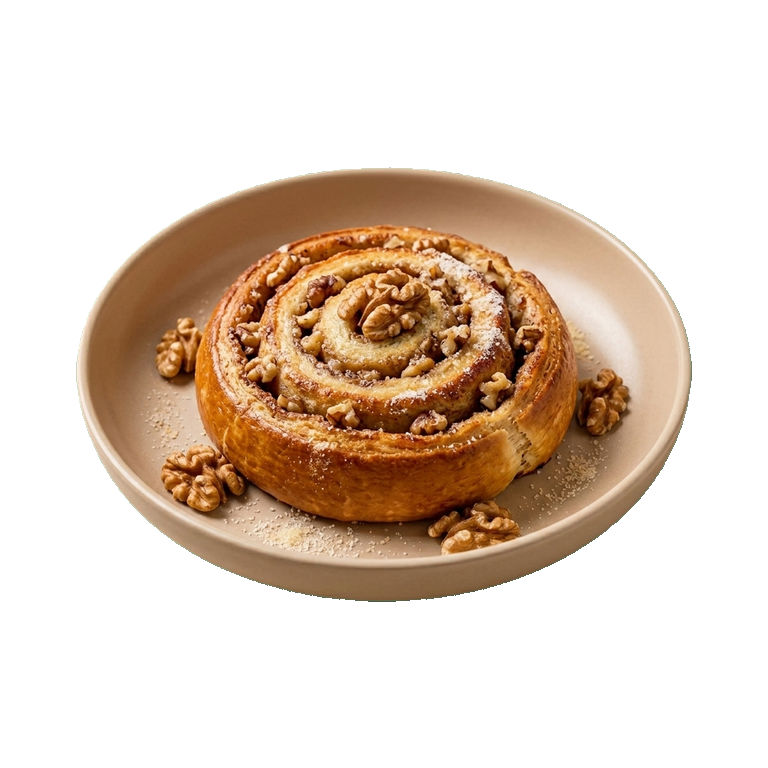
Usuba
Usuba
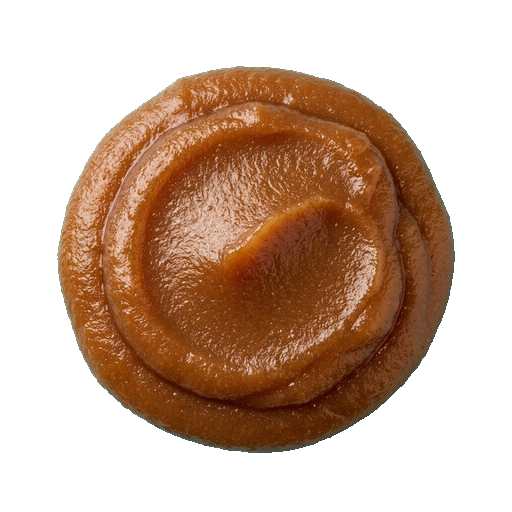
Apple jam
A thick fruit product made from stewed apples and sugar, characterized by a rich sweet taste with a subtle tartness and delicate fruity aroma. Used as a filling for pies, buns, and donuts, as well as an addition to yogurts, cottage cheese, and sweet sauces. When selecting, pay attention to the consistency — good jam should be uniform and dense, without excess liquid or large chunks.
About
Apple jam is a thick, homogeneous apple puree cooked with sugar until the mixture becomes almost plastic in consistency. The difference between jam and jelly is that the fruit is completely cooked down and transforms into a single uniform texture without chunks. This makes jam a versatile kitchen tool: it works equally well as a filling, as a sauce, or simply spread on a slice of bread.
Taste and Aroma
The taste of apple jam depends on the variety of the original fruit. Sour varieties provide a brighter, refreshing profile with a light tartness, sweet ones — a soft, rounded taste. During prolonged cooking, apples lose some of their freshness, acquire caramel notes, and become more concentrated. The aroma of cooked apple is warm and homey, sometimes with barely perceptible hints of cinnamon or clove, if added.
Where to use
Apple jam is one of the most versatile preserves in the kitchen. Its thick texture is ideal for filling pies, buns, and cookies: it doesn't spread during baking and holds its shape. In sweet sauces for meat or poultry, jam adds depth of flavor and natural sweetness, allowing you to reduce the amount of sugar. It can be used as a base for cake glaze or as a component in streusel.
- Filling for pies, buns, donuts and cookies
- Sauce for meat, duck or pork
- Glaze and filling for cakes
- Additive for yogurt or cottage cheese
- Component for streusel and crumbs
Pairings and flavor combinations
Apple jam works well with spices: cinnamon, cardamom, and clove highlight its warmth and depth. With vanilla, it becomes softer and more delicate. In sweet dishes, its partners are butter, nuts (especially walnuts and pecans), and dark chocolate. In savory sauces, jam harmonizes with mustard, ginger, and black pepper, creating an interesting contrast of sour, spicy, and sweet.
Selection and Storage
When choosing ready-made jam, pay attention to its consistency: it should be thick but not rubbery, and easy to spread with a spoon. Good jam has a uniform color — from light brown to dark amber, without layers or crystallization on the surface. Check the ingredients: quality jam should contain only apples, sugar, and possibly pectin or citric acid.
A sealed jar of jam can be stored in a cool, dark place for several years. After opening, keep it in the refrigerator and use it within a month. If mold appears on the surface, discard the entire jar — this is a sign that the seal has been compromised. Homemade jam often crystallizes over time: this is normal and does not affect quality, although the texture becomes more grainy.
Practical Tips
- If the jam is too thick, dilute it with water or juice before using in sauce
- For pie filling, mix jam with starch so it doesn't leak during baking
- Heat the jam before using in glaze — it will become more fluid and spread evenly
- Combine apple jam with other berry preserves for a more complex flavor
Nutrition
per 100 g
- Calories
- 243 kcal
- Protein
- 0.3 g
- Fat
- 0.1 g
- Carbs
- 61 g
Measures and weight
- 1 tbsp
- 19.5 g
- 1 tsp
- 6.5 g
- 1 cup
- 325 g
Measure calculator
- Weight
- 100 g
- Calories
- 243 kcal