Usuba
Usuba
Jelly
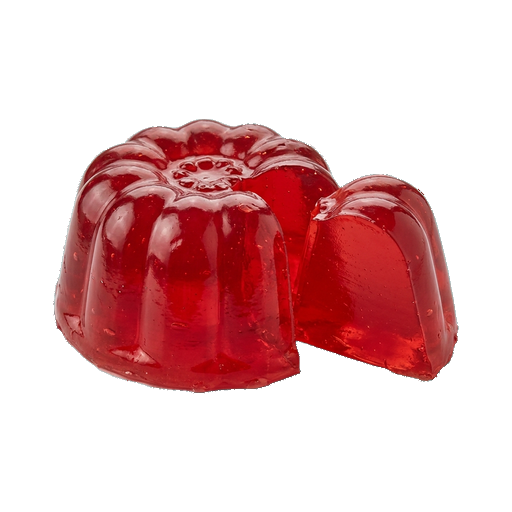
Jelly is a clear or semi-transparent gel-like dish that is obtained by cooling a liquid with the addition of gelatin, agar, or other gelling agents. It can be either a sweet dessert based on fruit juices and syrups, or a savory dish made from meat or fish broth. When choosing a gelling agent, keep in mind that gelatin requires maintaining a specific temperature regime and is not suitable for vegan recipes, whereas agar works at higher temperatures and is universal for any diet.
About
Jelly is a translucent or matte mass that quivers on a plate and melts in your mouth. The basis of any jelly is gelatin or agar-agar, which bind the liquid into an elastic structure. It is not just a dessert, but a universal tool in the kitchen: with its help, you can turn juice into a delicacy, layer ingredients in a complex dish, or give a dish a festive appearance.
Jelly works thanks to gelling agents that form a network when cooled, trapping the liquid. The result depends on the concentration: more gelatin makes the jelly firmer and cuts cleanly with a knife, less gelatin makes it more delicate and almost melts at room temperature. This allows you to experiment with the consistency for a specific dish.
Taste and Aroma
The jelly itself is almost tasteless — it is a canvas on which the taste of the main ingredient is painted. If you make jelly from fruit juice, it will be bright and fresh. From berry compote — deep and rich. From meat broth — delicate and umami. Jelly absorbs and enhances the flavors of additions: pieces of fruit, berries, spices, herbal infusions.
The texture of jelly is its main appeal. It brings pleasure not only through its taste, but also through how it melts on your tongue, how it jiggles on a spoon, how it contrasts with other layers in the dessert. It's a sensation of delicacy and lightness that's difficult to achieve in any other way.
Where is jelly used
- Standalone desserts: fruit jelly in a cream cup, berry jelly with coconut milk, jelly with champagne
- Layers in cakes and pastries: jelly between sponge cake and cream, as a glaze, layer between fruits and mousse
- Cold appetizers: meat jelly, fish jelly, vegetable jelly with herbs
- Garnishes and decorations: diced jelly with meat dishes, transparent jelly around the product for presentation
- Puddings and mousses: jelly as a base or top layer
Combinations and Proportions
Standard proportion: 10 grams of gelatin per 500 milliliters of liquid produces firm jelly that can be cut. If you prefer a more delicate texture, use 7–8 grams. For firm jelly that holds its shape in complex constructions, use 12–15 grams.
Jelly pairs well with fruits and berries: raspberry, strawberry, currant, orange, mango, kiwi. With dairy products: cream cheese, mascarpone, yogurt, sour cream. With alcohol: red wine, champagne, liqueurs. With spices: vanilla, cinnamon, mint, ginger.
Selection and Preparation
- Sheet gelatin dissolves more evenly and doesn't require pre-soaking in cold water, although soaking it is still recommended
- Powdered gelatin is cheaper, but it needs to be pre-dissolved in cold water and allowed to swell for 5–10 minutes
- Agar-agar — a plant-based alternative, sets at room temperature and holds its shape better, but requires boiling
- Check the expiration date: gelatin loses its gelling properties over time
Main rule: do not boil gelatin after it has dissolved — it will lose its gelling ability. Dissolve it in cold water, let it swell, then add it to warm liquid and stir. If you are using agar-agar, it needs to be boiled for 1–2 minutes.
Storing finished jelly
Finished jelly is stored in the refrigerator for 3–5 days under plastic wrap or in a closed container. It does not tolerate sharp temperature fluctuations: if you take the jelly out of the refrigerator and immediately put it back, it may separate into layers. You can freeze jelly, but after thawing it may become watery.
If the jelly turned out too liquid, you can save it: melt it, add more gelatin dissolved in cold water, and chill again. If it's too firm and resembles rubber, next time reduce the amount of gelling agent or use more liquid.
Jelly is a tool worth mastering. It transforms simple juice into a festive dessert, adds gloss and volume to dishes, and allows you to experiment with textures and layers. Start with simple fruit jelly, feel how it works, and gradually move on to more complex combinations.
Nutrition
per 100 g
- Calories
- 60 kcal
- Protein
- 1.7 g
- Fat
- 0.1 g
- Carbs
- 13 g
Measures and weight
- 1 tbsp
- 15 g
- 1 tsp
- 5 g
- 1 cup
- 250 g
Measure calculator
- Weight
- 100 g
- Calories
- 60 kcal