Usuba
Usuba
Fat
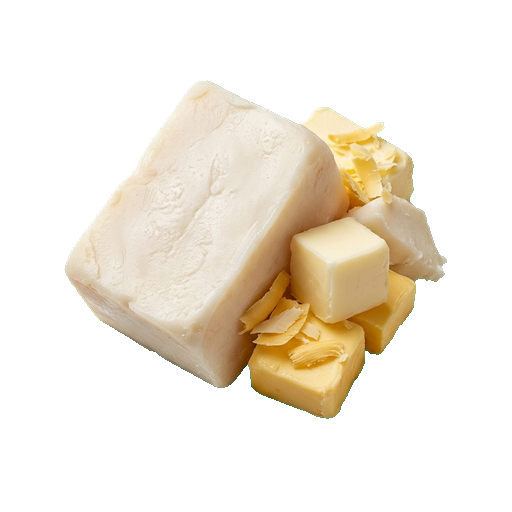
Fat is a fundamental culinary component used for frying, stewing, and baking that imparts characteristic flavor to dishes and improves texture. Depending on the source (animal or plant-based), fat has different smoke points, aroma, and affects the final result: for example, butter adds buttery notes, while vegetable oil remains neutral. When choosing, it's important to consider the purpose — for high-temperature cooking, oils with high smoke points are suitable, while for cold dishes and dressings, more aromatic options are preferred.
About
Fat in Cooking: The Foundation of Taste and Texture
Fat is not just an ingredient, but a building block of good cooking. It carries flavor molecules, creates tenderness and juiciness in dishes, and helps aromas develop. Without fat, food becomes flat and lifeless, even if all other components are perfect. Therefore, the question is not whether to use fat, but which one to choose for a particular dish.
Different fats — different tasks
Butter gives tenderness and a nutty note — ideal for sauces, baked goods, and finishing dishes. Vegetable oils are suitable for frying and dressings: sunflower oil is neutral, olive oil adds character. Animal fats (lard, goose fat, duck fat) withstand high temperatures and give dishes depth. Clarified butter (ghee) is stable when heated and stores for a long time.
Temperature and Smoke Point
Every fat has its own heat limit — a smoke point. If exceeded, the fat breaks down into harmful substances and loses its flavor. Butter smokes early, so it's used at medium temperatures or added at the end. Refined vegetable oils can withstand high temperatures. Animal fats and clarified butter are champions of stability; they can be safely used for intense frying.
How to Choose and Store
When purchasing, pay attention to the transparency and color of the oil — they should be uniform, without cloudiness or sediment. Choose butter with a fat content of at least 82 percent. Extra virgin olive oil should be stored in a dark bottle and away from light — it oxidizes quickly. Animal fats are stored in the refrigerator in a tightly sealed container, vegetable oils — in a cool place without air exposure.
Balance and flavor harmony
Fat enhances saltiness and sweetness, softens bitterness and acidity. This means that a pinch of salt in oil will shine brighter than in water. Acidic sauces become milder with the addition of fat, and spicy dishes are balanced by its creaminess. But it's easy to overdo it — too much fat masks other flavors and makes the dish heavy. The golden rule: just enough fat for the ingredients to reveal their potential, but not to overshadow each other.
Practical Combinations
- Butter + white sauces, vegetable purees, pasta, baking
- Olive oil + salads, Mediterranean dishes, bread, grilled vegetables
- Sunflower oil + frying, deep frying, neutral dishes
- Lard and animal fats + potatoes, meat, stewed vegetables, baking
- Clarified butter + Indian cuisine, high-temperature frying, sauces
Fat is not an enemy, but a helper. The main thing is to choose the right fat for the right task and remember that the quality of oil directly affects the quality of the finished dish. Good fat makes simple ingredients delicious, and good ingredients — unforgettable.
Nutrition
per 100 g
- Calories
- 900 kcal
- Protein
- 0 g
- Fat
- 100 g
- Carbs
- 0 g
Measures and weight
- 1 tbsp
- 13.8 g
- 1 tsp
- 4.6 g
- 1 cup
- 230 g
Measure calculator
- Weight
- 100 g
- Calories
- 900 kcal