Usuba
Usuba
Boneless Beef
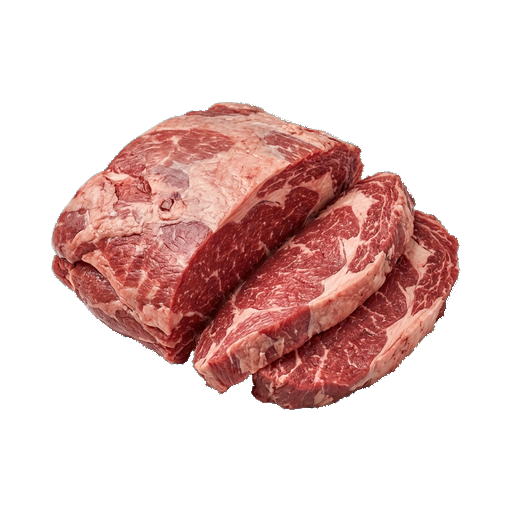
Tender meat with even structure, obtained from various parts of the carcass after bone removal. Such beef cooks faster than bone-in meat and is more convenient for portioning, although it may be less juicy if heat-treated incorrectly. When selecting, pay attention to color — it should be bright red or dark red; the meat should not be sticky or have a gray tint.
About
Boneless beef is a convenient meat format that saves time on preparation and allows you to focus on cooking itself. The absence of bones means you get the maximum amount of edible product and can immediately cut the meat into desired pieces or put it directly into the pot. This is especially valuable when you need to cook quickly or when precision in portion calculation is important.
Which cuts are suitable for different dishes
Boneless beef is sold in various anatomical cuts, and each has its own purpose. Meat from the neck and shoulder contains more connective tissue and collagen — this is ideal for braising, soups, and stews, where prolonged heat treatment converts sinews into gelatin and makes the dish rich and tender.
Strip and tenderloin are tender, lean meat with minimal fat. They are best cooked quickly: fry over high heat, roast as a whole piece, or slice thinly for steaks. Brisket, although boneless, remains sinewy and requires long braising, but it imparts a deep flavor and natural gelatin to the dish.
- Neck and shoulder — stewing, soups, ground meat
- Tenderloin and fillet — steaks, quick frying, baking
- Brisket — long stewing, broth
- Rump and chuck — versatile, suitable for frying and boiling
What to pay attention to when choosing
The color of the meat should be bright red or dark red, not brown or gray — this is a sign of freshness. If the surface is sticky, that's normal, but it should not be covered with slime. The smell should be meaty, without sour or musty notes. Fat, if present, should be white or creamy, not yellow.
Pay attention to the packaging: meat should be stored in a hermetic container with minimal liquid. If there is a lot of blood in the tray, this may indicate storage condition violations or that the meat has been sitting for a long time. Check the production date and expiration date — boneless beef is best used within a few days after purchase.
Preparation and Storage
Before cooking, let the meat rest at room temperature for 20–30 minutes if time permits. This will allow it to heat evenly and cook more predictably. Pat the surface dry with a paper towel to remove excess moisture — this will help the meat brown faster when frying.
Boneless beef in the refrigerator keeps for 3–4 days in the coldest part, usually on the lower shelf. If you don't plan to cook in the coming days, freeze the meat. It freezes well: place pieces in a single layer on a board, freeze, and then transfer to a container or bag. This way the meat won't stick together and will be easier to thaw in portions. Frozen beef keeps for several months.
- In the refrigerator: 3–4 days in the coldest part
- In the freezer: up to 3–4 months
- Thaw in the refrigerator, not at room temperature
Practical kitchen tips
If you buy lean meat (tenderloin, fillet), add a little fat during cooking — butter, vegetable oil, or lard. This will prevent drying out and add flavor. For stewed dishes, on the other hand, choose cuts with visible fat streaks — they will be a source of taste and tenderness.
Cut meat against the grain — this will make it appear more tender, even if it's not the most delicate cut. If you're cooking a steak or doing a quick fry, don't salt the meat in advance: salt will draw out moisture and the meat will become tough. Salt either 40 minutes before cooking (salt will have time to dissolve the proteins), or immediately before frying. For soups and stews, salt can be added during cooking.
Nutrition
per 100 g
- Calories
- 187 kcal
- Protein
- 20.2 g
- Fat
- 12 g
- Carbs
- 0 g
Measure calculator
- Weight
- 100 g
- Calories
- 187 kcal