Usuba
Usuba
Italian Parsley
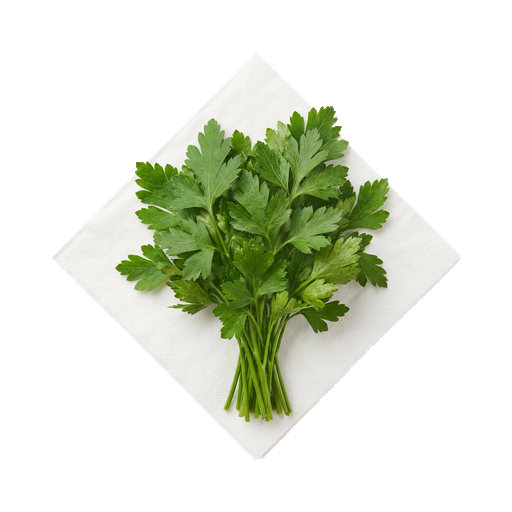
Italian parsley differs from curly parsley with larger flat leaves and a more pronounced herbaceous aroma with a slight bitterness. Its leaves are less tender and hold their shape better during heat treatment, making it ideal for soups, stews, and hot dishes, as well as for garnishing and decoration. When selecting, pay attention to the freshness of the leaves without yellowing, and in recipes it can be replaced with regular parsley, though the taste will be slightly milder.
About
Leaves with Character
Italian parsley is not just a herb, it's the workhorse of the kitchen. Unlike the familiar curly parsley, it has flat, wide leaves that are easier to wash and chop. Its flavor is brighter and more intense, with a slight bitterness and a more pronounced herbal aroma. When you buy a bunch, the leaves practically beg to be added to a dish — they hold their shape, don't fall apart when cut, and look beautiful on the plate.
When aroma works for results
This parsley doesn't hesitate to show itself. It's added not at the end, but during cooking — it withstands brief heat treatment and becomes even more aromatic. In soups, stews, and braised dishes, it doesn't get lost; on the contrary, it enhances the flavor. Fresh parsley is generously sprinkled over the finished dish: on fish, meat, and vegetables. It's versatile — works with lemon, garlic, olive oil, and spicy seasonings.
Where to find it in the kitchen
Italian parsley is indispensable in classic sauces — in the same pesto or chimichurri. It is the base for green butter, which is added to steaks. It is put in marinades for meat, mixed with breadcrumbs for cutlets, added to omelets and cottage cheese casseroles. In salads, it holds its position, does not wilt quickly and absorbs dressing well. Even in simple potato soup, it brings that very depth of flavor that distinguishes a home-cooked dish from an ordinary one.
How to Choose and Store
When shopping, look for bunches with firm, bright green leaves without yellow edges and dark spots. Stems should be fresh, not wilted. At home, parsley is best stored in a glass of water, covered with a bag — it will keep for a week this way. If you need it for longer, freeze the chopped herbs in ice with a small amount of water. You can dry it, but in dried form it loses its character — use it only if you have no other options.
Successful Pairings
- With lemon and olive oil — a classic dressing for fish and seafood
- With garlic in sauces and oils for bread
- With tomatoes and basil in summer salads
- With hot spices in marinades for meat
- With cottage cheese and cheese in pie fillings
Italian parsley is an investment in the quality of a dish. It works in the background and becomes a star when needed. If you haven't tried cooking with it yet, start simple: fresh herbs, lemon, garlic, and good bread. Everything else it will suggest on its own.
Nutrition
per 100 g
- Calories
- 36 kcal
- Protein
- 2.7 g
- Fat
- 0.8 g
- Carbs
- 6.3 g
Measures and weight
- 1 bunch
- 25 g
- 1 sprig
- 3 g
Measure calculator
- Weight
- 100 g
- Calories
- 36 kcal