Usuba
Usuba
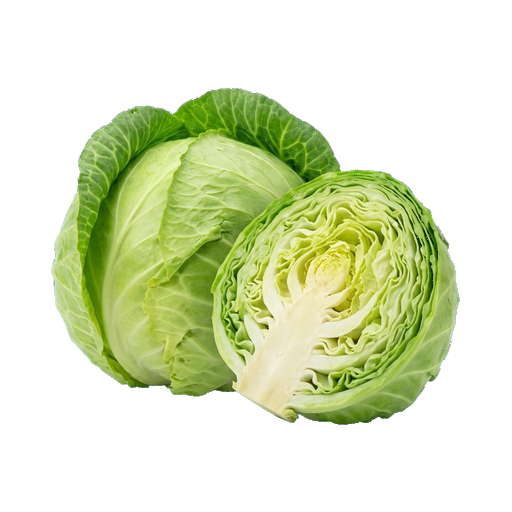
Young cabbage
Young cabbage is an early variety with tender, thin leaves and a soft structure, harvested before the head fully matures. It has a more delicate, slightly sweet taste compared to regular cabbage and requires minimal heat treatment — ideal for salads, light stewing, or braising. When selecting, look for firm heads without damage, keeping in mind that young cabbage has a shorter shelf life than late varieties and cooks significantly faster.
About
Young cabbage is a tender vegetable that appears on store shelves in late spring and early summer. Its heads have not yet reached full density, the leaves remain thin and fragile, and the taste is much milder than that of autumn cabbage. It is an ideal choice when you want a light dish without heaviness and bitterness.
Taste and texture
Young cabbage has almost none of the sharp bitterness familiar to us from winter varieties. Its leaves are slightly sweet, delicate, with barely noticeable pungency. The texture is fragile, juicy, literally melting in your mouth with proper preparation. It is this tenderness that makes it a favorite for spring salads and light side dishes.
How to use in the kitchen
Young cabbage requires minimal preparation and does not tolerate prolonged heat treatment. It is best eaten fresh — in salads, thinly shredded for marinades, or simply with salt and oil. If you still decide to cook it, do so quickly: stew over medium heat for 5–7 minutes, lightly fry with onions, or add to soup at the very end of cooking.
- Crispy salads with finely shredded cabbage, radish and herbs
- Quick stewing with carrots and a small amount of broth
- Marinated pieces as an appetizer or side dish for meat dishes
- Addition to soup or cabbage soup at the end of cooking to preserve tenderness
- Filling for pies and dumplings together with egg and herbs
Pairings with other ingredients
Young cabbage pairs well with spring vegetables: radishes, young onions, and fresh carrots. For greens, choose dill, parsley, or cilantro. Acidity—lemon juice, white vinegar, or yogurt—highlights its freshness. Olive oil, garlic, and ginger add depth of flavor without overpowering the delicate taste of the vegetable.
Selection and Storage
When shopping, pay attention to ensure the head is light, not too dense, with tender, clean leaves without dark spots or dents. Young cabbage is not stored for long — 3–5 days in the refrigerator in the vegetable compartment. There is no need to wrap it; simply place it in a regular section. The sooner you use it, the better its tenderness and sweetness are preserved.
Young cabbage is a seasonal delicacy. Don't miss the moment of its appearance on the market to enjoy the freshness and lightness it brings to spring and summer dishes.
Nutrition
per 100 g
- Calories
- 27 kcal
- Protein
- 1.2 g
- Fat
- 0.1 g
- Carbs
- 5.8 g
Measures and weight
- 1 head
- 1000 g
Measure calculator
- Weight
- 100 g
- Calories
- 27 kcal