Usuba
Usuba
Flour
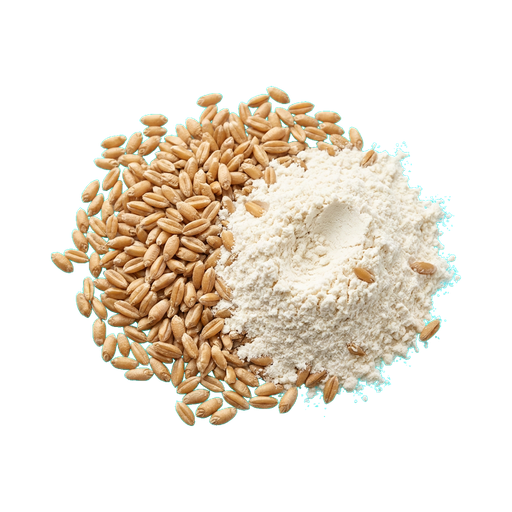
Flour is a finely ground powder made from cereal grains, most commonly wheat, which serves as the base for baking, sauces, and many other dishes. Its properties depend on the type of grain, degree of grinding, and gluten content: high-grade wheat flour works well for bread and pies, while lower-grade flour is better for pancakes and cupcakes. When choosing flour, it is important to pay attention to the packaging date and storage conditions, as flour oxidizes over time and loses dough elasticity.
About
Flour is one of the most versatile ingredients in the kitchen. It's not just a white powder in a bag, but a foundation that determines the structure, taste, and texture of almost all baked goods and many sauces. Understanding which flour to use and when transforms an ordinary recipe into a successful result.
Which flour is needed for what
- Premium wheat flour — the finest and whitest, ideal for delicate baking, cookies and thin pancakes
- First grade wheat flour — slightly coarser, contains more bran, good for bread and dense baking
- Whole grain flour — with grain husks, gives denser crumb and rich flavor, but requires more liquid in the dough
- Rye flour — dark, with characteristic flavor, used in bread and often mixed with wheat flour
- Corn flour — gluten-free, gives yellow color and loose structure, good for cornbread and baking
- Rice flour — fine, gluten-free, used in Asian baking and as a thickener for sauces
Gluten and Its Role
The protein content in flour directly affects the amount of gluten. Strong flour with high protein content (12–14%) is good for bread and yeast dough — it provides elasticity and good rise. Weak flour (8–10%) is suitable for cookies, pies, and cakes, where a tender, crumbly structure is needed. If you are cooking gluten-free, rice, corn, and buckwheat flour will become your foundation, although they require a different approach to kneading and are often used in a mixture.
How to Choose and Store
- Check the packaging date — fresh flour is better, it absorbs water faster and gives better results
- Pay attention to the color: white flour should be uniform, without yellow or gray spots
- Feel the bag — flour should not be lumpy, this is a sign of moisture
- Store in a tightly closed container or bag in a dry, cool place away from direct sunlight
- Whole grain and rye flour should be kept in the refrigerator or freezer — they contain oils that oxidize faster
Practical kitchen tips
Don't just pour flour from the bag into a bowl — sift it. This aerates the flour, improves dough structure, and helps distribute leavening agents more evenly. If the recipe calls for a specific type, try to stick with it, but if you don't have that flour, you can mix different types: for example, add some whole grain flour to all-purpose flour for greater nutritional value.
Flour moisture varies depending on the season and climate in your home. In humid climates, flour absorbs more moisture, so the recipe may require slightly less liquid. Start with the amount specified in the recipe, then adjust the dough consistency by feel. Experienced bakers always keep 10–15% of the liquid in reserve for this exact reason.
Flour is not a boring ingredient, but a tool that in your hands can create an airy sponge cake, crispy bread, or delicate sauce. Experiment with different types, learn to read the information on the package, and trust your experience. Every kitchen is a little different, and you'll quickly learn to understand how your flour behaves in your conditions.
Nutrition
per 100 g
- Calories
- 364 kcal
- Protein
- 10.3 g
- Fat
- 1 g
- Carbs
- 74.9 g
Measures and weight
- 1 tbsp
- 8.3 g
- 1 tsp
- 2.8 g
- 1 cup
- 137.5 g
Measure calculator
- Weight
- 100 g
- Calories
- 364 kcal