Usuba
Usuba
Palm sugar
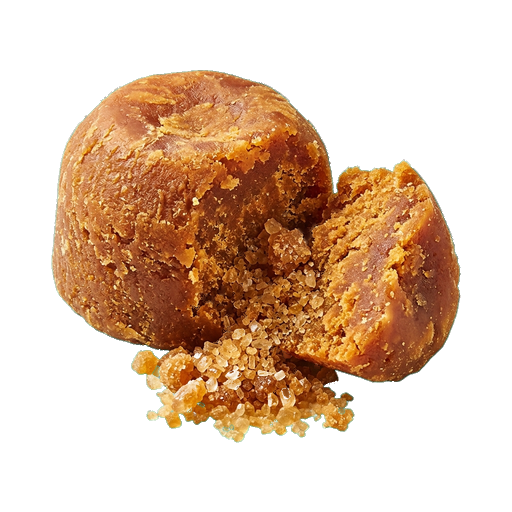
Palm sugar is a crystalline sweetener with a mild caramel flavor and subtle vanilla notes, derived from the nectar of palm flowers. It dissolves more slowly in liquid than regular sugar, making it better suited for beverages that need gradual sweetening, as well as for baked goods that require a more complex flavor profile. When substituting regular sugar, keep in mind that palm sugar may slightly darken the dish and add additional depth to it.
About
Palm sugar is a viscous mass of honey color or dark brown paste obtained from palm sap. Unlike regular sugar, it does not crystallize into granules but remains soft and plastic. It is often sold as dense balls, bricks, or in jars. It is one of the oldest sweeteners, which is still actively used in Asian cuisine and is increasingly found on the shelves of health food stores.
Taste and Aroma
Palm sugar has a deep, soft flavor with caramel and vanilla notes. It is less sweet than white sugar, but more aromatic and multifaceted. The sweetness is not sharp, but gradually unfolds, leaving a subtle aftertaste of burnt cane or honey. This characteristic makes it ideal for dishes where not only sweetness is needed, but also depth of flavor.
Role in dishes
- In Asian sauces and curries — adds sweetness and softens spiciness
- In baking and desserts — creates moist texture and rich flavor
- In beverages — dissolves slower than regular sugar, so it's better suited for syrups
- In marinades and glazes — gives the dish a caramel tint and depth
How to Work with Palm Sugar
If sugar has been stored in the cold, it may harden. Simply warm it in a water bath or microwave for a few seconds — and it will become soft and pliable again. For recipes where you need to dissolve sugar, it's better to add it to hot liquid. If you're using a block, grate it on a fine grater or break it into pieces before adding to the dish.
For every kilogram of regular sugar, you can substitute 750 grams of palm sugar — it is sweeter in terms of flavor intensity, although less sweet to the taste. In baking, such a substitution may slightly change the dough's moisture content, so monitor the consistency.
Selection and Storage
Look for palm sugar in Asian grocery stores or in the healthy food section. Choose a product without additives — the ingredients should contain only palm juice. The bricks should be dense, without cracks or mold smell. In an airtight package at room temperature, it keeps for several months. If your apartment is humid, transfer it to a glass jar with a tight lid — this way it won't absorb moisture and won't get moldy.
Palm sugar is not just an alternative to regular sugar, but a standalone ingredient with character. It's worth trying not to replace the familiar, but to expand the palette of flavors in your kitchen.
Nutrition
per 100 g
- Calories
- 380 kcal
- Protein
- 0 g
- Fat
- 0 g
- Carbs
- 95 g
Measures and weight
- 1 tbsp
- 12.8 g
- 1 tsp
- 4.3 g
- 1 cup
- 212.5 g
Measure calculator
- Weight
- 100 g
- Calories
- 380 kcal