Usuba
Usuba
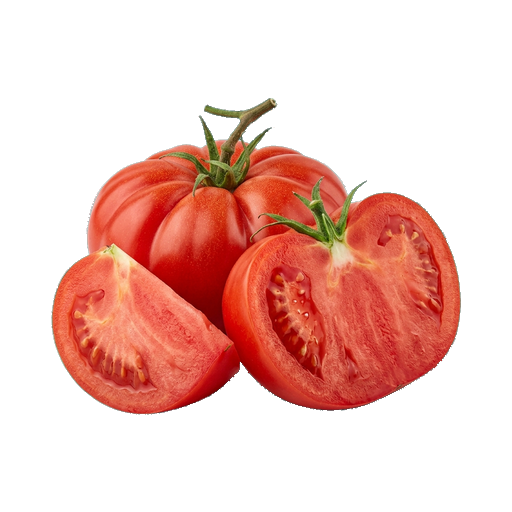
Beefsteak tomatoes
Large meaty tomatoes with firm flesh and minimal seeds, ideal for slicing and serving in salads or on sandwiches. Thanks to their thick walls, they hold their shape well during cooking and are suitable for stuffing or stewing whole. When selecting, pay attention to the firmness of the fruit and even red color without soft spots.
About
Meaty tomatoes for serious dishes
"Beef" tomatoes are large, heavy tomatoes with dense flesh and a minimal number of seeds. They are noticeably different from ordinary salad tomatoes: while a regular tomato weighs 150–200 grams, beef tomatoes can weigh 300–500 grams or even more. Their flesh is almost monolithic, with rare seed chambers, so when sliced, the tomato doesn't fall apart and doesn't release excess juice.
Taste and Aroma
Beef tomatoes have a rich, tomatoey flavor with good acidity and sweetness. The aroma is pronounced, especially if the tomato is grown in season and ripens properly. These are not watery greenhouse tomatoes — they have real tomato character. The flesh structure allows the flavor to unfold more fully than in looser varieties.
Where to use them
Beefsteak tomatoes are an ideal choice for slicing: in salads, on sandwiches, as a side dish. They hold their shape well, don't fall apart when cut, and look beautiful on a plate. Thick, meaty slices won't become saturated with dressing too quickly, so the salad will maintain its structure.
For sauces and soups, beef tomatoes are less versatile — smaller tomatoes with higher juice content would be more suitable here. However, if you're making tomato soup puree or a thick sauce and want an intense flavor, beef tomatoes will work perfectly. You'll just need more tomatoes by weight to achieve the desired volume of liquid.
Dish Combinations
- With soft cheeses (mozzarella, burrata) — a classic combination where the dense tomato flesh contrasts with the delicate texture of cheese
- With basil and olive oil — a simple and foolproof combination for salads
- With red onion and vinegar — for marinades and preserves
- On the grill — dense structure allows slicing into thick pieces and grilling without losing shape
- In cold appetizers and side dishes where the aesthetics of slicing is important
How to Choose and Store
When choosing, focus on weight and density: a tomato should be heavy for its size, without soft dents or dark spots. The color should be evenly red or red-orange depending on the variety. Press gently with your finger: the flesh should be firm, but not hard as stone.
Store beef tomatoes best at room temperature, stem side down, in a single layer. If the tomatoes are overripe or you don't plan to use them in the next day, put them in the refrigerator — they will keep there for up to a week. Remember that cold freezes cells and slightly spoils the taste, so take the tomatoes out of the refrigerator an hour before using.
Beef tomatoes are not just large tomatoes, but helpers for dishes where you need structure, beautiful slicing, and pronounced flavor. If you're cooking something where the tomato is the main character, not the background, choose them.
Nutrition
per 100 g
- Calories
- 20 kcal
- Protein
- 1 g
- Fat
- 0.2 g
- Carbs
- 3.9 g
Measures and weight
- 1 pcs
- 250 g
Measure calculator
- Weight
- 100 g
- Calories
- 20 kcal