Usuba
Usuba
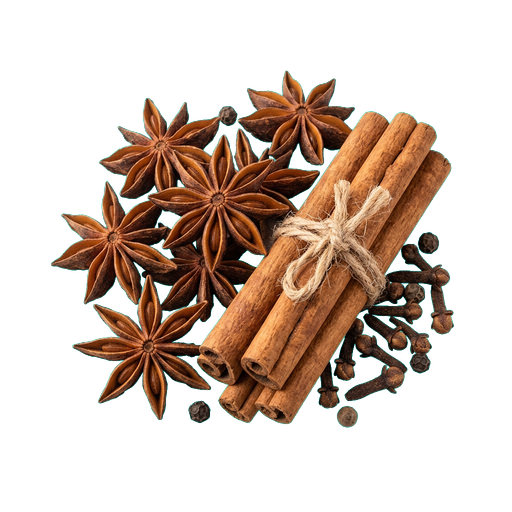
Spices
Spices are dried plant parts with an intense aroma and flavor, used to season dishes in small quantities. They add depth, complexity, and character to food, from the warm spicy notes of cinnamon and cloves to the heat of chili pepper and the pungency of ginger. When selecting spices, it's important to pay attention to their freshness and aroma: quality spices have a bright smell, and ground spices lose their properties faster than whole ones, so it's best to grind them immediately before use.
About
Spices are not just food additives, but a tool that transforms the character of a dish. They work on multiple levels: they bring new flavor layers, enhance the natural aromas of ingredients, and create that very depth which distinguishes a home-cooked dish from merely edible food. Each spice has its own temperament — some are warm and enveloping, others sharp and piercing, still others barely noticeable, but without them a dish loses its integrity.
Aroma and taste: what happens in a dish
Spices work through volatile oils and active compounds that unfold differently depending on temperature and processing time. Whole seeds or sticks release aroma more slowly but longer than ground spices — this is important to consider when planning cooking time. Heating spices in oil or in a dry pan awakens them, makes them more vivid and rounded, while adding them at the end of cooking preserves freshness and sharpness.
Balance is the main rule. Spices can easily overpower a dish if you forget about moderation. Start small and add gradually, especially if you're working with an unfamiliar spice for the first time. One spice can be the hero of a dish, but more often several spices work together in harmony, each one highlighting the qualities of the others.
Role in Different Cuisines and Dishes
Spices are the language of culinary traditions. Some spice blends create the recognizable flavor of Indian curry, others the warmth of Moroccan tagines, and still others the piquancy of Mexican sauces. But spices are universal: they work not only in traditional combinations, but also in experiments. A pinch of cinnamon in meat gravy, a touch of cumin in vegetable soup, cloves in compote — each time the result is unexpected and interesting.
- In hot dishes, spices reveal themselves more fully and work more boldly
- In cold appetizers and marinades, they act more gently, but penetrate the product longer
- In drinks and desserts, spices create a background without overpowering the main flavor
- In sauces, spices often become the foundation around which the entire taste is built
Selection and Storage: Keeping Fresh Flavor
The quality of spices is determined by their aroma and color. Fresh spices have a rich fragrance — if the smell is weak or musty, this is a sign that the spice has lost its potency. Whole spices (seeds, sticks, stars) last longer than ground spices because volatile oils evaporate more slowly. Ground spices should be used within a few months after opening the package.
Store spices in tightly sealed containers, away from light, heat, and moisture. The ideal place is a cool cabinet, not a shelf above the stove, as is often done. If you buy spices rarely, choose whole forms — they stay fresh longer. Grinding spices yourself in a mortar or coffee grinder is not a whim, but a way to get maximum flavor and aroma at the moment when you really need them.
Classic combinations and bold experiments
Some spices work together so naturally that it seems they were made for each other. Cinnamon with cloves, cumin with coriander, black pepper with nutmeg — these pairings have been tested for centuries. But this doesn't mean you should stop at what's familiar. Try adding an unexpected spice to a familiar dish: cardamom in tomato sauce, anise in vegetable marinade, saffron in mushroom risotto.
The main thing is to remember that spices should serve, not dominate. They enhance, emphasize, and create contrast, but should never overpower the main ingredient. Start with small amounts, write down what you've added and in what quantity — this way you'll quickly learn to feel the spices and use them confidently.
Nutrition
per 100 g
- Calories
- 255 kcal
- Protein
- 6.1 g
- Fat
- 6.4 g
- Carbs
- 38 g
Measures and weight
- 1 tbsp
- 7.5 g
- 1 tsp
- 2.5 g
- 1 cup
- 125 g
Measure calculator
- Weight
- 100 g
- Calories
- 255 kcal