Usuba
Usuba
Goji berries
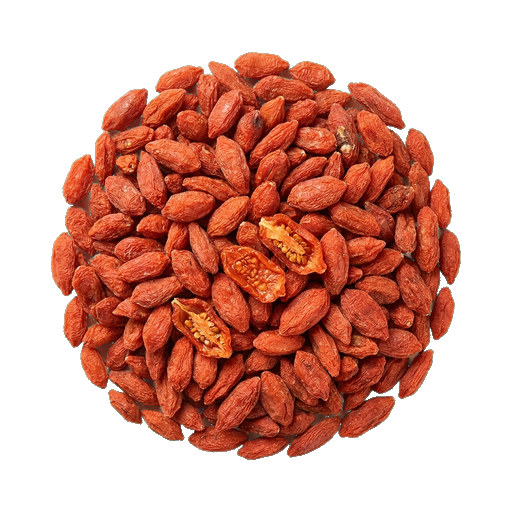
Goji berries are dried fruits with a delicate sweet taste and subtle tartness, often added to porridges, smoothies, compotes, and tea blends. They are rich in nutrients and swell well when soaked, so it's beneficial to briefly soak them in water or juice before use. When selecting, pay attention to a bright orange-red color and the absence of clumps — quality berries remain loose and crumbly.
About
Goji berries are dried fruits that have long earned their place on the shelves of health-conscious kitchens. They are bright orange, slightly sweet to the taste with a hint of tartness, and require no culinary preparation whatsoever. Simply add them to your dish — and you're done. Thanks to their natural sweetness, these berries work well in both sweet and savory dishes, adding a delicate fruity note to them.
Aroma and Taste
The taste of goji berries is mild and delicate. The main note is sweet, but not cloying, with barely noticeable astringency and a light bitterness on the finish. When chewed, you can feel a herbaceous undertone, which makes them interesting in the context of a dish. The aroma is weak, almost imperceptible, so the berries do not overpower other components, but complement them.
Where to use
- In porridges and muesli — add directly to the bowl or mix with the cereal during cooking
- In yogurts and cottage cheese — they will become a bright accent to dairy desserts
- In smoothies and compotes — they will soften and give sweetness to the drink
- In baked goods — sprinkle on top before baking or add to the dough
- In salads with chicken or fish — contrasting sweetness balances salty and spicy flavors
- In rice and side dishes — work like raisins, but with a more delicate taste
Successful Pairings
Goji berries pair well with nuts — almonds, cashews, and walnuts. Their sweetness is highlighted when combined with cinnamon, cardamom, and vanilla. In sweet dishes, they harmonize with coconut and white chocolate. On the savory side, they work well with ginger, turmeric, and lemon. With herbs — mint and melissa — they create a refreshing effect.
How to Choose and Store
When buying, pay attention to the color — the berries should be bright orange, without dark spots or mold. They should not stick together in a clump. Smell the packaging: the smell should be neutral, without mustiness. If the berries are too red or bright scarlet, this may be a sign of dye treatment.
- Airtight container in a cool place — berries keep for 6–12 months
- Refrigerator — if it's humid in your home, move them there, they won't absorb moisture
- Freezer — if you want to extend the shelf life as much as possible, they freeze without any problems
The main thing is to protect the berries from moisture and odors. If they start to stick together, that's not a problem, but the taste may suffer. Before using, you can soak them in warm water for a few minutes if you want them to become softer, or add them dry if you prefer to chew them.
Nutrition
per 100 g
- Calories
- 349 kcal
- Protein
- 14.3 g
- Fat
- 0.4 g
- Carbs
- 64.1 g
Measures and weight
- 1 tbsp
- 9 g
- 1 tsp
- 3 g
- 1 cup
- 150 g
Measure calculator
- Weight
- 100 g
- Calories
- 349 kcal